Hey there, friends!
I’m going to start an occasional blog feature on my blog to showcase some cool stuff I’ve discovered on other people’s blogs.
This blog features Jonathan Sutton, the owner of Gnarled Oak Art and a Fiction Author and Illustrator.
Here’s an example of his wood work:

Here’s a link to more wood pieces. He makes some really unique and beautiful ones.
And here’s a link to his paintings and illustrations.
He writes intriguing stories and makes captivating illustrations, like the ones below.
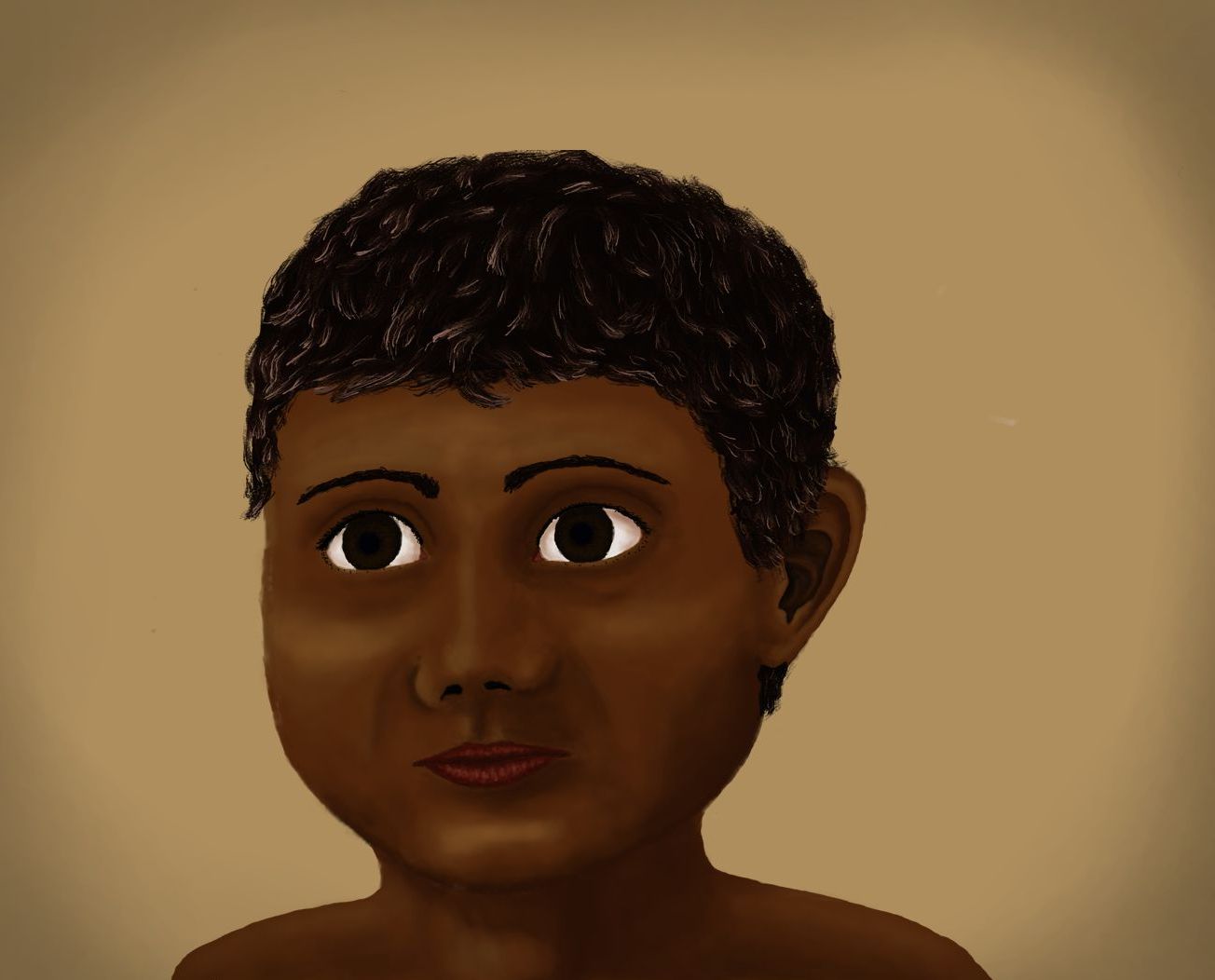
“Shapur” by Jonathan Sutton
“He was an orphan. With no parents to provide for him, he lived on the streets, if you could call it living. His skin, which was stretched over the bones of his malnourished body, bore the bruises of abuse. Three fingers on his right hand hung uselessly crooked. An enraged shopkeeper, who was tired of losing food to starving waifs, had smashed them. Unfortunately, angry shopkeepers were not the worst he had to deal with. Occasionally people (sometimes drunk) would beat him as a form of entertainment or as an object to vent frustration on. A few did things to him that he never thought or spoke about.
Then, everything changed. Sickness prevented him from eating for 2 days, and, when he recovered enough to move, he was desperately hungry. His desperation caused him to take stupid risks, so he got caught stealing bread. This sort of occurrence is so common that normally it would not be notable, and this story would end here with the death of one more orphan. However, a foreign King was in the city on a diplomatic mission, and he happened to notice this child. This King saw something in him no one else did, so he decided to show compassion to this child. He invited the boy to sit behind him on his horse and asked,
“Will you come with me and be my son instead of being an orphan?”
The orphan was struck dumb at the question for a time. Finally, he managed to squeak out,
“Me? What? Why?”
“Because I see who you are. You are an amazing person who has the potential to do great things; just the sort of person I want as a son.”
The child tried and failed to imagine what this meant, but there was one question burning in his mind.
“Does this mean that you will feed me?”
“Yes.”
“Every day?”
“Of course. I will give you plenty of food! You will never have to go hungry again.”
Again, the child tried and failed to imagine this, but it seemed to him that he would be provided with at least a few meals a week, even after taking into account the King’s obvious exaggeration.
“What do you want from me?” the orphan asked.
“To be my son.”
“What’s that?”
“It means we will be together and care for each other. You will spend time with me and learn from me.”
The child still didn’t understand this. What did the King mean by care for each other? Some of his playmates on the streets had fathers that beat them, so he wasn’t sure he wanted one.
Thoughts of always having food every day caused his head to swim. He didn’t know what to expect, but his hunger cried out louder than his doubts. If he could only get food, then he was sure he could find a way to survive the rest.
“Ok,” he whispered, hardly daring to look at the King. It was all incredibly overwhelming and seemed too good to be true.
The King laughed, loud, long, and joyfully. Then he declared,
“This child is now my son. He is my prince. I expect you to treat him the same way you treat me. Today I adopt him, name him Shapur, and declare him as my Prince and heir. The fact that he was an orphan is of no importance, and no one is to ever speak of it or treat him as such again. He is as much a prince as a child born in my own house.”
So the King took Shapur into his palace and treated him as his son and a prince of the realm. Surprisingly, this created difficulties for Shapur. When Shapur was given royal robes, he would only wear the undergarment because he was afraid of what the King would do to him if he ruined them. It’s not like it would be his fault. He had never learned to manage such things, but the King certainly wouldn’t be that understanding. He could never understand a poor orphan like him.
That night at supper he was seated with The King but avoided his eyes and touch. He snuck food away from the table, so he would have food the next time he was hungry. After supper, he was taken to his chambers. The bedroom was large and sumptuous with comfortable chairs, several large wardrobes, tables, and, best of all, a large, soft bed with a bedspread that reached the floor.
This last bit pleased Shapur. With the bedspread hanging so low, he could hide under there and while he slept. He briefly thought about stashing his food somewhere, but eventually decided it was safer to keep it on his person.
Shapur continued to behave like an orphan while The King continued treating him like a prince. Every day, the King would spend time with Shapur and teach him about what a prince was like. Shapur was uncomfortable with this because he could tell he acted nothing like a prince. He often wondered what the King was thinking during these conversations.
He tried to stop doing the things he did as an orphan, but his attempts were rather pitiful. Sometimes he could stop for a short time, but he always went back to his old habits again.
His food stash never got eaten because there was always plenty of food available, so it began to rot. The stench of it filled his room. He had gotten used to a clean room by this time, and the smell made him nauseous and too ashamed to allow anyone in. Some days, he would manage to go a whole day without sneaking food to his room. He was very proud of this. So proud, in fact, that his pride ran away with him the next time he saw the King.
“I would like to tell you something,” the Prince stated.
“Good, what is it?” the King asked, pleasantly surprised. Shapur rarely spoke to The King, but The King always wanted to hear what was on Shapur’s mind. So, he was very happy when the Prince wanted to talk to him.
“I’ve been sneaking food away from the table at mealtimes and stashing it in my room, but today I stopped doing that.”
The King grinned, “Good, now will you let me give you a hug?”
Shapur looked shocked, and his eyes dropped to stare at the ground again. “Um….I’ve got to…uh…go clean out my food stash. It.. um.. smells.”
“Oh, I can do that for you.”
This just made Shapur’s eyes widen in horror. “No, no, I’ll go do it.” And, with that, he fled to his room. The King watched him go and sighed.
This scene repeated itself over and over again regarding the various issues of how Shapur dressed, spoke, or behaved. However, the overall behavior of Shapur didn’t change. He could manage a change for a short while, but fear would always get the upper hand, drag him back into his old habits, and bury him in shame. He began to avoid the King more and more. The King had done so much for him, and he couldn’t even do simple things like dress properly. He had tried, but every time he started to put on the royal robes, he panicked and threw them off again.
This was the cycle he found himself in. He would try hard and have some success. Then he would fail and feel ashamed. Shame would cause him to despair and avoid the King even more. He would never be anything besides an orphan. The despair caused him to behave more like an orphan than ever before, while shame drove him to muster up yet another effort to change himself.
This cycle took its toll. Shapur would sometimes skip eating meals with the King and eat his rotten food instead. One day, when he was feeling particularly glum, he found some ragged clothes and decided they were all he was fit to wear. He would tell the servants how great the King was and how well he treated a poor undeserving orphan like himself, but he still wouldn’t accept a hug.
Finally, he began to sleep in the stable. One night while he was asleep, the King came out to see him. He covered him with a warm blanket and sat down waiting for him to wake. Shapur only slept fitfully these days, so he soon woke with a start. He stared at the King like a bird caught by a snake’s eye.
“Hello,” said the King with a smile.
Shapur scrambled to his feet. He knew he was in trouble now. “What are you doing here?” he asked.
“Being with you.”
“Huh?”
“Well, you don’t seem to want to be with me, so I come and spend time with you.”
“Why?”
“Because I love you. That makes me want to be with you.”
“But I wasn’t even doing anything. Weren’t you bored?”
The King grinned, “You would think so, wouldn’t you? But when you love someone, just being in their presence is special.”
This was too much for the Prince. So many confusing emotions rose and could not be stifled. They burst out heedlessly from the Prince’s mouth saying things he had never dared before.
“How? Why? What? I don’t understand. I’m an orphan! Can’t you see that? I dress like one, eat like one, talk like one, and act like one! You can’t prove otherwise! You are so good to me, but I still can’t act like you want me to. I’ve failed and shown everyone that you don’t know what you are doing. You picked a loser! You should kick me out! Why haven’t you? Maybe I should leave before you do. It would probably be better for both of us.”
“So why haven’t you left?” said the King who seemed strangely unruffled by this sudden outburst. In fact, there even seemed to be a smile lurking in his concerned eyes.
“I don’t know. You’re just so . . . so . . . good. After living here, I think I would die living anywhere else,” the Prince said gloomily. “I can’t stay and bring shame to both of us, and I can’t leave. I’m so stuck that I would have been better off dying in the streets.”
“I don’t think so,” The King smiled. “I love you, made you my prince, and named you Shapur. I know you act like an orphan. I expected this when I adopted you. That’s what you were as a small child, so that’s how you learned to act. Everything you learned then was aimed towards surviving one more day. You always had to take care of yourself. It takes time to understand what it’s like to be loved and cared for.”
“But I keep doing the same things wrong over and over again. I know better, but I never stop.”
“Now you are loved,” the King continued undisturbed, “Now I provide for you. These things are the difference between your old life and this one. If you want to learn how to be a prince you have to spend time with me and receive my love. When you receive my love, you will understand who I am. When you understand who I am, you will understand who you are because a prince is just like his father, the king. When you know who you are, you will act like yourself, my prince.”
“But that’s not who I am! I’m an orphan! Can’t you see how I hoard food, dress in rags, sleep in a stable, and hide from you and other people? I’ll never be able to stop!”
“You feel hopeless because you don’t accept that I adopted you. You think that your actions can make you who you are, but they can’t. You aren’t King. I’m the King. I decide how things in my kingdom are. No one under my rule can contradict anything I say, and that includes you! I say you are a prince, so you are. Nothing you say or do can change that.
As an orphan, your childhood was stolen from you. Please let me give it back to you. Let me take care of you, love you, and teach you how life really is.”
Shapur was in tears by the end of this. The abuse of his past hurt so much, and his failures stung him mercilessly. He was tired, so very tired from . . . everything.
“Ok,” he whispered. Then he collapsed.
The King caught him in his arms and held him close.
“I love you,” he whispered. And as Shapur lay there, he finally felt . . . contentment.
The inspiration behind this story lies in spiritual beliefs which have brought positive changes to my life. I believe we are all born separated from God, but God wants to be with us. He sees good in us that we cannot see, and he wants to restore us to our original design. If we let him, he will show us who we are. Since these beliefs have helped me, I wanted to share them, but I wasn’t sure how. Eventually, I settled on writing this allegory. I hope this helps you as it has helped me. May God bless you whoever and wherever you are.” ~Jonathan
Here is a link if you’re interested in checking out his blog!
 Classic Reads