
If you liked Harry Potter, you might like A Wizard of Earthsea. Both feature young boy wizards who become legends and attend wizarding school.
Overall, this was a good book that I recommend. However, the story can be a little slow at times, but that is mainly because it is a story of self-discovery and not just action. I also found the author’s style to be a little confusing at times.
From the Afterword:
To give you a taste of the intention behind this book, here’s a note from the author, Ursula K. LeGuin, as she looks back to when she first published it in 1968, at the end of the civil rights movement:
“The hero does what a man is supposed to do: he uses his strength, wits, and courage to rise from humble beginnings to great fame and power, in a world where women are secondary, a man’s world.”
“In other ways my story didn’t follow the tradition. Its subversive elements attracted little attention, no doubt because I was deliberately sneaky about them. A great many white readers in 1967 were not ready to accept a brown-skinned hero. But they weren’t expecting one. I didn’t make an issue of it, and you have to be well into the book before you realize that Ged, like most of the characters, isn’t white.”
“To be the man he can be, Ged has to find out who and what his real enemy is. He has to find out what it means to be himself. That requires not a war but a search and discovery. The search takes him through mortal danger, loss, and suffering. The discovery brings him victory, the kind of victory that isn’t the end of a battle but the beginning of a life.”
LeGuin distinguishes her story from others in that it is a fantasy without war in it. It also has persons of color as the main and supporting heroes.
At the time LeGuin wrote it, the civil rights movement was still in full swing. It was published in 1968, the same year Martin Luther King, Jr. was assassinated.
Mystery
The mystery LeGuin develops definitely kept me reading. A dark shadow haunts the main character, Ged, throughout most of the book. He greatly fears it, but doesn’t know what it is.
You don’t find out who or what the shadow is until the end, but the reveal is definitely profound and worth waiting for.
The Pride of Youth
LeGuin shows Ged’s impetuousness at times, and his desire to prove himself. Jasper, a student who is unimpressed with Ged’s abilities, really brings this out of him:
“He has either skill or power, or the doorkeeper wouldn’t have let him in. Why shouldn’t he show it, now as well as later? Right, Sparrowhawk?”
“I have both skill and power,” Ged said. “Show me what kind of thing you’re talking about.”
Then, Jasper takes the opportunity to show Ged what he can do, and Ged begins to pridefully defend himself and his abilities, while secretly feeling insecure.
It is Ged’s pride that eventually gets him into trouble, when he tries to raise the dead to prove his power to Jasper.
Philosophy of Language
I loved all the philosophy of language elements LeGuin had in Earthsea. One of these is the ability to know something’s true name.
This concept is introduced early, when Ged is learning from his master Ogion:
“When you know the fourfoil in all its seasons root and leaf and flower by sight and scent and seed, then you may learn its true name, knowing its being: which is more than its use. What, after all, is the use of you? or of myself?”
There is a constant distinction between calling something by a name and discovering the true name of something- which in an ontological sense is its essence.
Overall, an enjoyable read. I may circle back and read the next book in the series, but I have many others on my list at the moment.
My Upcoming Book Release
I am excited about my upcoming children’s fantasy novel, The Land in the Woods! It comes out June 4th on Amazon. Below is the cover and the blurb.
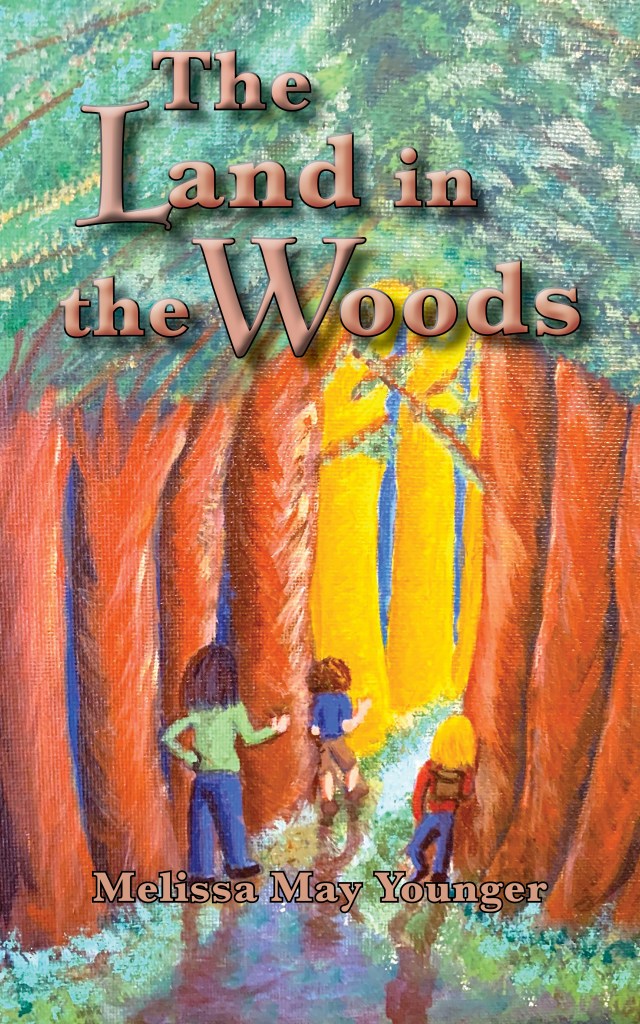
You never know what adventure is waiting for you in the woods.
While exploring the woods near their house, Janine, Maurie, and Bobby Wells find a portal to a magical land. This new land has strange laws and magical creatures, and a looming threat of encroaching darkness. The children are summoned to appear before the King of the land, to receive His protection.
As the children escape dangerous villains and meet the mysterious and kind Prince, they wrestle with questions of justice, forgiveness, and mercy.
This middle grade fantasy novel draws on themes and characters from classics such as Alice in Wonderland; The Lion, the Witch, and the Wardrobe; Pilgrim’s Progress; and Phantastes.
 Classic Reads