

In E.Nesbit’s captivating children’s story, The Railway Children, she provides political commentary that her readers at the time would have understood. In fact, the main mystery in the novel, of what happened to the children’s father, raises critical questions about the French government.
What Happened to the Father
Near the end of the story, the eldest girl, Bobbie, discovers the truth in the headline of an old newspaper clipping she finds:
What [Bobbie] had read was headed, ‘End of the Trial. Verdict. Sentence.’ The name of the man who had been tried was the name of her Father. The verdict was ‘Guilty.’ And the sentence was ‘Five years’ Penal Servitude.’ “Oh, Daddy,” she whispered, crushing the paper hard, “it’s not true–I don’t believe it. You never did it! Never, never, never!”
E. Nesbit. The Railway Children.
Bobbie then confronts her mother with the discovery, frightened that her father might be a criminal. Bobbie’s mother assures her of her father’s innocence:
“That’s all right,” said Mother. “It’s not true. And they’ve shut him up in prison, but he’s done nothing wrong. He’s good and noble and honourable, and he belongs to us. We have to think of that, and be proud of him, and wait.”
E. Nesbit. The Railway Children.
Why Was the Father Arrested?
The charges that he has been found guilty of are revealed later in the narrative. Bobbie listens to her mother as she shares the story of how she found out that the government was:
charging him with selling State secrets to the Russians — with being, in fact, a spy and a traitor. [Bobbie’s mother] heard about the trial, and about the evidence — letters, found in Father’s desk at the office, letters that convinced the jury that Father was guilty.
E. Nesbit. The Railway Children.
I found an interesting article that explains why Nesbit might have included this plot point in her story, as well as the Russian that the children meet at the train station who is nearly arrested based on a misunderstanding.
“The almost Kafkaesque arrest and unjust conviction of the children’s father was clearly inspired by the Dreyfus case, and the Russian who turns up at the station having escaped imprisonment in Siberia for writing a book about the Russian poor was inspired by the Russian exile Sergi Stepniak who along with his anarchist comrade Peter Kropotkin was a friend of the Blands.
Ironically, Stepniak was killed by an oncoming train as he walked down the line – an accident that may well have been suicide.”
Lyn Gardner, “Golden Age: She was an indifferent mother with a string of lovers – so how did E Nesbit come to write such an idealised celebration of Victorian family life?“
The Dreyfus Case
I was curious, so I decided to learn a little more about the Dreyfus affair.
As it turns out, Alfred Dreyfus was a Jewish-French artillery captain. He was imprisoned from 1804 to 1906 (the year that Nesbit published The Railway Children). He was charged for passing important military information to the Germans.
Evidence was found that Dreyfus was not a spy and that the real traitor was a French military officer, Major Ferdinand Walsin Esterhazy. But the evidence was covered up. This resulted in a political divide in France.
In 1899, Dreyfus found guilty again, then pardoned by the president. In 1906 Dreyfus was finally released. You can read more here.
It isn’t hard to see the parallels to the wrongful imprisonment with the father in The Railway Children. Nesbit is questioning, along with many French citizens at the time, the motives and brand of justice of the French government.
Yet, the family in Nesbit’s novel are not living in France, and the father is not abducted by the French government. It is as though Nesbit is saying that the injustices that happened in France could happen, or possibly are already happening, in England.
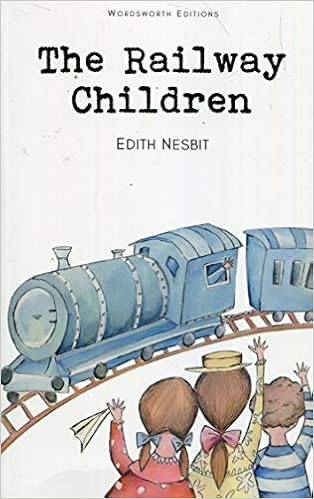
All in all, this is a layered, interesting, and entertaining children’s story. I loved the characters, the dialogue, and the many happy adventures. I highly recommend it if you get the chance to read it:
There’s also a movie version, free if you have Amazon prime, but I didn’t find the story as enchanting in this format:
 Classic Reads