Among them was that we would start trying for a child. We were blessed with a healthy pregnancy earlier than I thought, and it definitely made me rearrange all of my priorities.
First, I had to learn a lot and had many questions:
What can I expect? How do I need to change my routine? Is what’s happening to me normal?
Then, there was the energy drain and physical symptoms (morning sickness, anyone?).
Then, there was the planning. I am a huge planner, and wanted to plan everything from diet and exercise to birth plan and how to rearrange our apartment to accommodate a third (albeit tiny) person.
So, this year, since I’m due in early March, I’ll have to hold my goals more loosely.
There’s so much I can’t predict about how life will change with this new little boy, and I want to enjoy every moment with him. I don’t want to be stressed or pressured during this time.
However, I am a planner and goal-oriented type, so I HAVE to have some direction.
Here are some of my more modest goals (which my inner idealist struggles with):
Learn how to balance being a loving, caring wife and mother with writing and life things.
Continue freelance writing – take on as much as not to compromise my ability to care for my family, but enough to keep us afloat.
Work on some other writing projects I’ve wanted to dig into: my YA Jane Austen modern fanfic piece, nonfiction book on forgiveness or Jesus and mental health.
Blog about the books I’m reading, but don’t pressure myself to make the blogs so perfect.
That’s it! I am not going to add anything else to that list, because I think I will have my hands full.
And this year especially- I just want to enjoy being in the moment, and too many ambitions can distract from that.
What are some of your goals for 2022? Any life changes ahead?
There’s a reason I’ve been less active the past six months on WordPress…
I’m pregnant! I’m due March 8th with a precious baby boy.
With pregnancy, baby prep, publishing my second book and starting my Author Youtube channel, blogging (both writing and reading blogs) definitely took a back seat.
I went from meeting my weekly goal of 3 blogs/ week to…crickets. Slowly, I have begun to re-enter the blogosphere.
I plan to blog and read more blogs in the next couple of months, but all bets are off when the baby comes. Blogging could be a welcome respite and outlet, or it could feel like a burden.
There are so many unknowns with such a big life transition that I won’t put any expectations on myself. Ideally, I’d like to stay connected with the WordPress blogging world, but certainly not at the expense of my sanity 🙂
I’m truly looking forward to this next phase of life and to reading many books to my son, including my own children’s book series! Perhaps I will start reviewing younger children’s books on this blog as I read to him. Of course, I will read him many children’s classics 🙂
Whatever happens, I’m grateful to follow so many great blogs on here and to have others read mine, too!
Happy Blogging in 2022, Everyone!
If you want to check out my children’s middle grade fantasy adventure series, here are the links and descriptions.
You never know what adventure is waiting for you in the woods.
While exploring the woods near their house, Janine, Maurie, and Bobby Wells find a portal to a magical land. This new land has strange laws and magical creatures, and a looming threat of an encroaching darkness. The children are summoned to appear before the King to receive His protection, but must escape danger and villains along the way.
They also meet the mysterious and kind Prince, who helps them to wrestle with justice, forgiveness, and mercy.
This middle-grade fantasy novel draws on themes and characters from classics such as Lewis Carroll’s Alice in Wonderland; C.S. Lewis’ The Lion, the Witch, and the Wardrobe; John Bunyan’s Pilgrim’s Progress; and George MacDonald’s Phantastes and The Wise Woman. Part Christian allegory and part adventure story, this book will get your kids thinking about spiritual and moral concepts.
When Maurie, Janine, and Bobby Wells return to the mythical land of Eridu, they are given an important mission to fight the Darkness.
After deciphering ancient languages and intricate puzzles, the Wells children learn they must recover the King’s magical scroll to bring light back into His Kingdom.
But the road to finding the scroll is difficult, and they must team up with new friends and old foes, battling dangerous creatures and overcoming obstacles on their epic journey.
The children are guided by Prince and Neumatos, whose power and goodness continue to surprise them. Yet, when new and powerful enemies threaten their mission, the children and crew worry that their mission is doomed. Will Eridu be consumed by the Darkness? And how many can be saved before they are swallowed up completely?
This is the second book in the Adventures in Eridu. We recommend reading The Land in the Woods first!
Using mythological themes and creatures from history and children’s classics, these books will inspire your children’s imagination and teach them important values of faith, courage, and love.
This book has everything from magical sorceresses and knights to dragons and werewolves! It has a fellowship of adventurers like in The Hobbit and The Lord of the Rings and an ocean voyage similar to The Voyage of the Dawn Treader in The Chronicles of Narnia. It has danger, battles, and comic relief along the way, geared to entertain today’s young readers.
This is the kind of story that starts out bizarre and increasingly makes sense as it goes along.
It starts out like an ordinary fairytale, and has many typical fairy and folk tale elements (seven-league boots, magic, wizards, witches, kings, etc).
Yet, there is a self awareness in the story and in the main character from the beginning. The character knows her life is a story, and she has read many stories and seen that nothing special ever happens to the oldest child.
As she is an oldest child, she makes peace early on that she won’t have adventures… yet this sets her up as the perfect candidate to have an adventure happen to her.
The Inciting Incident
Ordinary Sophie is making hats for her widowed stepmother, slaving away without pay and planning to leave because she is being taken advantage of, when in pops a witch, who curses her. This pushes Sophie to take the leap and set out to seek her fortune, and hopefully lift the curse.
Under her curse, Sophie is disguised as an old woman. She finds satisfaction and freedom in this form, as she can act more bossy than usual and speak her mind. She ends up at the infamous Wizard Howl’s castle (which moves by magic, giving the book its name). There, she befriends the others in the castle and begins living her best life by cleaning the living daylights out of the filthy, magical place.
The Humor
I loved the humor in this story! From the witty narrator to Sophie’s crotchety behavior contrasting with Wizard Howl’s immature impulsivity, there’s a lot to enjoy.
Sophie’s cleverness and perspective also bring some laughs.
The Self-Discovery
One of my favorite things about this story was how much the protagonist learns about herself.
For instance, as an older woman, she gives herself permission to be stubborn and bossy. She discovers along the way that she enjoys acting that way, instead of merely letting others tell her what to do. She finds she doesn’t want to toe the line. In her own way, she rebels.
As she discovers more about herself, she also discovers she has magic. She always talked to inanimate objects, but eventually she realizes/ is told that her compulsive talking habit actually casts spells.
The Ending
There are many disparate bits of information thrown into the story: a previous wizard who disappeared, a King, and an enchanted scarecrow that follows Sophie and won’t leave her alone.
Everything comes together in a neat and tidy explanation at the end. All the disparate pieces have a purpose. As a writer, I admire the author’s ability to do this.
Interested in other Middle Grade Fantasy or hearing more about this book? I share some thoughts on my Youtube channel as well:
Free Children’s Middle Grade Ebook!!
Also, from December 25th-29th, 2021 My ebook The Land in the Woods, a children’s middle grade fantasy adventure story, is free on Amazon! Check it out!
They are fun fantasy adventure stories with Christian themes.
Here is the description:
When Maurie, Janine, and Bobby Wells return to the mythical land of Eridu, they are given an important mission to fight the Darkness.After deciphering ancient languages and intricate puzzles, the Wells children learn they must recover the King’s magical scroll to bring light back into His Kingdom.
But the road to finding the scroll is difficult, and they must team up with new friends and old foes, battling dangerous creatures and overcoming obstacles on their epic journey.
The children are guided by Prince and Neumatos, whose power and goodness continue to surprise them. Yet, when new and powerful enemies threaten their mission, the children and crew worry that their mission is doomed.
Will Eridu be consumed by the Darkness? And how many can be saved before they are swallowed up completely?
This is the second book in the Adventures in Eridu. We recommend reading The Land in the Woods first!
Using mythological themes and creatures from history and children’s classics, these books will inspire your children’s imagination and teach them important values of faith, courage, and love.
This book has everything from magical sorceresses and knights to dragons and werewolves! It has a fellowship of adventurers like in The Hobbit and The Lord of the Rings and an ocean voyage similar to The Voyage of the Dawn Treader in The Chronicles of Narnia. It has danger, battles, and comic relief along the way, geared to entertain today’s young readers.
Also, here is a video of how I did the painting, if you’re interested (with some relaxing music):
During Nanowrimo, I’ve been working on the third book in my adventures in Eridu series. Here’s a chapter I’ve written this past week and a video update on my writing progress at the end!
If you haven’t seen the first book in the series, The Land in the Woods, you should check it out on Amazon! It’s a children’s fantasy adventure story for ages 8-12.
It’s free on Kindle unlimited and will be free as an ebook for 5 days right before I release the second book, The Forgotten Scroll, on December 15th!
Chapter 5: Friend or Foe?
As it turned out, the stream was outside near another entrance to the building. Around the stream, green grass was visible on its banks. It appeared the snow could not exist where the stream’s water touched.
After the children drank their fill at the stream, they were eager to head back to the snow beast. They had never seen one before, and his whole existence was a mystery to them.
Aaron handed them each a small container to take water back with them in, which he said he had found from scrounging around in the building.
They headed back to the snow beast and arrived there quickly. To their surprise, it had regained consciousness. It struggled against the bindings and groaned pitifully, but could not break free.
When it saw the children and Aaron approaching, it gasped, “Please, you have to let me go!”
“It can talk!” Janine gasped.
“I’ve never met one that talks,” Aaron said. “Beware, this may be a trick of the sorcerer. He is said to be able to conjure great illusions.”
“He seems sad to me,” Bobby said. He went towards the beast and held out his water dish. “Want a drink?” he asked.
“Where did you get that water?” the beast asked.
“From the river behind the building,” Maurie said. Something about the beast made her want to trust it.
“Then, yes,” the beast said. Bobby poured a few drops into the beast’s mouth and it shivered and then gave a satisfied sigh.
“That is the only water I drink from,” the beast said. “It comes from Prince’s mountain. My brothers eat the snow, but it has made them wild and wicked.”
“Would they try to eat us?” Maurie asked.
“Yes,” the beast confessed. “But I would not, I promise you.”
“Why were you trying to get us?” Bobby asked.
“You attacked me. I was only trying to get away from the sorcerer.”
“The sorcerer?” Aaron asked, sounding alarmed. “Is he here?”
“Yes and no,” the beast replied. “His illusions are here, but I think he lives at the edge of the ruins. He tricks my brothers into doing his bidding, and would do the same to me if I didn’t run from him.”
Maurie glanced up at the portrait on the wall. She hoped that the sorcerer wasn’t somehow watching them through it, or wasn’t tricking them into something bad without them knowing it.
“Do you know much about the sorcerer?” Maurie asked the beast.
“I know he is suspected of being in league with the Amarok, and that is enough for me,” the beast said with a shiver. “Now, will you untie me? These ropes are cutting into my paws.”
Maurie looked at the ropes and saw that they did look tight and were leaving red marks on him as he struggled.
“Then don’t struggle,” Aaron said. Maurie glanced at him suspiciously. He seemed to have no sympathy for the creature and she hoped he wasn’t still intending for them to eat it for dinner.
“Are you a good snow beast?” Bobby asked, gently patting the top of the beast’s head. He let out a sort of purr that gave the impression that he enjoyed it.
“A good beast?!” scoffed Aaron. “I don’t believe it for one minute. I’ve never seen one.”
“Maybe because you are too quick to kill us before you find out!” snarled the beast. “You have killed many of my brothers, some of them still good like myself.”
The children looked at Aaron in shock. Maurie wondered how he would react to such an accusation.
“I have to eat,” Aaron explained. “And so do the snow beasts. It’s kill or be killed.”
“Not all of us would kill you,” the beast argued, struggling against its bindings.
“I wouldn’t want to wait and find that out the hard way,” Aaron said.
“Maybe we should untie him and let him free,” Maurie suggested. “After all, he didn’t try to hurt us. I believe him.”
“Better safe than sorry,” Aaron disagreed. “We must keep him tied up as long as we’re here. Especially as he found a way inside. He might alert the others to come in.”
“Nothing wicked can enter here,” the snow beast said with a sigh.
“But if this is enchanted by the sorcerer,” Janine wondered, “then why would he only want good things to enter?”
“It’s not enchanted by the sorcerer. The sorcerer tried to take it over when he cursed the land, but he could not undo Prince’s magic, which runs through the stream and in tunnels underneath this building,” the beast explained. “The legend is well-known among the snow beasts.”
“But you said,” Maurie said, turning to Aaron. She paused, confused. Aaron had told them a very different story, and she didn’t know who to believe. Both Aaron and the snow beast seemed to be able to drink Prince’s water, so she was inclined to trust them both.
“I can only guess at what happened here,” Aaron admitted. “I haven’t found hard proof of my theories, but I have learned not to trust the snow beasts. Don’t put too much stalk in what he says.”
The beast gave an exasperated groan and then sighed. “If you would be so kind as to untie me at least when you leave,” he said.
Maurie pitied the beast and thought Aaron was being unfair. Although the beast looked fierce, she recalled that even Prince could transform into fearsome creatures.
They ate the rest of their treats from Mrs. Goodwin and drank some of the water from their vessels.
“Since the snow stopped, we should leave,” Janine said.
Aaron shook his head. “If you want to leave the cursed ruins, you have to do it at dawn. It’s a long journey across them, and by the time you get out it will be night. It’s still too dangerous to travel at night, especially in this part of the land.”
“Well, what are we going to do today, then?” Maurie asked.
“I suggest gathering what supplies you can find from this place,” Aaron remarked. “There’s not much but its better than nothing.”
The children set off to explore the building while Aaron watched the beast. Maurie hoped Aaron wouldn’t decide to slaughter it and have it for dinner while they were away. “Prince,” she said softly. “Protect our new friends.”
The other rooms in the dilapidated building were not better than the one they had been in. Some had small trinkets that told them someone had lived there, long ago. There were some pots and a few dolls, toys, and decorations.
Janine found some more rope on other sets of curtains and tied some of it around her waist, securing the rest by making a loop at her side. Maurie giggled. “You look like an explorer,” she said.
Janine smiled. “Well, I guess we are explorers.”
“Yayy!” said Bobby. “Hey guys, what about this?” he held up a small silver knife he had found.
“That’s a bread knife,” Janine said knowledgeably.
“Well, maybe we will need it for bread,” Bobby said. Then he squinted his eyes mischievously. “Or to fight our enemies,” he said with a slight growl in his voice.
Maurie found some pretty peach colored cloth with velvet roses on it, but wasn’t sure it would be useful. She lifted it up to examine it, and discovered it was a shawl. She saw a small satchel made from the same cloth underneath it. “Perfect!” She secured the satchel over her shoulder.
Aaron was right: there wasn’t much to find. After they had gathered some things, they went back to the main room. There, they passed the day playing I Spy and listening to Aaron’s stories about how he had survived in the ruins.
“Why don’t you leave with us tomorrow?” Bobby asked.
Aaron shook his head. “I can’t. You see, the reason I came here in the first place is the reason I can’t leave. My wife and child were taken by the creatures of darkness, and I found out they were enlisted as servants in the sorcerer’s fortress. I won’t leave here until I’ve found them.”
“When we find Prince, we can ask him to help you,” Maurie assured Aaron.
“Thank you,” Aaron said. “You are very kind.”
“Why don’t you just find the fortress and break in?” Bobby wondered.
“It is guarded by illusions,” Aaron said. “The closer you get to it, the harder it is to find.”
The children went to bed that night feeling sorry for both Aaron and the beast. It seemed terrible to be trapped by the curse, but the sorcerer sounded too powerful for them to take on on their own.
Somehow, they would find Prince and break the curse, Maurie promised herself.
Ever since I heard this story as a little girl, I was captivated. George MacDonald has a way of telling fairytales/ fantasy stories in a way that connects with a very human experience.
The young princess in the story is a curious and naive sort, which drives her to meet and trust many different characters, including the old woman she meets in a tower and a young boy who is “not her class.”
You can guess what the Goblins in the story represent: the worst of humanity, the abstract “evil” in the world, or what have you. Yet, one thing is clear throughout: they are wicked, selfish, and petty villains bent on getting revenge on the King and his household.
On the face of it, The Princess and the Goblin is simply a fun fairytale where good prevails and evil is defeated. Yet, George MacDonald has this way of weaving grace and truth into his stories that spark a deeper, spiritual interest.
Below are some video versions of the Princess and the Goblin (and the last is a hilarious version!).
So far, I’ve written over 5,000 of the 30,000 words I am shooting for during Nanowrimo on my WIP, The Cursed Ruins. It’s the third book in my children’s fantasy adventure series, and the second is being edited so that I can publish it in December!
Here’s a chapter I wrote this week:
Chapter 2 – Christmastime
Two weeks later, the house was abuzz with activity. Their aunt Bertha was coming to visit for a few weeks and they had to rearrange their house to accommodate her. Mr. and Mrs. Wells brought Maurie’s bed into Janine’s room, which the girls would be sharing for the holidays.
Then, they had to set up a cot in Maurie’s room and get some of her things out of the way. They vacuumed, cleaned, baked, and tidied until the house was immaculate and smelled of lovely gingerbread.
“Can’t we try some before she comes?” Bobby begged, peering at the cookies on the counter. They had cut out some gingerbread men and shortbread cookies and had to let them cool before they could decorate them.
“Not yet! They’re a special treat,” Mrs. Wells reminded him. Her phone buzzed and she looked down at it. “She’s almost here!”
Janine groaned, and Maurie nodded. She felt the same way. The children disliked aunt Bertha because she always told them they should do things differently and bossed them around.
Just then, there was a knock on the door. Aunt Bertha barely waited for the door to be unlocked before she barged in, dumping snow on the doorstep. She took off her boots and dropped them onto the floor and then took off her large purple snowcoat.
“Be a dear and hang this up,” she said to Janine, who was closest to her. Janine pursed her lips but complied.
“Don’t just stand there,” Aunt Bertha reprimanded Maurie. “Give me a hug.”
Maurie stood as still as a statue but Mrs. Wells gave her a gentle push from behind and she knew she had to do it. She stepped forward and held her arms up and Aunt Bertha enveloped her in a crushing embrace. Maurie’s nostrils were filled with the scent of mothballs and potpourri. She did her best not to cough or gag. In fact, it was somewhat difficult to breathe until the hug was over.
“Now can we eat the cookies?” Bobby asked.
“Cookies? You shouldn’t be eating cookies,” Aunt Bertha said with a laugh. “Those must be for Santa. Little boys like you need to eat carrots and good things.”
“I do eat healthy things,” Bobby replied, nonplussed by his Aunt’s manner.
“Well, then, more for the adults!” She said.
Maurie’s face reddened slightly. She could feel herself growing irritated with Aunt Bertha already. She clenched one of her fists slightly. She wouldn’t let her ruin Christmas for them, she just wouldn’t. “We made the cookies for everyone,” she said, hoping this would settle things.
Aunt Bertha ignored Maurie’s comment and turned her attention to Bobby, who she gave an extra big hug to so that his eyes nearly bugged out. (970)
After Aunt Bertha was settled in, the children decorated the cookies with red, white, and green icing.
“Can we bring some to Mrs. Goodwin?” Bobby asked. “She always shares her cookies with us.”
“Yes, but make sure you’re quick about it. There’s a blizzard coming in and it should be starting soon.” As soon as Mrs. Wells said that Maurie looked out the window and saw some white sparkling snowflakes start to fall.
“Let’s get bundled up!” Maurie cried out excitedly. It felt like quite the adventure to be racing against the blizzard to deliver some Christmas cookies.
The children packed up the cookies carefully, selecting some of the prettiest ones. “Careful! The icing isn’t dry yet,” Janine warned.
Once the cookies were packed and the children were bundled, they set out down the street. The snow was falling quickly at that point and there must have been over an inch of it on the ground.
“Hurry!” Janine commanded as the snow began to pick up. A gust of wind blew some of it in their faces.
They hurried onto my porch and pounded on my door. “Mrs. Goodwin, we’re here to give you some Christmas cookies!” Bobby shouted over the wind.
I opened my door and saw my three young snow-covered friends. “You look freezing!” I commented. “Step inside for a moment.”
The children crossed the threshold, bringing a load of snow with them. I laughed as it fell off them onto my floor. Bobby glanced up at me with an apologetic expression. “Oops.”
“Don’t worry about that,” I said. “It will melt, and I’m sure Sally will enjoy licking it up.” I beckoned to my old, white furry Samoyed friend who was lying on her bed in the corner. She barked happily as if in agreement.
“Here’s the cookies,” Maurie said, handing them to me. “We hope you like them.”
“Merry Christmas!” Janine said. The children turned around as if they were about to leave.
“Hold on,” I said. “I’ve got something for you three.”
They closed the door and waited patiently at the entryway while I went to find the three small gifts I had wrapped in green shiny paper the day before.
“Here,” I said, handing them out. “A little something I thought of from the stories you told me.”
“Wow, thanks!” Bobby exclaimed. I took the cookies from them and set them on the counter.
I narrowed my eyes at them suspiciously. “You haven’t had any more adventures lately, have you?”
The children shook their heads sadly. “Though I wonder,” said Maurie, “what Eridu is like at Christmastime.”
“Maybe Santa goes there, too,” Bobby said.
“Santa’s a legend,” Janine reminded Bobby.
“From what you told me, it sounds like the place where some legends are true,” I surmised.”Now take care as you head back. That storm is picking up.”
I opened the door and the children went back out into the cold. What happened next was rather unbelievable. One moment I saw them heading into the blizzard as snow whipped around wildly. The next moment it was as if they had vanished. I guessed it was an effect of the denseness of the storm at the time, but as I later found out, my three friends had been transported back to Eridu again.
They didn’t know they were in Eridu at first, as there was a snowstorm there, in the area they had been transported to, as well.
“Just a little further,” said Janine as they pressed onward. “I see a light.”
The children went towards the light and gasped. “Where did this come from?” Maurie asked. It was a giant structure of ancient design, and looked like the top half had mostly crumbled away. The whole thing was covered in a thick layer of snow and ice, but a lit doorway at its base looked inviting.
“Let’s go inside,” Bobby suggested. “I’m fr-rr-rr-eezing!”
The children approached cautiously, unsure of where they were. They stepped inside and dusted themselves off. The light they had seen came from a torch, which was fixed to the wall.
“Where is this place?” Janine wondered aloud.
Maurie looked at the walls and saw some markings that looked like a kind of writing. She recognized them as some they had seen the last time they were in Eridu. “Guys,” she said, pointing to her discovery. “I think I know where we are.”
How about you, fellow writers? How is your progress going and what are you working on?
Here’s a little more about my strategies and goals for Nanowrimo:
If you’re writing or have finished writing a book, you might be considering whether the self or traditional publishing route is best for you.
Below, I weight the pros and cons of each publishing route.
Which Makes More Money?
As you will see in this video, you can make money through self or traditional publishing. The amount you make with each, however, varies based on a few factors.
Other Factors to Consider
Let’s talk about some of the benefits of self-publishing and traditional publishing! In this video we will answer these questions:
Can I become a famous author self-publishing or through traditional publishing?
Which route is better to get my voice out there and be heard?
How can I reach the people I want to help through my writing? self- or traditional publishing?
Which allows me to have more creative control: self-publishing or traditional publishing?
After taking a few months off for life things, I will be resuming blogging about some books I’ve read. I will also share more about the upcoming sequel to my children’s fantasy novel, The Land in the Woods.
If you are a fan of wacky fantasy or postmodern literature, this is a must-read!
About the Author
This classic children’s fantasy novel was written in 1979 in German, by author Michael Ende. Ende was a famous children’s writer, who was heavily influenced by surrealism from a young age, as his father Edgar Ende was a painter.
From his author website, Michael Ende, “believed it was necessary to reconnect the disparate threads of modern life in a new poetic mythology for the contemporary age. In line with the romantic tradition, his quest for the magic word was a search for a story that would conjure the essence of the world as we know it.”
The Book vs. the Movie
The first third of the book is basically exactly like the 1984 movie, up until the end. Bastian is bullied, runs into a book shop, and steals the neverending story to read in his school attic instead of attending class.
Slowly, the reader is drawn into Bastian’s experience of reading the book while Bastian is being drawn into the story he is reading. In fact, the lines between the real and fictional world are increasingly blurred to the degree that when one of the characters is looking in a mirror, he sees Bastian through the mirror in the school attic.
The main difference between the book and the movie is when Bastian calls out the Child Empress’ name it is only the beginning of his adventures. After that, the story becomes increasingly meta, and bizarre. Yet, the author has a purpose in this.
Post-Modern Literature or Surrealism?
Is The Neverending Story post-modern? I would have to say yes.
I liked how one blog explained post-modern literature: “Parody and pastiche serve to highlight the self-reflexivity of Modernist and Postmodernist works, which means that parody and pastiche serve to remind the reader that the work is not “real” but fictional, constructed.”
While in the world of the story, Bastian tells stories which become true.
Also, at different points a character in the story recounts “The Neverending Story,” starting with the moment Bastian walks into a book store. At that moment, Bastian is in the story, listening to a story about him discovering the story (which he is now in). I had to chuckle at Ende’s mind games.
On the other hand, this story is also heavily influenced by surrealism, which “can be defined as an artistic attempt to bridge together reality and the imagination. Surrealists seek to overcome the contradictions of the conscious and unconscious minds by creating unreal or bizarre stories full of juxtapositions.”
This story is incredibly meta and pokes fun at itself throughout. The main character, Bastian, who is reading a story, gradually becomes a character in the story. Yet, because he comes from the real world, he is able to invent and create in the fictional world. This is where the story becomes truly bizarre, as a child begins to dictate the course of the narrative and affect the makeup of Fantastica.
Yet, as he discovers, Bastian is still bound by the rules of the world. For instance, like others in Fantastica, he can only meet the Child Empress once. He also only has true power to create when holding the Empress’s medallion, a power which belongs exclusively to the story and not him.
You can see the increasing blur between reality (represented by Bastian) as he encounters a world of imagination (Fantastica). Interestingly enough, the more time he spends there creating, the more he loses touch with the “real” world.
Yet, Bastian must spend time there, for Fantastica is in danger of being lost.
Imaginary Things Become Lies
How Ende talks about the residents of Fantastica is also interesting. They are all created and named by those outside their world. They rely on the imagination of real people for their continued existence.
Yet, Fantastica is in jeopardy because people have stopped visiting the world of imagination. To become its savior, Bastian must find a way to bring knowledge of it back with him.
However, if the creatures in Fantastica were to ever enter the real world, they would become lies. And by the second, as Bastian continues to create in Fantastica, he loses more of himself.
You’ll have to read the story to find out more!
It is very difficult to describe how fun this book was to read and the trip it took me on in a single blog, but I have tried. 🙂
If you enjoy wacky, creative fantasy, especially the kind that makes you think deeply, this is the book for you!
As a young girl, I knew fairies weren’t real, but it was fun to imagine what it would be like if they were.
I had a wild imagination and could create fantasy worlds and adventures for myself and my younger siblings in our imaginary games (the older ones, naturally, wanted to dictate what we would play instead).
I read Fairytale: A True Story, the novelization based on the movie, when I was in fourth grade. I didn’t remember the story, but the concept captured my imagination.
The story is based on two young cousins, Elsie and Frances, in 1917. They take pictures of “fairies” for their mother/aunt, who is grieving the loss of her son Joseph. The mother is looking for something to believe in, such as angels or fairies, to connect her to Joseph.
The film version has historical cameos from characters such as Harry Houdini and Sir Arthur Conan Doyle. Doyle is portrayed as one who believes in fairies, while Houdini, being an illusionist, sees through the girl’s ruse but doesn’t rat them out.
Throughout the story, there are hoards of people who want to believe in fairies because it gives them hope, especially in war times.
The film is based on the real story of two girls who took photographs with “fairies” and became famous for it. The photographs were found to be authentic, thus making people believe the fairies were real.
Yet, the girls did something simpler than faking a photograph- they used drawings of fairies from “Princess Mary’s Gift Book,” with hat pins to hold them up. They simply took pictures of themselves with the drawings.
The film asks whether it is moral to make others believe in something that isn’t real if it gives them hope. I enjoyed revisiting the story and history, but I do think the girls shouldn’t have let the hoax go so far. Hope, when rightly placed, is a good thing, but I think misplaced hope can be dangerous and lead to an endless wild goose chase, as it did for many in this film.
You can check out The Land in the Woods on Amazon if you haven’t yet (link below).
It is now available on Kindle- free for Kindle Unlimited users and $0.99 for others.
You can buy this middle-grade fantasy adventure story for a child you know between the ages of 9 and 12, or for yourself! It makes a great gift and a fun summer read.
Here’s the blurb:
The woods can be a magical place. At least, that is what young Maurie, Janine, and Bobby Wells find when they discover.
There, they must face dangers and overcome their fear, envy, and resentment. They must learn to trust Prince as he guides them to the King.
As their beliefs are tested and reshaped, the children learn and grow. They marvel at the wonders, magic, and strange creatures in the land. If they ever get home, they will have quite the tales to tell!
Also, here’s an author reading of the first chapter:
Meanwhile,
I have just finished the Neverending Story and am more than halfway through Howl’s Moving Castle. They are amazing stories and page-turning adventures! I am excited to share about each of them later in a full-length blog. Stay tuned 🙂
I wanted to share my author reading of the first chapter of my new children fantasy novel, The Land in the Woods. You can pass this along to a child you think might enjoy it- the book is for ages 9-12.
Here’s the blurb:
You never know what adventure is waiting for you in the woods.
While exploring the woods near their house, Janine, Maurie, and Bobby Wells find a portal to a magical land. This new land has strange laws and magical creatures, and a looming threat of encroaching darkness. The children are summoned to appear before the King of the land, to receive His protection.
As the children escape danger and villains and meet the mysterious and kind Prince, they wrestle with questions of justice, forgiveness, and mercy.
This middle grade fantasy novel draws on themes and characters from classics such as Alice in Wonderland; The Lion, the Witch, and the Wardrobe; Pilgrim’s Progress; and Phantastes.
Here’s the Book Promo Video I created, which tells you a little more about my new children’s fantasy book, The Land in the Woods. It is for ages 9-12, and is an adventure story about three children that includes Christian themes.
Here’s the blurb:
You never know what adventure is waiting for you in the woods.
While exploring the woods near their house, Janine, Maurie, and Bobby Wells find a portal to a magical land. This new land has strange laws and magical creatures, and a looming threat of encroaching darkness. The children are summoned to appear before the King of the land, to receive His protection.
As the children escape danger and villains and meet the mysterious and kind Prince, they wrestle with questions of justice, forgiveness, and mercy.
This middle grade fantasy novel draws on themes and characters from classics such as Alice in Wonderland; The Lion, the Witch, and the Wardrobe; Pilgrim’s Progress; and Phantastes.
I’m excited to announce that my debut children’s fantasy novel, The Land in the Woods, is coming out this Friday, June 4th!
You can buy this middle-grade fantasy adventure novel for a child you know, ages 9-12. It makes a great gift, and makes a fun summer read.
Here’s the description:
You never know what adventure is waiting for you in the woods.
While exploring the woods near their house, Janine, Maurie, and Bobby Wells find a portal to a magical land.
This new land has strange laws and magical creatures, and a looming threat of encroaching darkness.
The children are summoned to appear before the King of the land, to receive His protection.
As the children escape danger and villains and meet the mysterious and kind Prince, they wrestle with questions of justice, forgiveness, and mercy.
This middle-grade fantasy adventure novel draws on themes and characters from classics such as Alice in Wonderland; The Lion, the Witch, and the Wardrobe; Pilgrim’s Progress; and Phantastes.
Here’s the Amazon link:
Stay tuned! I will be sharing excerpts, book promo videos, and behind the scenes about making and publishing my book.
I will continue with blogging about some of the classic books I am reading, too, and might even share how some of those influenced my writing!
I decided to read some of the most popular middle-grade (ages 8-12) fantasy books on Amazon, and I am really enjoying it so far!
The Neverending Story (Die Unendliche Geschichte)
Written in 1979 by German author Michael Ende, and translated into English by Ralph Manheim in 1983, this classic children’s fantasy work is definitely worth the read! I am only a third of the way through it, but I am already admiring the post-modern elements, creativity, and fast-moving plot. I can’t help but see the movie as I’m reading it, and it’s really taking me back to my childhood (and childhood imagination) in a good way.
If you’re not familiar with it, its about a boy named Bastian who is bullied, finds a fantasy book in a bookstore, steals it and reads it in secret. The main story is the book, but Ende plays with the line between imagination and reality as the boy finds himself increasingly drawn into the story until he becomes a part of it.
Howl’s Moving Castle
I was intrigued by the unique plot and popularity of this one, and am looking forward to reading it next. It was written by English author Diana Wynne Jones and first published in 1986.
Here’s the description:
“Sophie has the great misfortune of being the eldest of three daughters, destined to fail miserably should she ever leave home to seek her fate. But when she unwittingly attracts the ire of the Witch of the Waste, Sophie finds herself under a horrid spell that transforms her into an old lady. Her only chance at breaking it lies in the ever-moving castle in the hills: the Wizard Howl’s castle. To untangle the enchantment, Sophie must handle the heartless Howl, strike a bargain with a fire demon, and meet the Witch of the Waste head-on. Along the way, she discovers that there’s far more to Howl—and herself—than first meets the eye.
In this giant jigsaw puzzle of a fantasy, people and things are never quite what they seem. Destinies are intertwined, identities exchanged, lovers confused. The Witch has placed a spell on Howl. Does the clue to breaking it lie in a famous poem? And what will happen to Sophie Hatter when she enters Howl’s castle?”
Ella Enchanted
I am rereading this book, as I read it when it first came out in 1997 (I was 9!). I absolutely loved this book and related a little too much to Ella, who is forced to be obedient all the time. It’s not only a clever twist on the story of Cinderella, but I loved the world Gail Carson Levine created, and how clever and book smart Ella was (she could speak ogre!). I felt like they lost some of that when they translated this story into the movie with Anne Hathaway, though I still enjoyed the film as a separate story.
The Adventurers Guild
This is the most modern book I am reading (published in 2017), and is written by Zack Loran Clark and Nick Eliopolus. It’s very highly reviewed by others, and I like the premise.
Here’s the description:
“In one of the last cities standing after the world fell to monsters, best friends Zed Kagari and Brock Dunderfel have high hopes for the future. Zed desperately wishes to join the ranks of the Mages Guild, where his status as Freestone’s only half elf might finally be an asset. Brock, the roguishly handsome son of merchants, is confident he’ll be welcomed into the ranks of the Merchants Guild.
But just as it seems the boys’ dreams have come true, their lives take a startling turn . . . and they find themselves members of the perilous Adventurers Guild. And when the boys uncover a conspiracy that threatens all of Freestone, Zed, Brock, and their new allies-Liza, a fierce noble, and Jett, a brave dwarf-must prove their worth once and for all.”
Also, I saw that the Shadow and Bones books are very popular (now a Netflix series). I started reading a review and they seemed very interesting and engaging. I may pick those up at some point.
If you liked Harry Potter, you might like A Wizard of Earthsea. Both feature young boy wizards who become legends and attend wizarding school.
Overall, this was a good book that I recommend. However, the story can be a little slow at times, but that is mainly because it is a story of self-discovery and not just action. I also found the author’s style to be a little confusing at times.
From the Afterword:
To give you a taste of the intention behind this book, here’s a note from the author, Ursula K. LeGuin, as she looks back to when she first published it in 1968, at the end of the civil rights movement:
“The hero does what a man is supposed to do: he uses his strength, wits, and courage to rise from humble beginnings to great fame and power, in a world where women are secondary, a man’s world.”
“In other ways my story didn’t follow the tradition. Its subversive elements attracted little attention, no doubt because I was deliberately sneaky about them. A great many white readers in 1967 were not ready to accept a brown-skinned hero. But they weren’t expecting one. I didn’t make an issue of it, and you have to be well into the book before you realize that Ged, like most of the characters, isn’t white.”
“To be the man he can be, Ged has to find out who and what his real enemy is. He has to find out what it means to be himself. That requires not a war but a search and discovery. The search takes him through mortal danger, loss, and suffering. The discovery brings him victory, the kind of victory that isn’t the end of a battle but the beginning of a life.”
LeGuin distinguishes her story from others in that it is a fantasy without war in it. It also has persons of color as the main and supporting heroes.
At the time LeGuin wrote it, the civil rights movement was still in full swing. It was published in 1968, the same year Martin Luther King, Jr. was assassinated.
Mystery
The mystery LeGuin develops definitely kept me reading. A dark shadow haunts the main character, Ged, throughout most of the book. He greatly fears it, but doesn’t know what it is.
You don’t find out who or what the shadow is until the end, but the reveal is definitely profound and worth waiting for.
The Pride of Youth
LeGuin shows Ged’s impetuousness at times, and his desire to prove himself. Jasper, a student who is unimpressed with Ged’s abilities, really brings this out of him:
“He has either skill or power, or the doorkeeper wouldn’t have let him in. Why shouldn’t he show it, now as well as later? Right, Sparrowhawk?”
“I have both skill and power,” Ged said. “Show me what kind of thing you’re talking about.”
Then, Jasper takes the opportunity to show Ged what he can do, and Ged begins to pridefully defend himself and his abilities, while secretly feeling insecure.
It is Ged’s pride that eventually gets him into trouble, when he tries to raise the dead to prove his power to Jasper.
Philosophy of Language
I loved all the philosophy of language elements LeGuin had in Earthsea. One of these is the ability to know something’s true name.
This concept is introduced early, when Ged is learning from his master Ogion:
“When you know the fourfoil in all its seasons root and leaf and flower by sight and scent and seed, then you may learn its true name, knowing its being: which is more than its use. What, after all, is the use of you? or of myself?”
There is a constant distinction between calling something by a name and discovering the true name of something- which in an ontological sense is its essence.
Overall, an enjoyable read. I may circle back and read the next book in the series, but I have many others on my list at the moment.
My Upcoming Book Release
I am excited about my upcoming children’s fantasy novel, The Land in the Woods! It comes out June 4th on Amazon. Below is the cover and the blurb.
You never know what adventure is waiting for you in the woods.
While exploring the woods near their house, Janine, Maurie, and Bobby Wells find a portal to a magical land. This new land has strange laws and magical creatures, and a looming threat of encroaching darkness. The children are summoned to appear before the King of the land, to receive His protection.
As the children escape dangerous villains and meet the mysterious and kind Prince, they wrestle with questions of justice, forgiveness, and mercy.
This middle grade fantasy novel draws on themes and characters from classics such as Alice in Wonderland; The Lion, the Witch, and the Wardrobe; Pilgrim’s Progress; and Phantastes.
I finally finished formatting and uploading all the components of my book to Amazon, complete with all the blurbs and keywords. Now, it is under review. I will order a copy for myself before it goes live.
In the meantime, I thought I would share some things I learned along the way. I have been learning a lot in this process.
If you are self-publishing, I hope you find these helpful!
Think about all the book components you want to include at the beginning and it will make the process go much faster! Remember that you need a copyright page, a title page, a table of contents, etc. I suggest doing an author page because you can’t fit much about the author on the back cover.
Consider adding an excerpt of your next book (or one you’ve already published) as a “teaser” at the end. Keep your readers coming back for more 🙂
Make sure your book is at least 100 pages, or Amazon will tell you it is too narrow for the spine.
The rule of thumb with book formatting is, don’t try anything fancy. Save your creativity for your content. Professional book formatting will allow for easy reading. Pick simpler fonts, align paragraphs and headings, etc.
Though many people advise you to download a template, plug it in to Canva, and make your book cover there, Amazon has a tool that allows you to create your book cover with less steps, and more checks. I’ll let you know how it turned out when I get the preview copy in my hands, but so far I’d say that method is easier.
Make your fonts match. This is an easy way to make your book look a little more professional. Since my book is fantasy, I went with Baskerville. If you use Arial, Times New Roman, or another basic font, you could make the title a bit of a fancier font. But for the most part, especially if this is your first book, I’d say use the same font/ family of fonts.
That’s all I have right now, but I’ll share more updates, tips and resources along the way.
My middle grade fantasy novel, The Land in the Woods, will be launched June 4th. I am very excited!
I am excited to share the book cover to my upcoming debut children’s novel, The Land in the Woods!
If all goes well, I plan to publish it June 4th on Amazon.
The story is about three siblings who find a magical land in the woods. They meet various creatures and encounter dangers.
The children must make moral decisions and learn and grow along the way. They must meet the King of the land, who they fear, with the help and protection of His Son, the Prince.
It is a Christian allegory after the tradition of The Lion, the Witch and the Wardrobe, Pilgrim’s Progress, and The Wise Woman.
I watched many videos and read lots of material on the internet to figure out how to make a book cover. I also just played around with various programs and effects before I found something I liked.
I painted the illustration and used Adobe InDesign for the font.
This may not be the absolute final version, but it’s close enough to call this a cover reveal.
I will share some resources and tips in another post.
This week, I’ve been formatting my children’s fantasy novel, The Land in the Woods.
Once I got the formatting process down, it went pretty quickly. I was using Adobe InDesign, which allows you to make text presets that you can easily apply to a body of text.
As I got closer to the end, I got very excited.
I’ve never had a problem with creating a concept and telling a story. I’m not nervous about whether someone will like my book or not based on the content, because that is largely a matter of taste.
I have been concerned, however, about learning how to edit and format my book well. I believe after a year of learning, I have finally arrived.
I feel confident in the work I’ve put into this book, and I’m excited to see a print copy of it later this month!
After watching Becca’s video (which I will post below for those who missed it in the last blog), I was able to do the book formatting for about 30,000 words (it’s a middle grade novel) in about 5 hours total. I spend the most time getting all of my “steps” set up.
Stayed tuned for my book cover reveal tomorrow, along with some more self-publishing helps!
I have finished editing my manuscript for the fourth time, and have started to format it. I am using Adobe InDesign, but there are a number of programs you can use to format your manuscript to upload it to Amazon.
I thought I would share some resources and document my journey on my blog. I hope some of these are helpful to you if you are self-publishing.
Great InDesign Formatting Video Tutorials.
This is the video I have been using to help me to navigate Indesign. This is a tutorial for text only. Becca does a great job explaining the process!
If you are using InDesign that has images, such as a children’s book or photo book, you might want to try one of these:
Microsoft Word Book Formatting Video Tutorial
If you don’t have InDesign, you might want to check out this simple, short tutorial that uses Microsoft Word.
I prefer to use video tutorials from people who are good teachers because a) it saves time and frustration and b) every time you watch their video you are helping their Youtube business!
My Experience Formatting
Becca’s tutorial helped me understand how to use the program. Now that I’ve mastered the basics and have formatted the first couple of chapters, I should be able to finish formatting the book by the end of the week.
So far, it hasn’t taken as much time as I thought it would. Between watching the video and doing the formatting, I probably spent around an hour to an hour and a half on the first 3 chapters, the title page, etc.
I will make a post this week or next about uploading my book and how that went.
I plan to share other things I am learning in the self-publishing process, and resources you might want to look at if you are thinking about self-publishing your book, too.
At the beginning, it can seem daunting. Having spent a year learning about every aspect of self-publishing, however, I feel I am in a good place to finally take the plunge! Nothing will stop me now!
Today we’re going to discuss what Jesus says about some heavy topics: lust and divorce. It’s important to keep the old testament background in mind, as Jesus is talking about the Old Testament law. We also need to understand the cultural context and not misapply Jesus’ words.
In this week’s video, I share a few insights from my research to help us understand the text. I always look at the passage in the original Greek and use commentaries and other resources. If you’re a busy woman who wants to understand scripture at a deeper level but doesn’t have much time, my hope is that my videos can help provide that for you, and I always give you a reflection question at the end that you can use in your prayer life.
I have a BA in English and an MA in Theological studies. I have taught the Bible while working in various ministries for over ten years. I love helping others understand God’s Word and how to live for him!
Sources used:
Zondervan Illustrated Bible Backgrounds Commentary, Vol. 1: Matthew, Mark, Luke. Edited by Clinton E. Arnold. 2002.
IVP Dictionary of Jesus and the Gospels. Editors Joel B. Green, Scot McKnight, I. Howard Marshall. 1992.
We often take resources such as water for granted, but this story shows the struggle of different tribes in Sudan to get clean water.
In Linda Sue Parks’ A Long Walk to Water, she follows two stories in two different time periods in Sudan.
The First Story: A Boy, Running for His Life
The main story is based on the true account of a boy named Salva.
It’s 1985 and a civil war rages on, driving Salva and his family from his village. Rebels from South Sudan have been fighting against the government, who want everyone to be Muslim.
For most of the book, you follow Salva’s perilous journey through the wild with different groups from the Dinka tribe. They encounter lions and crocodiles, and must survive the barren Akobo Desert.
All the while, Salva’s driving purpose is to be reunited with his family.
Salva’s story is heartbreaking. He loses many people he loves along the way.
Through all of his hardships, Salva learns to cope by reminding himself to take “one day at a time.”
Salva learns to face obstacles by focusing on the present and simply getting to the next step. That’s something we could all learn to do a little more.
The Second Story: A Girl in Need of Clean Water
The second story follows a fictional girl, Nya, in her daily life in 2008.
Nya has to make a long trip to get enough water for her family every day. Their lives revolve around having enough water to survive.
Nya can’t carry too much, so they can’t boil it. As a result, her sister gets very ill from the water.
One day, someone from a warring tribe comes to help them…
You’ll have to read the book to see how these two stories meet. 🙂
My Review
Overall, this book was an easy, quick read. It was also thought-provoking, and makes you want to take action.
This book was given to me by a friend, and is not a classic (but could become one!). It is, however, a #1 New York Times Bestseller.
An Aside
Sometimes people object that putting in clean water wells/ pumps may disrupt the community. For some tribes, a shared water source nearby is reason to keep the peace.
If people are dying from dehydration or diseases in the water, I think the water pumps are essential. Once they are no longer facing those day-to-day issues, they can focus on other ones.
In this story, a native who understood the people and the land started a water project to help them. I think that is an ideal scenario.
This video goes through part of the sermon on the mount where Jesus is talking about anger.
Anger is something I personally struggle with, and this passage is challenging to me. I hope this video encourages you and helps you to think about the times you get angry.
We all need to take a step back and ask why we’re getting angry and how God wants us to deal with it. Anger affects the way we relate to others, which matters to God.
Bible for the Busy Woman is a project I started to encourage women by bringing short expositions of scripture with the Biblical and historical background and help them to take a few minutes to reflect.
I have a BA in English from Framingham State University and an MA in Theological Studies from Trinity Evangelical Divinity School. I served in various ministries and taught the Bible for over 10 years. I currently write Christian fiction and nonfiction, and do freelance writing.
You can now follow me on Twitter: MelissaMYounge1
Resources used:
Greek NT
Zondervan Illustrated Bible Backgrounds Commentary, Vol. 1: Matthew, Mark, Luke. Edited by Clinton E. Arnold. 2002.
In the past year and a half, since I made writing my full-time career, I’ve learned and grown tremendously.
My growth is partly due to the insights and wisdom I’ve gleaned from other writers, some of which I will share at the end of this blog. Along the way, I’ve recognized some of my bad writing habits, and I’ve worked hard to improve.
Here are a few gems I’ve learned:
I’ve learned how to copyedit. In copyediting, you reduce the number of words and try to find the best ones to convey your message. You’re trying to make your writing as reader-friendly and precise as possible.
For example:
“Sally was a strange girl, who would go around picking up lots of seashells on the sandy beaches, and then set up a stand to see if anyone would buy them.”
Becomes:
“Sally sells seashells by the seashore.”
However, sometimes I prefer longer prose, and you can trim your content too much.
Don’t do this:
“Gerald was tired of sitting around and doing nothing all day. He ate, slept, drank some water, and then used his special box. He was longing for adventure in the world he saw beyond the glass, but every time he tried to get there, something got in the way. Usually, it was his owner’s foot.”
Should NOT become:
“Gerald was a cat. He wanted to go outside, but his owner wouldn’t let him.” (It’s much less interesting)
Unless you’re writing a children’s story. If you are, then you want to do that.
I’ve learned to ask myself if something is necessary. Do my readers need to know that the girl’s grandmother’s tablecloth is red, checkered, and over fifty years old? Is it relevant to the plot and characters? Do I need to make a note of every time a character nods or scratches their head?
I also try to ask myself if something is accurate. If I said the lukewarm coffee was refreshing, the reader probably wouldn’t buy that (unless this was a strange quirk of one of my characters). Sometimes it feels cliche to write about the sunlight feeling warm or the rain feeling wet, but we have to write accurately.
I’ve had to cut out endless repetitions. It’s easy when you’re in the zone to say the same statement several times. Even if you’re saying it in different ways, your writing could benefit from trimming some of those.
For example:
“I opened every cupboard in the kitchen, desperately searching in every space. I opened cupboard after cupboard, wrenching the doors open with force. I ran my hand across the shelves, muttering to myself. It had to be there, somewhere.”
I’ve also learned to love Grammarly. I tend to overestimate my grammatical intuition and knowledge, but Grammarly helps to keep me honest. I don’t use the premium option, but I can usually figure out the changes that I need to make based on what’s underlined in yellow.
Below is an excerpt from a piece of nonsense I wrote many years ago that needed serious editing. After using Grammarly, I was able to whip it into decent shape.
Sudden movement beneath him caused him to divert his attention from his minor injuries to the heaving dune. With two great sighs, the land gave way and fell, forming itself into a large pit. Frederick fell gracelessly onto his side. He had forgotten about the irritable landscape on Fardula. One had to tread lightly on the dunes. Otherwise, they collapsed in a self-defensive measure. Then one would have to climb out of the pit, which was next to impossible, Frederick recollected as he attempted to do so.
He attempted to get a foothold in the side of the sand crater, but the sand poured around his foot, mocking him. He tried to dig but only succeeded in getting two large fistfuls of sand. He lay against the side of the almost sixty-degree wall of the inverted dune and pressed into it. How did he get out of the last one? He pushed off and tried to climb, but a great landslide of sand came pouring down.
Frederick lay down in the bottom of the pit, and it came to him. It had been Arena, a native who had dropped in on her spacecraft when she saw his plight. She had laughed at him, speaking in a series of clucks and tsks. Would he be so lucky this time? He decided to stand up and call for help.
“Hello?” he shouted. “I know you probably can’t understand me, but I need help! Do you hear me?” He kicked the wall of the sandpit in anger, and more sand crumbled down. This gave him an idea. He started kicking the wall all around him, causing more sand to fall and collect at the bottom of the pit. He kept this up for an hour but only gained about a foot and a half.
Though the sun was rising on Fardula, he felt exhausted. The strenuous kicking had tired him, and he lay down to have a quick and sandy rest. He awoke to a loud popping noise and felt the ground beneath him surge. The dune shot up again.
Great Resources for Writers
I was such a huge fan of Ella Enchanted when I first read it, and I decided to check out Gail Carson Levine’s website. She has an amazing blog with great conversations and tips on how to improve your writing. Here are some recent posts you might want to check out:
Every time you accomplish something, add something else to the list.
Keep telling yourself you’ll never get it all done, and you’re a failure if you don’t.
Tell yourself you can only relax once you complete the items on your list.
Demand that you bring your idealized best to each task.
Eliminate those unnecessary breaks by scheduling every minute to be the most productive.
Push yourself to the max every day.
When you start to feel burnt out, push harder. YOLO, right?
Substitute caffeine for rest and sleep.
Repeat every day until you’ve demotivated yourself to the point that you just want to crawl under the covers and not come out for a couple of months.
I’m poking fun at myself (and others who do these things), but one insight I’ve gained lately is that this mentality not only treats yourself like machine instead of an organic lifeform with actual needs, but becomes more task-oriented than goal-oriented.
What about you? What are your demotivation techniques? 😉
Bible for the Busy Woman is a phrase I came up with to describe what I do: I minister to busy women through my Youtube channel by providing a short Bible exposition and application question. I hope that you find this video encouraging!
Please like, comment, and subscribe to my Youtube channel if you want to see more of these videos. Thanks for watching!
Also, if you have any questions about the Bible, Christianity, or theology I’d love to discuss them with you. Leave a note in the comments and we can connect. Feel free to leave a prayer request, too, and I will pray for you.
Resources used:
Zondervan Illustrated Bible Backgrounds Commentary, Vol. 1: Matthew, Mark, Luke. Edited by Clinton E. Arnold. 2002.
IVP Dictionary of Jesus and the Gospels. Editors Joel B. Green, Scot McKnight, I. Howard Marshall. 1992.
I’m jumping on a book tag by Mischenko from ReadRantRock&Roll, showing off an old book I own.
Here’s my old, shabby book:
This book was well-loved by many others before it made it into my hands. There’s something nice about that.
You can’t see it too clearly in the photo, but the book was discarded from a library in 1987 (Before I was born!). I got this one at a second-hand book sale somewhere.
I first read A Wrinkle in Time when I was in the fourth grade. I thought it was the strangest, wackiest book, from the names of the characters (Mrs. Whatsit, for example) to the idea of a tesseract. At the time, my criteria for books was the wackier, the better.
When I got to the end of the book, I found a deeper meaning: Meg had to exercise true love to overcome evil and save her brother.
When I read it as an adult I was not as impressed by it, but I think that’s because I look for more complexity now. I think this is a great book for kids, though.
I think much of the magic and depth doesn’t translate well to the newest movie they made based on this book. They’re too concerned with trying to show strong female characters that they forget about the richness of the plot, especially at the end.
For this one, I’d say read the book and skip the movie.
“There’s the scarlet thread of murder running through the colourless skein of life, and our duty is to unravel it, and isolate it, and expose every inch of it.”
A Study in Scarlet.
So begins the first case for Holmes and Watson.
This book was so much fun to read! I never thought I was much for mysteries, but I’m inspired to read the rest of the Sherlock Holmes books after this one.
Watson’s First Impressions of Holmes
This is the book you want to start with in the series, as it introduces Watson’s character, background, and how he meets Holmes.
Watson has come back from being an army surgeon in Afghanistan and is looking for a place to stay. The problem is, he doesn’t have much money. He needs to split a room with someone, and an old acquaintance introduces him to an eccentric student: Holmes.
It’s fun to hear Watson’s first impressions of Holmes, who becomes his new roommate:
As the weeks went by, my interest in him and my curiosity as to his aims in life, gradually deepened and increased. His very person and appearance were such as to strike the attention of the most casual observer. In height he was rather over six feet, and so excessively lean that he seemed to be considerably taller. His eyes were sharp and piercing, save during those intervals of torpor to which I have alluded; and his thin, hawk-like nose gave his whole expression an air of alertness and decision. His chin, too, had the prominence and squareness which mark the man of determination. His hands were invariably blotted with ink and stained with chemicals, yet he was possessed of extraordinary delicacy of touch, as I frequently had occasion to observe when I watched him manipulating his fragile philosophical instruments.
A Study in Scarlet.
Apart from noticing his habits and physical oddities, Watson observes Holmes’ completely limited knowledge and competence in many ordinary subjects, and an expertise in strange subjects, such as chemistry and “sensational literature.”
Watson isn’t sure what to make of all this, until it’s Holmes’ moment to shine.
The Case
A tricky case is brought to Holmes. Using his powers of deduction and vast knowledge of murder, Holmes eventually solves it. However, the reader still doesn’t understand how Holmes solved it nor what the murderer’s motives were.
The second part of the book leaves Watson, Holmes, and England behind and travels to the midwest. We are introduced to new characters- an older man and a young girl, who are taken in by some Mormons.
Doyle inserts some history here, as the clan that the next several chapters follow are none other than those led by Brigham Young. Young had died (1877) only ten years before Doyle wrote this book (1887).
I won’t give too much away, but its an intriguing story that keeps you guessing until the end! I highly recommend it if you are new to mysteries like I am.
In Matthew 5:13-16, Jesus says His followers are light salt and light in the world, but what does that mean?
In this week’s Bible for the Busy Woman video, I explore these metaphors and some possible meanings for them in the original Biblical and historical context. Wait for the application question at the end!
Here are some other Bible passages that explore light and salt:
Genesis 1:16-19
And God made the two great lights—the greater light to rule the day and the lesser light to rule the night—and the stars. And God set them in the expanse of the heavens to give light on the earth, to rule over the day and over the night, and to separate the light from the darkness. And God saw that it was good. And there was evening and there was morning, the fourth day.
Exodus 10: 21-23
Then the Lord said to Moses, “Stretch out your hand toward heaven, that there may be darkness over the land of Egypt, a darkness to be felt.” So Moses stretched out his hand toward heaven, and there was pitch darkness in all the land of Egypt three days. They did not see one another, nor did anyone rise from his place for three days, but all the people of Israel had light where they lived.
Nehemiah 9:12
By a pillar of cloud you led them in the day, and by a pillar of fire in the night to light for them the way in which they should go.
Psalm 18:28
For it is you who light my lamp; the Lord my God lightens my darkness.
Psalm 37:6
He will bring forth your righteousness as the light, and your justice as the noonday.
Psalm 119:130
The unfolding of your words gives light; it imparts understanding to the simple.
Proverbs 4:18
But the path of the righteous is like the light of dawn, which shines brighter and brighter until full day.
Isaiah 51:4
“Give attention to me, my people, and give ear to me, my nation; for a law will go out from me, and I will set my justice for a light to the peoples.
John 8:12
Again Jesus spoke to them, saying, “I am the light of the world. Whoever follows me will not walk in darkness, but will have the light of life.”
Exodus 30:34-36
The Lord said to Moses, “Take sweet spices, stacte, and onycha, and galbanum, sweet spices with pure frankincense (of each shall there be an equal part),and make an incense blended as by the perfumer, seasoned with salt, pure and holy. You shall beat some of it very small, and put part of it before the testimony in the tent of meeting where I shall meet with you. It shall be most holy for you.
Leviticus 2:13
You shall season all your grain offerings with salt. You shall not let the salt of the covenant with your God be missing from your grain offering; with all your offerings you shall offer salt.
2 Kings 2:19-21
Now the men of the city said to Elisha, “Behold, the situation of this city is pleasant, as my lord sees, but the water is bad, and the land is unfruitful.” He said, “Bring me a new bowl, and put salt in it.” So they brought it to him. Then he went to the spring of water and threw salt in it and said, “Thus says the Lord, I have healed this water; from now on neither death nor miscarriage shall come from it.”
2 Chronicles 13:4-5
Then Abijah stood up on Mount Zemaraim that is in the hill country of Ephraim and said, “Hear me, O Jeroboam and all Israel! Ought you not to know that the Lord God of Israel gave the kingship over Israel forever to David and his sons by a covenant of salt?
Job 6:5-7
Does the wild donkey bray when he has grass, or the ox low over his fodder? Can that which is tasteless be eaten without salt, or is there any taste in the juice of the mallow? My appetite refuses to touch them; they are as food that is loathsome to me.
Colossians 4:6
Let your speech always be gracious, seasoned with salt, so that you may know how you ought to answer each person.
What patterns do you notice in the way light and salt are talked about/ the contexts they are used in throughout these passages?
How do these passages help illuminate Matthew 5:13-16?
Resources used for this video:
Zondervan Illustrated Bible Backgrounds Commentary, Vol. 1: Matthew, Mark, Luke. Edited by Clinton E. Arnold. 2002.
IVP Dictionary of Jesus and the Gospels. Editors Joel B. Green, Scot McKnight, I. Howard Marshall. 1992.
As I was reading through Matthew 26-27, about the events leading up to Jesus’ death, the verse, “Jesus cried again with a loud voice and yielded up his spirit” (27:50) stood out to me.
How did Jesus “yield his spirit?” I wondered. This prompted an investigation.
I looked up the verse in my Greek New Testament, then went to my Greek lexicon, then found some references of where this phrase occurs in other Greek texts. I thought I would share my findings with you.
πνεῦμα is often used in Matthew to mean the Holy Spirit, but it is also used in Matthew 12:43 to refer to an unclean spirit (demon), and when Jesus chastises his disciples for falling asleep in Matthew 26:41, saying their spirits are willing while their flesh is weak.
This word has a range of meanings, but in Matthew it just has two: (1) the Holy Spirit or (2) the spirit of a person or demon.
ψυχὴν, however, also occurs in Matthew. It means “soul” or “life” in these contexts.
In Matthew 2:20, it is used when the angel tells Joseph that, “those who sought the child’s life are dead,” referring to Herod and his men, who were trying to kill the baby Jesus.
In Matthew 10:28, however, it is used twice to mean “soul,” as Jesus tells his followers that though people might be able to kill their bodies for speaking on his behalf, they cannot kill their souls. Instead, they should fear the death of their soul (along with their body) in hell.
What is Matthew doing here?
What I infer from this is that Matthew may be using πνεῦμα to differentiate the death of Jesus from ordinary men. He wasn’t giving up an ordinary human spirit, as he was fully man and fully God.
I have to be careful here, because there are theological mysteries in Jesus’ death that are beyond my current knowledge and comprehension. I don’t want to simply read theology into the text here, either. Instead, I’ll use another scripture to help illuminate:
“I lay down my life that I might take it again. No man takes it from me, but I lay it down of myself. I have power to lay it down, and I have power to take it again.” John 10:17-18
Jesus predicted his death in all the gospels, but John’s gospel gives us an explicit explanation of the “how.”
Jesus is giving up His spirit, willingly and through his power. No one else caused him to die.
Jesus could have hung on the cross for days and then climbed off to show everyone his invulnerability. The irony in the mocking by the chief priests and elders (Matthew 27:42), that he “saved others,” and so why doesn’t he “save himself?” is that He could have.
Herodotus, The Histories 4.190
Here is an example of the phrase being used with τὴν ψυχήν in a Greek text from the late 400s BC:
The dead are buried by the nomads in Greek fashion, except by the Nasamones. They bury their dead sitting, being careful to make the dying man sit when he releases his spirit, and not die lying supine. Their dwellings are constructed of asphodel stalks1 twined about reeds; they can be carried here and there. Such are the Libyan customs.
1 Asphodel is a long-stalked plant. The name has acquired picturesque associations; but Homer’s “asphodel meadow” is in the unhappy realm of the dead, and is intended clearly to indicate a place of rank weeds.
***Texts above from Perseus.tufts.edu
1 Esdras 4.21
Here is an example from the greek Aprocryphal book of 1 Esdras (possibly from 2nd Century BC):
21καὶ μετὰ τῆς γυναικὸς ἀφίησι τὴν ψυχὴν καὶ οὔτε τὸν πατέρα μέμνηται οὔτε τὴν μητέρα οὔτε τὴν χώραν
English Translation: (CEB Biblegateway)
21 With his wife he departs this life, with no memory of his father or mother or country.
Greek Septuagint, Genesis 35:18
This passage is talking about Rachel, one of Jacob’s wives and the mother to Joseph and Benjamin. She is dying in childbirth, after bearing Benjamin, and the phrase is used to signal that her soul is moving on.
And as her soul was departing, for she was dying, she called his name Ben-oni but his father called him Benjamin.
Application:
Matthew arguably could have had this phrase in mind from these texts, or rather simply known the ordinary Greek usage of it. Therefore, I think there is a purposeful use of τὸ πνεῦμα.
The fact that Jesus gave up his spirit when he didn’t have to shows His dedication to the purpose the Father had for Him and His desire to save us.
We should mourn what Jesus had to suffer, but we can also see His sacrificial love. Praise God for the gift He has given us, and the price He was willing to pay so that we could be with Him!
Also, here’s my one-verse meditation on John 19:30 for Good Friday from my Youtube channel:
Do you have 2021 goals you are working towards? How are you doing?
I tried to break my 2021 goals into quarterly and weekly tasks, to make them more manageable. Admittedly, I don’t always meet them within the allotted time frame, but I have made great progress!
Here are a few of my goals and my quarterly progress. I like to grade myself on a scale of 1 to 10, giving myself grace for factors I can’t control.
Blog 3X per week. 10 out of 10! I only did 2 one week, but I made up for it by doing 4 another week. I’ve had to get more flexible about what I write and a little looser with the grammar to accomplish this.
Freelance income. Eh, 7 out of 10, with a grace factor. I was too lofty in my goal, and forgot that a large part of this depends on how much work my clients have for me. A couple of my clients went radio silent in the new year, and others have work “down the pipeline” but had to get organized in the first couple of months. I have sought new clients like a champ, but for whatever reason, there have been less bites. Things have started to pick back up, which I am thankful for. One of the downsides to freelance work is the ebb and flow. Last year, I made the most/ was the busiest over the summer months. Also, the plus side is that I’ve had much more time for my writing/ publishing projects!
Stay healthy.10 out of 10. I’ve kept a regular exercise bike/ yoga/ cardio/ strength training routine and eaten lots of fresh fruits and vegetables. Right now, I am gluten-free, dairy-free, and almost meat-free. Yet, my UC has flared up! Autoimmune disorders – What can you do?
Read 25 “texts.”10 out of 10. These could be anything from poems to myths to short stories or novels. I’ve mentioned about 19 of these in my blogs, and truthfully I read more than I blog about. I don’t count Bible commentaries, books of the Bible, or blogs/ articles in this. If I had to guess, I’ve probably made my mark, but I need a better system to keep track of it.
Post 1 Bible for the Busy Woman video/ week. 10 out of 10! This has been a fun project, and I feel I’ve grown not just in my Bible knowledge and in thinking about how to communicate about spiritual things, but also in filming and editing and using Youtube. You can check out these videos on my Youtube channel here.
Grow in gratitude and give thanks to God daily. 7 out of 10. It’s definitely been a struggle, but I’ve tried very hard to give thanks even when I don’t feel well and while Chicago is still mostly locked down.
Let go and give more to God. 5 out of 10. Man, I love to hold on to things and try to control things ! I’m still working on this one, but I have moments where I’m able to let go and find peace.
Learn how to deal better with conflict. 2 out of 10. I honestly forgot about this one, which is probably a signal that I am ignoring my conflicted feelings about dealing with conflict, haha! I’ll have to actively seek out some resources and tools for this. If you have recommendations, I’m all ears!
Finish editing The Land in the Woods. 10 out of 10. I finished and incorporated all feedback, then decided I would just “read it through.” I found myself making so many changes that I decided to do a fourth round of full editing! This is my debut self-published book, so I want it to be amazing! Stay tuned for a cover reveal.
Finish writing the first draft of The Forgotten Scroll. 9 out of 10. This is the sequel to The Land in the Woods. I made it to the last 2 chapters, but I really psych myself out about endings. I plan to finish it this week, but we’ll see.
Stay in touch with friends more. 9 out of 10. I’ve gotten much better at this! It’s harder to say “let’s hang out” when you can only meet virtually, but I’ve tried to make it a priority. I’ve been doing multiple virtual meet-ups or phone calls with friends every week!
I have at least 8 more goals, but I won’t bore you with all the details, and some are more private. At least one of them I have partly given up (studying German) because we are no longer going to Germany. However, I may pick it up again if I have some time and energy to do so over the summer.
What about you? How is your year going so far? Are there goals you are crushing or have had to let go of?
According to some sources, the first palm processional to honor this Biblical account might have taken place in the fourth century.
Basically, today Christians use palm branches to remember when Jesus entered into Jerusalem, the week he would be crucified. He was given a royal welcome, with people shouting “Hosanna!” and “Blessed is He who comes in the name of the Lord!”
In the video, I discuss the fulfillment of the prophecy in Zechariah 9:9-
Rejoice greatly, O daughter of Zion! Shout aloud, O daughter of Jerusalem! Behold, your king is coming to you; righteous and having salvation is he, humble and mounted on a donkey, on a colt, the foal of a donkey.
ESV Bible, Zechariah 9:9
Jesus had been teaching and healing people, and had amassed quite a reputation and following. He was received with hope, as people saw Him as a deliverer from their present troubles, especially the oppressive Roman rule.
Yet, Jesus would not deliver them in the way they had anticipated, and though Palm Sunday is often seen a celebratory it is also the beginning of a grim and dark week.
The interactions between the children were just as good as the first book in this series (the Psammead series: Five Children and It is the first book).
I loved the Phoenix. He had a delightful, wise, interesting and unique personality. This really shines through in the dialogue.
Here’s an excerpt from when they first meet him:
‘Well,’ said the Phoenix, seeming on the whole rather flattered, ‘to cut about seventy long stories short (though I had to listen to them all – but to be sure in the wilderness there is plenty of time), this prince and princess were so fond of each other that they did not want any one else, and the enchanter – don’t be alarmed, I won’t go into his history – had given them a magic carpet (you’ve heard of a magic carpet?), and they had just sat on it and told it to take them right away from everyone – and it had brought them to the wilderness. And as they meant to stay there they had no further use for the carpet, so they gave it to me. That was indeed the chance of a lifetime!’
‘I don’t see what you wanted with a carpet,’ said Jane, ‘when you’ve got those lovely wings.’
‘They are nice wings, aren’t they?’ said the Phoenix, simpering and spreading them out. ‘Well, I got the prince to lay out the carpet, and I laid my egg on it; then I said to the carpet, “Now, my excellent carpet, prove your worth. Take that egg somewhere where it can’t be hatched for two thousand years, and where, when that time’s up, someone will light a fire of sweet wood and aromatic gums, and put the egg in to hatch;” and you see it’s all come out exactly as I said. The words were no sooner out of my beak than egg and carpet disappeared. The royal lovers assisted to arrange my pile, and soothed my last moments. I burnt myself up and knew no more till I awoke on yonder altar.’
Nesbit, Edith. EDITH NESBIT Ultimate Collection: 20 Novels & 200+ Short Stories, Tales for Children & Poems (Illustrated): The Railway Children, The Enchanted Castle, … Beautiful Stories from Shakespeare… . e-artnow. Kindle Edition.
The Phoenix explains in entertaining detail how he came to be in the form of an egg, and reveals to the children that the new carpet in their bedroom is magical. It can take them anywhere they want!
Thus the adventures begin.
The children soon start wishing to go places, and go on many grand adventures.
Nesbit introduces an interesting concept in this story, however. The children learn not only about adventure, but about right and wrong. Robert and Cyril are noted to have an “inward monitor” at times, that tells him to do kind things, and not unkind or selfish things.
Jane, who has a soft heart, takes pity on a burglar and finds out that he isn’t the cruel stereotype that she imagined. In other words, the children have started to learn about how to treat others kindly.
The children learn more about looking out for each other, and have grown wiser about using magic from their experience with the Psammead in the last book (which always had negative outcomes).
In this book, the children also have a wise guide, who sometimes uses his magic to help the children. The Phoenix knows about different kinds of magic, and can communicate with other magical beings, such as the carpet.
When the children use up all their carpet wishes and can’t get home, the Phoenix finds out from the carpet where he can go to help them:
‘But how did you do it?’ they asked, when everyone had thanked the Phoenix again and again.
‘Oh, I just went and got a wish from your friend the Psammead.’
‘But how did you know where to find it?’
‘I found that out from the carpet; these wishing creatures always know all about each other – they’re so clannish; like the Scots, you know – all related.’
Nesbit, Edith. EDITH NESBIT Ultimate Collection: 20 Novels & 200+ Short Stories, Tales for Children & Poems (Illustrated): The Railway Children, The Enchanted Castle, … Beautiful Stories from Shakespeare… . e-artnow. Kindle Edition.
The magic in this story is fun, and mostly just involves transportation. The children have a blast exploring old castles, finding hidden treasure, and taking their cook to a tropical island (where she chooses to stay).
The carpet brings them things, too. When they ask it to bring them something from its homeland, it reappears with 100 mewing Persian cats. It also thought to bring 100 rats for them to snack on, which the children promptly say to take away. Instead, they ask the carpet to bring enough milk for the cats, and it brings a cow.
The fun has to end, however, and the Phoenix and the carpet eventually move on.
There’s humor, adventure, and fun interchanges between the characters. I highly recommend this fun, classic, middle-grade children’s fantasy read!
Below is the first episode of the 1997 BBC version, and the audiobook.
Last week, we talked about what Jesus means when he says blessed are the poor in spirit, mournful, and meek.
Today, we’re going to go through the final 5 beatitudes:
those who hunger and thirst for righteousness
the merciful
the pure in heart
the peacemakers
those persecuted for righteousness/ Christ
Watch the video to find out what these mean! And please subscribe, like, and comment on my Youtube channel 🙂
Resources used for this video:
Zondervan Illustrated Bible Backgrounds Commentary, Vol. 1: Matthew, Mark, Luke. Edited by Clinton E. Arnold. 2002.
IVP Dictionary of Jesus and the Gospels. Editors Joel B. Green, Scot McKnight, I. Howard Marshall. 1992.
Greek New Testament
Bible for the Busy Woman is for:
mothers of young children who can only grab a few minutes and don’t have a lot of brain power
working women who have to give a lot to their job and want to understand the Bible better but don’t have the time
female students who need their brainpower for their studies
Goals:
Help women to be in the Word regularly.
Help women gain understanding of proper approaches to studying the Bible.
Educate women about books of the Bible and connections throughout the Bible.
Teach orthodox theology according to the Bible.
Encourage women to live for God.
I hold a BA in English and an MA in Theological Studies. Additionally, I have taught the Bible while working in various ministries for over ten years. I love helping others understand God’s Word and how to live for him.
Please let me know if you have any questions about the Bible passage, Christianity, theology, etc. I’d love to answer them or point you to some resources!
I am thrilled that the first day of spring is finally here!
Gone “is the winter of our discontent made glorious summer by this sun” of Chicago spring! (Shakespeare, Richard III)
I don’t know about you, but the spring fever is upon me. I’ve begun spring cleaning, and will soon change over my wardrobe (finger’s crossed that the snow is gone for good!).
Here are some spring poems to enjoy as we watch the flowers and leaves start to bud and bloom:
The Spring
Thomas Carew
Now that the winter’s gone, the earth hath lost Her snow-white robes, and now no more the frost Candies the grass, or casts an icy cream Upon the silver lake or crystal stream; But the warm sun thaws the benumbed earth, And makes it tender; gives a sacred birth To the dead swallow; wakes in hollow tree The drowsy cuckoo, and the humble-bee. Now do a choir of chirping minstrels bring In triumph to the world the youthful Spring. The valleys, hills, and woods in rich array Welcome the coming of the long’d-for May. Now all things smile, only my love doth lour; Nor hath the scalding noonday sun the power To melt that marble ice, which still doth hold Her heart congeal’d, and makes her pity cold. The ox, which lately did for shelter fly Into the stall, doth now securely lie In open fields; and love no more is made By the fireside, but in the cooler shade Amyntas now doth with his Chloris sleep Under a sycamore, and all things keep Time with the season; only she doth carry June in her eyes, in her heart January.
(from Love’s Labours Lost, by William Shakespeare)
When daisies pied and violets blue And lady-smocks all silver-white And cuckoo-buds of yellow hue Do paint the meadows with delight, The cuckoo then, on every tree, Mocks married men; for thus sings he, Cuckoo; Cuckoo, cuckoo: Oh word of fear, Unpleasing to a married ear!
When shepherds pipe on oaten straws, And merry larks are plowmen’s clocks, When turtles tread, and rooks, and daws, And maidens bleach their summer smocks, The cuckoo then, on every tree, Mocks married men; for thus sings he, Cuckoo; Cuckoo, cuckoo: Oh word of fear, Unpleasing to a married ear!
We all know the beatitudes, but what do they mean?
In this week’s video, we look at the first 3 beatitudes in-depth and use the Biblical and historical context to help us understand why Jesus started teaching his followers this way.
Welcome to Bible for the Busy Woman!
I hold a BA in English and an MA in Theological Studies. Additionally, I have taught the Bible while working in various ministries for over ten years. I love helping others understand God’s Word and how to live for him.
Subscribe to my Youtube channel to join me for these quick, 5-minute, information-rich devotionals, which I post every Friday.
Resources used for this video:
Zondervan Illustrated Bible Backgrounds Commentary, Vol. 1: Matthew, Mark, Luke. Edited by Clinton E. Arnold. 2002.
IVP Dictionary of Jesus and the Gospels. Editors Joel B. Green, Scot McKnight, I. Howard Marshall. 1992.
Greek New Testament
Think you don’t have time to study the Bible? Let these videos help enhance your understanding as you read through these Bible passages. Feel free to ask me some questions and I’ll direct you to some helpful resources.
Goals:
Help women to be in the Word regularly.
Help women gain understanding of proper approaches to studying the Bible.
Educate women about books of the Bible and connections throughout the Bible.
Teach orthodox theology according to the Bible.
Encourage women to live for God.
Bible for the Busy Woman is for:
mothers of young children who can only grab a few minutes and don’t have a lot of brain power
working women who have to give a lot to their job and want to understand the Bible better but don’t have the time
female students who need their brainpower for their studies
As my church is reading through Genesis, I’ve been looking at commentaries and studying the passages in depth. The Word Biblical Commentary mentions many of the other creation myths that would have been well-known at the time Genesis was written, and can therefore provide some context for understanding style and motifs in the Genesis account.
I’m not saying that Genesis is simply a literary text. To me, it is also the authoritative word of God. However, it is a text, and was written in a cultural and literary environment, and thus I find it fruitful to take a look at what some of the texts in that literary environment were.
What is Atrahasis about?
This brings me to Atrahasis. This Old Babylonian myth begins at a time before man is created, like the Genesis account. However, in Atrahasis there are many gods. In fact, there are so many you’ll have to reference dictionaries on Babylonian gods along the way to keep track of them and to understand their roles.
At the beginning of Atrahasis, the great Anunna-gods are burdening the lesser Igigi-gods with forced labor. The god Anu is king, the warrior god Enlil is counsellor, and Ninurta is prefect.
The gods cast lots (kind of like drawing straws). The result is that Anu gets to govern the heavens while Enlil will govern the earth. Anu goes up there, and Enlil oversees the Igigi-gods and their forced labor.
As you might guess, the Igigi-gods get tired of working, so they come up with a plan: they will fight Enlil so that they can be free from their heavy work.
When the Igigi-gods surround Enlil’s dwelling, he sends for the other Anunna-gods. Then, he goes out to debate the Igigi-gods.
Here, you can already see a difference in the Genesis account (if you know it). In Genesis, there is only one God. The emphasis on God’s oneness throughout the Pentateuch radically sets Judaism apart from the pagan religions and their myths.
How Man is Created
In Genesis, God creates man from dirt, but then breathes life into him. Mankind is created in the image of God, to rule over His creation.
In Atrahasis, mankind is created by killing one of the gods and mixing his blood with dirt.
“Let one god be slaughtered,
Then let the gods be purified in it.
Let Nintu mix clay with his flesh and blood,
Let that same god and man be thoroughly mixed in the clay”
Foster, Benjamin R. Before the Muses: An Anthology of Akkadian Literature. 2005. Lines 208-211.
Then, they slaughter Aw-ila, the god who had this inspiration, and the Igigi gods spit on the clay. Mami, the birth goddess, helps to remove the work from the Igigi gods and put it on the shoulders of mankind instead.
This has panentheistic undertones, as a god becomes part of the creation. The spirit of the god used to create mankind now becomes mankind’s spirit.
After this point, the version I was reading talks about fertility and the first childbirth, where Nintu (which is possibly another name for Mami) is the midwife.
In both accounts of creation, man is created to work. In Genesis, however, mankind is blessed to rule over creation and work the ground. He is given a good and prestigious position. In Atrahasis, mankind is burdened with the work the gods don’t want to do.
Where Did Atrahasis Come from?
I read an English translation by Benjamin R. Foster of the Old Babylonian version, which is based on a manuscript dating back to 1700 B.C.
Some other fragments were found and incorporated, but there are also missing parts to the story. The original version was three tablets of 1245 lines, of which we only have about 60%.1
A scribal identification on the three tablets can be connected with the time and rule of Ammi-Saduqa, the great-grandson of Hammurabi. He would have ruled in Babylon, which is modern day Iraq.2
Sources:
Foster, Benjamin R. Before the Muses: An Anthology of Akkadian Literature. 2005.
This is one of George MacDonald’s stranger tales. It is a fairytale of sorts, but also reads a little like a ghost story.
Throughout the story, I was trying to guess what the shadows were. The tricky thing is, not even the shadows seemed to know that.
The King of Fairyland Meets the Shadows
The story opens with the mortal king of fairyland, who is sick in his bed in London. MacDonald has this tongue-in-cheek way of adding irrelevant details which defy normal fairytale conventions:
Old Ralph Rinkelmann made his living by comic sketches, and all but lost it again by tragic poems. So he was just the man to be chosen king of the fairies, for in Fairyland the sovereignty is elective.
The king meets some mischievous shadows when they start dancing on his wall and playing mind games with him. They claim to be his subjects, and tell him they want him to know them better.
Intrigued, the King asks to know more about them. They take him on a journey to their shadowland (which is in Iceland, naturally), where the aurora borealis is visible. There, they go to “church” before going about their night business.
In Shadowland
The king has never seen anything like the shadows:
The king had seen all kind of gnomes, goblins, and kobolds at his coronation; but they were quite rectilinear figures compared with the insane lawlessness of form in which the Shadows rejoiced; and the wildest gambols of the former were orderly dances of ceremony beside the apparently aimless and willful contortions of figure, and metamorphoses of shape, in which the latter indulged.
They retained, however, all the time, to the surprise of the king, an identity, each of his own type, inexplicably perceptible through every change. Indeed this preservation of the primary idea of each form was more wonderful than the bewildering and ridiculous alterations to which the form itself was every moment subjected.
From there, the king continues to try to understand what the shadows are. They claim they are “human Shadows,” but beyond that they don’t offer a concrete explanation.
The King meets many of the shadows and they regale him with stories of their exploits around the world. MacDonald raises many interesting moral, philosophical, and sociological points through these stories.
What Are the Shadows?
We learn a few things about the shadows:
They are impish and like to play tricks on people.
They try to point humans towards behaving better, or punish them for behaving badly (though only by frightening them or making them feel guilt).
They can only come out at night.
They are not human, but they can become human if they stay out too long.
They only remember what happens each night, but have no recollection of the previous nights.
They are not angels, as angels are spoken of as other kinds of beings.
Do you have any guesses of what the shadows might be?
At first, I thought the shadows were ghosts, but it turned out they had never been human. Then, I thought they were angels.
I finally surmised they are ambiguous beings who “haunt” humans. Perhaps they can be compared to the “angel and demon on the shoulder” idea, as they try to influence human behavior.
Literary Connections
This story definitely brought to mind Peter Pan’s relationship with his shadow. I am sure that J.M. Barrie was influenced by MacDonald, whose stories were well-known by that time.
In this week’s Bible passage, Jesus begins calling disciples and healing and teaching people. Word about his ministry spreads, and crowds come to Him in Galilee.
Join me as we use the historical context and maps to help us understand this passage and apply it to our lives.
Welcome to Bible for the Busy Woman!
Goals:
Help women to be in the Word regularly.
Help women gain understanding of proper approaches to studying the Bible.
Educate women about books of the Bible and connections throughout the Bible.
Teach orthodox theology according to the Bible.
Encourage women to live for God.
I hold a BA in English and an MA in Theological Studies. Additionally, I have taught the Bible while working in various ministries for over ten years. I love helping others understand God’s Word and how to live for him.
Feel free to ask me some questions or request a specific Bible passage.
Resources used for this video:
Zondervan Illustrated Bible Backgrounds Commentary, Vol. 1: Matthew, Mark, Luke. Edited by Clinton E. Arnold. 2002.
IVP Dictionary of Jesus and the Gospels. Editors Joel B. Green, Scot McKnight, I. Howard Marshall. 1992.
Deluxe Then and Now Bible Maps. Rose Publishing, Torrance, 2008.
This is a middle grade fantasy novel that was greatly influenced by many classical works I’ve read in this genre (including Alice in Wonderland, The Lion, the Witch, and the Wardrobe, etc.) and some classic Christian works (Pilgrim’s Progress, Phantastes by George MacDonald, etc.). I also drew upon my experience as a child exploring the woods in New England, and my knowledge of sibling dynamics from my family and the children I’ve taught over the years.
This story has been in the works for over 10 years! That is mostly because I didn’t have the time nor the confidence to fully develop it and publish it. It is now fully written, has been edited 3 times (and is currently being reviewed again), and I am developing the drawings for the chapter headings and finishing off the painting for the book cover. I plan to launch it in June of this year.
Description:
While exploring the woods near their house, Janine, Maurie, and Bobby Wells hear a strange animal cry and go to investigate it. To their surprise, they find a portal to a magical land. In the land, they must face the forces of darkness, and be confronted with the darkness that is in them, too.
As the children learn the laws of the land from the King’s creatures, and meet the mysterious and kind Prince, they question wrestle with questions of justice, forgiveness, and mercy.
Excerpt:
Maurie turned to Bobby. His lip had begun to tremble as tears sprung to his brilliant blue eyes. He was not quite old enough to appreciate the grandness of the adventure he was on. While Maurie was drinking everything in with awe, Bobby was suffering from several instances of shock, one of them being his abrupt separation from his eldest sister.
“Don’t cry, Bobby,” Maurie consoled him. She stooped to give him a big hug. “You can go next if you want. Janine will be on the other side, waiting for us.”
“Okay,” Bobby agreed, sniffling but comforted by the idea of reconciliation.
Maurie helped Bobby to open the door. It was heavier than she anticipated, and it opened with a loud creak.
Bobby stared into the darkness on the other side. “How will I see where I’m going?” he asked.
“I don’t know, but I’m sure Sir Bluthers wouldn’t send us anywhere unsafe,” Maurie reassured him.
Bobby crossed his arms and stuck out his lower lip. “Hmph!”
Maurie sighed, her patience waning. “If you don’t go, I will,” she threatened.
“No! I’m going!” Bobby protested, stepping through the door.
In a moment, Maurie was alone. A slight shiver ran up her spine. She had been so concerned with getting Bobby through the door that she hadn’t realized that she was afraid, too.
The Forgotten Scroll
This is the sequel to The Land in the Woods, and is about 5/8 written. I enjoy the inventive, creative process I am at right now with this one, and I am excited to see how it develops. I always create a rough outline, tweak the outline several times, and then sometimes don’t adhere to it at all when doing the final chapters.
Description:
A few months after they discovered the magical land of Eridu, the Wells children are transported back there to complete an important mission for the King. Mystery surrounds the disappearance of an important scroll, and to retrieve it the children must team up with some old foes and new allies.
Excerpt:
The Wells children were at odds with each other. Janine had become grumpier and bossier than usual lately, and Maurie and Bobby tried to avoid her.
Ever since the summer, when they had traveled to the land of Eridu in the woods, and then not been able to find it again, Janine had insisted that it must have been a dream.
She wouldn’t listen to Maurie’s objection that they couldn’t have had the same dream, nor to Bobby’s insistence that he wouldn’t have been able to draw his pictures about the land if he hadn’t been there.
Mr. and Mrs. Wells weren’t any help, as Mr. Wells continued to encourage Maurie and Bobby to tell stories about the land, while Mrs. Wells scolded them for lying.
The summer was slowly turning into fall and the children had been back in school for about a month. Each of the children had grown taller that summer, and Maurie and Bobby felt they had grown much wiser, too.
Janine, however, had lost what she had gained in Eridu and returned to her old patterns.
Even though Bobby was five and Maurie was eight, they played with each other and tried to avoid Janine altogether. It seemed that they might go on like this forever, if not for something extraordinary that happened.
Learning from the Man of Sorrows
This book deals with anxiety, depression, grief, pain, and other kinds of suffering by looking at scriptures and using Jesus as the ultimate example of how to bear these sorrows and walk through them in a godly way.
It will draw on philosophy and psychology to help us understand the human condition and to illuminate how to pull through these things with hope.
True Forgiveness
I will draw upon Christian thinkers, theologians, church fathers, philosophers, and Bible passages to look at what forgiveness is and what it really means to forgive.
Excerpt from the introduction:
“Everyone always says that forgiving means you simply let something go, as if the event never happened, or the hurt never occurred.
The problem is that when someone wrongs another person deeply enough that forgiveness is needed, the person who must forgive pays a price. That should never be forgotten or minimized. When it is, it actually detracts from the act of sacrificial love that motivates true forgiveness.
What many people often mean when they say, “forgive and forget” is simply: “forget.” Forget the thing happened. Forget the pain you felt. Forget the injury that was caused you. Forget the injustice. Act like it never happened and try to treat the other person the same way you did before they harmed you. Basically, deny reality and suppress your true feelings. Deny your right to be respected and loved.
Over time, this type of false forgiveness is deeply damaging. Instead of bringing harmony, it brings a false sense of comradery while deep and painful emotions boil under the surface.
The reason people arrive at this false forgiveness is that they want things to be simple. But forgiveness is not simple. It is complex. It involves two or more parties, and may be needed on both sides of a dispute. It can take moments, years, or a lifetime to be “resolved.” It may even need to be revisited when old wounds are scratched.”
Those are just a few of my personal writing projects right now.
He writes intriguing stories and makes captivating illustrations, like the ones below.
“Shapur” by Jonathan Sutton
“He was an orphan. With no parents to provide for him, he lived on the streets, if you could call it living. His skin, which was stretched over the bones of his malnourished body, bore the bruises of abuse. Three fingers on his right hand hung uselessly crooked. An enraged shopkeeper, who was tired of losing food to starving waifs, had smashed them. Unfortunately, angry shopkeepers were not the worst he had to deal with. Occasionally people (sometimes drunk) would beat him as a form of entertainment or as an object to vent frustration on. A few did things to him that he never thought or spoke about.
Then, everything changed. Sickness prevented him from eating for 2 days, and, when he recovered enough to move, he was desperately hungry. His desperation caused him to take stupid risks, so he got caught stealing bread. This sort of occurrence is so common that normally it would not be notable, and this story would end here with the death of one more orphan. However, a foreign King was in the city on a diplomatic mission, and he happened to notice this child. This King saw something in him no one else did, so he decided to show compassion to this child. He invited the boy to sit behind him on his horse and asked,
“Will you come with me and be my son instead of being an orphan?”
The orphan was struck dumb at the question for a time. Finally, he managed to squeak out,
“Me? What? Why?”
“Because I see who you are. You are an amazing person who has the potential to do great things; just the sort of person I want as a son.”
The child tried and failed to imagine what this meant, but there was one question burning in his mind.
“Does this mean that you will feed me?”
“Yes.”
“Every day?”
“Of course. I will give you plenty of food! You will never have to go hungry again.”
Again, the child tried and failed to imagine this, but it seemed to him that he would be provided with at least a few meals a week, even after taking into account the King’s obvious exaggeration.
“What do you want from me?” the orphan asked.
“To be my son.”
“What’s that?”
“It means we will be together and care for each other. You will spend time with me and learn from me.”
The child still didn’t understand this. What did the King mean by care for each other? Some of his playmates on the streets had fathers that beat them, so he wasn’t sure he wanted one.
Thoughts of always having food every day caused his head to swim. He didn’t know what to expect, but his hunger cried out louder than his doubts. If he could only get food, then he was sure he could find a way to survive the rest.
“Ok,” he whispered, hardly daring to look at the King. It was all incredibly overwhelming and seemed too good to be true.
The King laughed, loud, long, and joyfully. Then he declared,
“This child is now my son. He is my prince. I expect you to treat him the same way you treat me. Today I adopt him, name him Shapur, and declare him as my Prince and heir. The fact that he was an orphan is of no importance, and no one is to ever speak of it or treat him as such again. He is as much a prince as a child born in my own house.”
So the King took Shapur into his palace and treated him as his son and a prince of the realm. Surprisingly, this created difficulties for Shapur. When Shapur was given royal robes, he would only wear the undergarment because he was afraid of what the King would do to him if he ruined them. It’s not like it would be his fault. He had never learned to manage such things, but the King certainly wouldn’t be that understanding. He could never understand a poor orphan like him.
That night at supper he was seated with The King but avoided his eyes and touch. He snuck food away from the table, so he would have food the next time he was hungry. After supper, he was taken to his chambers. The bedroom was large and sumptuous with comfortable chairs, several large wardrobes, tables, and, best of all, a large, soft bed with a bedspread that reached the floor.
This last bit pleased Shapur. With the bedspread hanging so low, he could hide under there and while he slept. He briefly thought about stashing his food somewhere, but eventually decided it was safer to keep it on his person.
Shapur continued to behave like an orphan while The King continued treating him like a prince. Every day, the King would spend time with Shapur and teach him about what a prince was like. Shapur was uncomfortable with this because he could tell he acted nothing like a prince. He often wondered what the King was thinking during these conversations.
He tried to stop doing the things he did as an orphan, but his attempts were rather pitiful. Sometimes he could stop for a short time, but he always went back to his old habits again.
His food stash never got eaten because there was always plenty of food available, so it began to rot. The stench of it filled his room. He had gotten used to a clean room by this time, and the smell made him nauseous and too ashamed to allow anyone in. Some days, he would manage to go a whole day without sneaking food to his room. He was very proud of this. So proud, in fact, that his pride ran away with him the next time he saw the King.
“I would like to tell you something,” the Prince stated.
“Good, what is it?” the King asked, pleasantly surprised. Shapur rarely spoke to The King, but The King always wanted to hear what was on Shapur’s mind. So, he was very happy when the Prince wanted to talk to him.
“I’ve been sneaking food away from the table at mealtimes and stashing it in my room, but today I stopped doing that.”
The King grinned, “Good, now will you let me give you a hug?”
Shapur looked shocked, and his eyes dropped to stare at the ground again. “Um….I’ve got to…uh…go clean out my food stash. It.. um.. smells.”
“Oh, I can do that for you.”
This just made Shapur’s eyes widen in horror. “No, no, I’ll go do it.” And, with that, he fled to his room. The King watched him go and sighed.
This scene repeated itself over and over again regarding the various issues of how Shapur dressed, spoke, or behaved. However, the overall behavior of Shapur didn’t change. He could manage a change for a short while, but fear would always get the upper hand, drag him back into his old habits, and bury him in shame. He began to avoid the King more and more. The King had done so much for him, and he couldn’t even do simple things like dress properly. He had tried, but every time he started to put on the royal robes, he panicked and threw them off again.
This was the cycle he found himself in. He would try hard and have some success. Then he would fail and feel ashamed. Shame would cause him to despair and avoid the King even more. He would never be anything besides an orphan. The despair caused him to behave more like an orphan than ever before, while shame drove him to muster up yet another effort to change himself.
This cycle took its toll. Shapur would sometimes skip eating meals with the King and eat his rotten food instead. One day, when he was feeling particularly glum, he found some ragged clothes and decided they were all he was fit to wear. He would tell the servants how great the King was and how well he treated a poor undeserving orphan like himself, but he still wouldn’t accept a hug.
Finally, he began to sleep in the stable. One night while he was asleep, the King came out to see him. He covered him with a warm blanket and sat down waiting for him to wake. Shapur only slept fitfully these days, so he soon woke with a start. He stared at the King like a bird caught by a snake’s eye.
“Hello,” said the King with a smile.
Shapur scrambled to his feet. He knew he was in trouble now. “What are you doing here?” he asked.
“Being with you.”
“Huh?”
“Well, you don’t seem to want to be with me, so I come and spend time with you.”
“Why?”
“Because I love you. That makes me want to be with you.”
“But I wasn’t even doing anything. Weren’t you bored?”
The King grinned, “You would think so, wouldn’t you? But when you love someone, just being in their presence is special.”
This was too much for the Prince. So many confusing emotions rose and could not be stifled. They burst out heedlessly from the Prince’s mouth saying things he had never dared before.
“How? Why? What? I don’t understand. I’m an orphan! Can’t you see that? I dress like one, eat like one, talk like one, and act like one! You can’t prove otherwise! You are so good to me, but I still can’t act like you want me to. I’ve failed and shown everyone that you don’t know what you are doing. You picked a loser! You should kick me out! Why haven’t you? Maybe I should leave before you do. It would probably be better for both of us.”
“So why haven’t you left?” said the King who seemed strangely unruffled by this sudden outburst. In fact, there even seemed to be a smile lurking in his concerned eyes.
“I don’t know. You’re just so . . . so . . . good. After living here, I think I would die living anywhere else,” the Prince said gloomily. “I can’t stay and bring shame to both of us, and I can’t leave. I’m so stuck that I would have been better off dying in the streets.”
“I don’t think so,” The King smiled. “I love you, made you my prince, and named you Shapur. I know you act like an orphan. I expected this when I adopted you. That’s what you were as a small child, so that’s how you learned to act. Everything you learned then was aimed towards surviving one more day. You always had to take care of yourself. It takes time to understand what it’s like to be loved and cared for.”
“But I keep doing the same things wrong over and over again. I know better, but I never stop.”
“Now you are loved,” the King continued undisturbed, “Now I provide for you. These things are the difference between your old life and this one. If you want to learn how to be a prince you have to spend time with me and receive my love. When you receive my love, you will understand who I am. When you understand who I am, you will understand who you are because a prince is just like his father, the king. When you know who you are, you will act like yourself, my prince.”
“But that’s not who I am! I’m an orphan! Can’t you see how I hoard food, dress in rags, sleep in a stable, and hide from you and other people? I’ll never be able to stop!”
“You feel hopeless because you don’t accept that I adopted you. You think that your actions can make you who you are, but they can’t. You aren’t King. I’m the King. I decide how things in my kingdom are. No one under my rule can contradict anything I say, and that includes you! I say you are a prince, so you are. Nothing you say or do can change that.
As an orphan, your childhood was stolen from you. Please let me give it back to you. Let me take care of you, love you, and teach you how life really is.”
Shapur was in tears by the end of this. The abuse of his past hurt so much, and his failures stung him mercilessly. He was tired, so very tired from . . . everything.
“Ok,” he whispered. Then he collapsed.
The King caught him in his arms and held him close.
“I love you,” he whispered. And as Shapur lay there, he finally felt . . . contentment.
The inspiration behind this story lies in spiritual beliefs which have brought positive changes to my life. I believe we are all born separated from God, but God wants to be with us. He sees good in us that we cannot see, and he wants to restore us to our original design. If we let him, he will show us who we are. Since these beliefs have helped me, I wanted to share them, but I wasn’t sure how. Eventually, I settled on writing this allegory. I hope this helps you as it has helped me. May God bless you whoever and wherever you are.” ~Jonathan
Here is a link if you’re interested in checking out his blog!
I’ll blog on some of these books down the road, but I thought I’d share what I’m reading right now and my initial thoughts on these books.
Forgiving What You Can’t Forget Lysa Terkeurst
This New York Times bestseller stuck out to me because of its title. So often we’re told to forgive and forget, when the truth is that there are things we can’t forget. This is especially the case for those who face trauma and deal with PTSD. I appreciate Terkeurst’s story and message, but I’m not far enough into the story to give it an official thumbs up or thumbs down. What I can say is that it is very honest and personal. She speaks from experience, and with compassion.
Necessary Endings by Henry Cloud
This is one I am reading with a friend. I’m a few chapters into it and so far, I find myself nodding my head often. Cloud gives sensible advice and points out our tendency to let things continue too long when we would benefit far more by ending some of them. This includes having to fire people, end relationships, or stop spending so much time on activities that are sucking time and energy away from things that matter.
Connecting by Larry Crabb
I’m a quarter of the way into this one and, though I appreciate Crabb’s point that the church could and should do more to help people connect with each other on a deeper level, I have a few problems with his theology. He’s a counselor, not a theologian, but when he starts talking about the trinity mirroring what should be happening in human relationships a warning alarm goes off in my head (“Warning: potential heresy!”). Still, he has some good points, so I’ll continue this one.
The Phoenix and the Carpet by E.Nesbit
I’m about halfway through this one, which is the sequel to Five Children and It, and I am over the moon for this book. This is what children’s fantasy ought to be! The children are having an ordinary, boring day until their father gives them a carpet, which turns out to be magical, which they find out from the magical phoenix that comes with it. I like the personality of the Phoenix better than the Psammead in the first book (he was too grumpy) and I love that the children’s adventures are more varied, and don’t all end in disaster.
The Shadows by George MacDonald
I’ve just started this delightful fairytale, which I haven’t read before. So far, it is intriguing, mysterious, and playful. The shadows are impish, but part of me wonders if they have nefarious purposes. I’ve seen shadows in other works by MacDonald, and they usually represent spirits that have passed on. I look forward to finishing this one and blogging about it.
We’ve been trekking through the book of Matthew, looking at the historical context and Matthew’s extensive use of the Old Testament to help us find meaning.
This week’s Bible passage is Matthew 4:12-17, which shows Jesus moving away from potential danger after John the Baptist is arrested. In doing so, Jesus fulfills Isaiah 9:1-2.
We learn from this passage and use of an OT quotation that Jesus is the long-awaited hope for the Jewish people. Similarly, He is our hope, but we need to ask ourselves if we are truly hoping in Him.
Resources used for this video:
Zondervan Illustrated Bible Backgrounds Commentary, Vol. 1: Matthew, Mark, Luke. Edited by Clinton E. Arnold. 2002.
Deluxe Then and Now Bible Maps. Rose Publishing, Torrance, 2008.
Greek New Testament
Goals:
Help women to be in the Word regularly.
Help women gain understanding of proper approaches to studying the Bible.
Educate women about books of the Bible and connections throughout the Bible.
Teach orthodox theology according to the Bible.
Encourage women to live for God.
Bible for the Busy Woman is for:
mothers of young children who can only grab a few minutes and don’t have a lot of brain power
working women who have to give a lot to their job and want to understand the Bible better but don’t have the time
female students who need their brainpower for their studies
Feel free to ask me some questions about this or other Bible passages and I’ll try to answer or will direct you to some helpful resources.
I’ve been watching Wandavision (slight spoiler ahead), and its commentary on grieving is very interesting.
So far, we have learned that Wanda created this entire TV land to escape the reality that Vision is dead. In the most recent episodes, Wanda is confronted by others that she needs to face her grief and her “truth.”
I think there are a lot of misconceptions about grief, and I know I’m not the first to notice we don’t have the healthiest ways to deal with it.
In fact, most of us do what Wanda does: we refuse to process and deal with our grief.
There’s a lot to grieve right now: missing friends and family, important events, and a loss of freedom. Some are grieving loss of loved ones due to CoVid or other reasons.
While it is unpopular, grief is not the enemy. It is part of how we need to process our experience, and there are healthy ways to deal with it.
The Grief Recovery Handbook
One of the books I’ve found helpful to help me process my grief, especially when my dad died a couple of years ago, was The Grief Recovery Handbook by John W. James and Russell Friedman.
One of the most enlightening things in that book was learning that the “five stages of grief” were not meant to be applied to grief.
Dr. Elizabeth Kubler-Ross identified emotional stages that a personal with a terminal illness might go through before they die: denial, anger, bargaining, depression, and acceptance.
These stages were not studied and observed in people grieving the death of a loved one, yet people commonly try to apply them to that scenario.
Grieving is Different for Everyone
One of the main points the authors emphasize is that grieving is going to look different for everyone because the relationship will be different.
Siblings who have lost a parent are going to grieve differently because they had a completely different relationship with the parent. Two people who have lost a pet are not going to have the same grieving experience as each other.
Each person needs to do their own work of sorting through their feelings, practicing self-care and identifying the boundaries they need.
Making Your Grief Complete
The authors also emphasize the need to complete your grief, and they guide you through a process they have successfully used in grief recovery programs.
Basically, you end up going over a history of your relationship with the person, pet, event, etc. and all the good and bad. You process your emotions and recognize what you are actually losing. You also recognize what you can be thankful for.
It was a good exercise for me, and I can recommend this book to those who are grieving. Sometimes we need to escape for a while and need a distraction from the work, but I think it’s important for everyone to process their grief. It can be a very healing process and you can learn a lot about yourself.
On a Personal Note
One thing I personally had to do in the grieving process was learn how to feel my anger and yet get to a place of true forgiveness.
You can’t skip that first step if you want to get to the second. When we try to forgive before emotionally processing things, you end up with denial. This is not a denial that the person is dead, but rather a denial of your feelings by not facing them.
Grieving is a natural, human process and I think we generally need to make more room for ourselves and others to be able to do that. We don’t need to fix it, and it doesn’t help to ignore it: instead, we need to heal by finding healthy ways to walk through it.
I post new Bible videos every Monday. Join me for these quick, 5-minute, information-rich devotionals. You can subscribe on Youtube to see these videos, and likes or comments on Youtube are always appreciated!
Here are some other Bible passages you can look at when you’re facing temptation:
Let no one say when he is tempted, “I am being tempted by God,” for God cannot be tempted with evil, and he himself tempts no one. But each person is tempted when he is lured and enticed by his own desire. Then desire when it has conceived gives birth to sin, and sin when it is fully grown brings forth death.
Do not be deceived, my beloved brothers. Every good gift and every perfect gift is from above, coming down from the Father of lights, with whom there is no variation or shadow due to change. Of his own will he brought us forth by the word of truth, that we should be a kind of firstfruits of his creatures.
James 1:13-18, ESV
What causes quarrels and what causes fights among you? Is it not this, that your passions are at war within you?You desire and do not have, so you murder. You covet and cannot obtain, so you fight and quarrel. You do not have, because you do not ask. You ask and do not receive, because you ask wrongly, to spend it on your passions. You adulterous people! Do you not know that friendship with the world is enmity with God? Therefore whoever wishes to be a friend of the world makes himself an enemy of God.
James 4:1-4, ESV
And he came out and went, as was his custom, to the Mount of Olives, and the disciples followed him. And when he came to the place, he said to them, “Pray that you may not enter into temptation.” And he withdrew from them about a stone’s throw, and knelt down and prayed,saying, “Father, if you are willing, remove this cup from me. Nevertheless, not my will, but yours, be done.”And there appeared to him an angel from heaven, strengthening him.And being in agony he prayed more earnestly; and his sweat became like great drops of blood falling down to the ground.And when he rose from prayer, he came to the disciples and found them sleeping for sorrow,and he said to them, “Why are you sleeping? Rise and pray that you may not enter into temptation.”
Luke 22:39-44, ESV
Pray then like this:
“Our Father in heaven, hallowed be your name. Your kingdom come, your will be done, on earth as it is in heaven. Give us this day our daily bread, and forgive us our debts, as we also have forgiven our debtors. And lead us not into temptation, but deliver us from evil.
Matthew 6:9-13, ESV
No temptation has overtaken you that is not common to man. God is faithful, and he will not let you be tempted beyond your ability, but with the temptation he will also provide the way of escape, that you may be able to endure it.
1 Corinthians 10:13, ESV
But those who desire to be rich fall into temptation, into a snare, into many senseless and harmful desires that plunge people into ruin and destruction.
1 Timothy 6:9, ESV
When you are tempted:
– seek God in His Word
– pray and look for a way out of it
– share your struggle with a trusted brother or sister in Christ and ask for prayer and accountability
Resources used for this video:
Zondervan Illustrated Bible Backgrounds Commentary, Vol. 1: Matthew, Mark, Luke. Edited by Clinton E. Arnold. 2002.
IVP Dictionary of Jesus and the Gospels. Editors Joel B. Green, Scot McKnight, I. Howard Marshall. 1992.
Greek New Testament
Think you don’t have time to study the Bible? Let these videos help enhance your understanding as you read through these Bible passages. Feel free to ask me some questions and I’ll direct you to some helpful resources.
Goals:
Help women to be in the Word regularly.
Help women gain understanding of proper approaches to studying the Bible.
Educate women about books of the Bible and connections throughout the Bible.
Teach orthodox theology according to the Bible.
Encourage women to live for God.
Bible for the Busy Woman is for:
– mothers of young children who can only grab a few minutes and don’t have a lot of brain power
– working women who have to give a lot to their job and want to understand the Bible better but don’t have the time
– female students who need their brainpower for their studies
Melissa Younger holds a BA in English and an MA in Theological Studies. Additionally, she has taught the Bible while working in various ministries for over ten years. She loves helping others understand God’s Word and how to live for Him.
This was a very long book (656 pages in the Penguin Classics edition)! I started reading it a couple of years ago, up until the point when the main character was about to commit a crime.
As I anticipated, I lost a lot of respect and empathy for the main character once he committed the crime. I like heroes to realize their wrongdoing and change. Unfortunately, you have to wade through many hundreds of pages for him to get there. Even then, he only confesses to the crime after being found out. I was satisfied there was some redemption in the epilogue (finally!).
Fyodor Dostoyevsky
Fyodor Dostoyevsky, the Russian novelist who wrote Crime and Punishment in 1866, was highly influential in the development of modern literature. He brought many unique political, psychological, and philosophical ideas to his works, and Crime and Punishment embodies them all.
Dostoyevsky was very politically active. He hung around intellectual, utopian socialists and was arrested for it. He spent eight months in prison before being marched out to an execution with the other members of the group. They were a trigger-pull away from their end when they were informed that the tsar had mercifully decided to spare them. Dostoyevsky’s experience later inspired the novel Crime and Punishment.
Dostoyevsky was familiar with pain, suffering, social problems, and death. After his life was spared, he spent four years in a Siberian prison before being forced into service as a soldier. He had a bad case of epilepsy and was known to have seizures. He later married a widow who died of consumption.
Though most of his life reads like a tragedy, Dostoyevsky eventually started to see the goodness of people in his later years. He grew less cynical and turned more towards faith, as he was influenced by Russian Orthodoxy.1
The Crime
Dostoyevsky used his life experiences to write Crime and Punishment. The difference is, the main character Raskolnikov commits a far more hideous crime than simply belonging to a group of intellectual revolutionaries.
Raskolnikov thinks of himself as a brave Napoleon, overcoming an obstacle to right a wrong in society. His way of thinking leading up to and following the crime could be termed consequentialist, as he believes the ends justify the means.
The crime he commits (spoiler alert!) is the horrific and graphic murder of two older women. Raskolnikov hides behind strategy and rationalizations in the time leading up to, during, and after the crime, believing that society would be wrong to consider what he did to be a crime.
Dostoyevsky delves into the complexities of a criminal’s psychology, and explores some of the external factors that sometimes drive people to commit crimes, such as oppression and poverty.
Raskolnikov has many different motivations for killing one of the women: she exploits poor people (including himself), he wants to save his sister from a bad marriage, and he desperately needs money.
The Guilt
Throughout the story, guilt eats away at Raskolnikov. This book serves as a study in the psychological effect of believing one can take justice into one’s own hands…only to find out that one is a poor judge.
When Raskolnikov discovers that he is not above the moral law which governs ordinary people, he begins to realize his guilt. It starts to drive him insane, until he is certain that he has no other choice but to confess.
The Punishment
This book explores different types of punishment. One of these is how we punish ourselves. Raskolnikov punishes himself psychologically long before he is arrested.
He puts himself in danger of being found out and starts dropping hints to others that he committed the murders everyone is talking about. He is in a nervous condition and constantly collapses from the mental strain.
On top of that, he goes through additional psychological torture when he is followed and continually interrogated, especially by a detective who implies but does not outright state what he knows.
Raskolnikov is eventually imprisoned in Siberia (like Dostoyevsky was), and forced into penal servitude. He works himself to the bone, and into a state of illness. Finally, a sense of shame and despondency set in. He is only rescued from these by the love of Sonya, a young girl who has loyally followed him after he showed kindness to her family.
Raskolnikov knows Sonya’s religious convictions, and realizes she has something he needs. He begins to read the New Testament, and the final seven years of his sentence don’t look so gloomy anymore.
I came away from this book thinking it is like a very dark and depressing murder mystery. Unlike other murder mysteries, the question is not whodunnit but, will the murderer be found out?
This was not the most pleasant read during a stressful pandemic and winter storm season, but I am happy to have finished it! If you’ve read this book I’d love to hear your thoughts 🙂
In today’s video, we look at Matthew 3:13-17 and why Jesus was baptized. We’ll also explore the importance of the Trinity in the passage and in our daily walk.
The context:
John has been baptizing many people who have come out to him to repent of their sin. Today, we see Jesus enter the scene, and ask John an uncomfortable question.
Different Kinds of Baptisms:
John was baptizing people who wanted to repent and live for God. It was a purification type of baptism, and not the same as the baptism we practice today (as they were not accepting Jesus as their savior yet!).
Jesus is baptized “to fulfill all righteousness,” but he didn’t need to repent because he was without sin. He is endorsing John’s baptism and the baptism with water shows his full submission to God. It is at this point that he receives another baptism: of the Holy Spirit.
Today’s Passage: Matthew 3:13-17
13 Then Jesus came from Galilee to the Jordan to John, to be baptized by him. 14 John would have prevented him, saying, “I need to be baptized by you, and do you come to me?” 15 But Jesus answered him, “Let it be so now, for thus it is fitting for us to fulfill all righteousness.” Then he consented. 16 And when Jesus was baptized, immediately he went up from the water, and behold, the heavens were opened to him, and he saw the Spirit of God descending like a dove and coming to rest on him; 17 and behold, a voice from heaven said, “This is my beloved Son, with whom I am well pleased.”
I post a new video every week, walking through the book of Matthew. You can stay tuned by subscribing on Youtube!
Here are a few fun facts about St. Valentine, after whom the holiday is named:
There are a couple of historical candidates who may have earned the name St. Valentine, but we’re not certain. One of them was a martyr.
The celebration of Valentine’s Day as a day for couples started in the 14th Century.
In the Catholic church, St. Valentine was the saint of marriage, beekeepers, and epilepsy.
Chaucer may have been to blame for the start of this holiday, as it first appeared in “Parliament of Foules,” which I will share an excerpt from:
For this was on Seynt Valentynes day, Whan every foul cometh ther to chese his make, Of every kinde, that men thynke may; And that so huge a noyse gan they make, That erthe and see, and tree, and every lake So ful was, that unnethe was ther space For me to stonde, so ful was al the place.
This is a different telling of the stories than I read, but it is much cheaper on Amazon.
When I was studying abroad in Ireland during my senior year of undergrad, I had the privilege of taking an Irish mythology course. In it, I was introduced to Irish greats like Cú Chulainn and Fionn mac Cumhaill (Finn McCool).
I didn’t read them in Gaelic, although I have a deep appreciation for the language.
After many years, I dug up my Longman anthology of British Literature from the Middle Ages and was surprised to see Cú Chulainn there. Here’s my take on the short stories I read about him, as well as a little more background on the myths if you’re interested.
Where Did These Stories Come From?
Many accounts say the stories were passed down by oral tradition during the first few centuries until they were written down, but there is some disagreement about the dates.
As the stories go, Cú Chulainn was a hero of Ulster around the 1st Century. It stands to reason that the tales must have started after that point, but I believe there is no written evidence of them until at least the seventh century.
Cú Chulainn is referred to a different name (Setanta is his given name at birth in many) or alternative spellings (Cú Chulaind) as well, which adds to the confusion. Part of this is because he is renamed based on his deeds, as you will see in one of the tales below.
The Birth of Cú Chulainn
This is a very strange birth story. The tale opens with a legendary king of the Ulsterman, Conchobor, in his chariot with his daughter Deichtine. The land is devastated, and he and his men are driving chariots to chase away the birds. The birds fly and sing, enchanting the men. If I had to guess, they have something to do with what happens next.
The birds leave, it snows, and all the men seek shelter. In the shelter, the wife of the man of the house is giving birth. Deichtine kindly goes to help her. A boy is born, and at the same time, a mare at the entrance to the house gives birth to two foals.
The foals are given to the boy and Deichtine nurses him. In the morning, however, everything vanishes: the man, his wife, and the house. Conchobor, his daughter, and his men are left to care for the baby boy and the two foals.
Then, the boy dies. Deichtine cries for a while and then she turns to drinking, but a strange creature appears every time she tries to drink and prevents her from doing so. She has a strange dream about Lug, a pre-Christian deity in Ireland, who says she’s in his house and is now pregnant with his son. He will be named Setanta (Cú Chulainn’s original name).
Deichtine becomes pregnant, and no one knows who the father is. Conchobar’s men guess that it was him when he was drunk, and Conchobar then marries his daughter off to this guy, Súaltam. Deichtine is so embarrassed at being pregnant that she crushes the child within her and a split second later is pregnant by Súaltam. Súaltam is credited, in other accounts, as being the mortal father of Cú Chulainn.
My question is: at what point is Cú Chulainn born here?
As I recall, there are many different birth stories of Cú Chulainn, and the possibility that he was born more than once. If I had to guess, I would say Cú Chulainn was killed before he was born but was so clever or strong or something that he figures out how to be born again at a later time. This is mythology, so anything is game.
The Naming of Cú Chulainn
In this story, things are a little more straightforward. Cú Chulainn wins a bunch of games against all the other boys and ends up stripping them stark naked and humiliating them. There are many double entendres in this story about balls and sticks that are used in a game, but basically the point is that Cú Chulainn is the strongest and most manly.
Then, when Cú Chulainn is invited to Culann’s house for a feast, Conchobar forgets that Cú Chulainn is coming and tells Culann that everyone is there. Culann lets out his giant watchdog and it attacks Cú Chulainn while he is still playing.
The men of Ulster try to assist Cú Chulainn, but the boy outsmarts and overpowers the hound. When Culann finds out his watchdog has been killed, he laments, but Cú Chulainn offers to serve in place of the watchdog until a new one can be reared.
Thus, he is called Cú Chulainn, which means “hound of Culann.” It’s a pretty cool origin story.
Literary Connections
There are many connections between stories of Cú Chulainn and earlier mythology. Some have cited Hercules, as he is also a strong demigod character.
However, if you go back further, there are some parallels with the Sumerian Epic of Gilgamesh (dates around 2000BC).
Gilgamesh plays similar games with the young men of the town and shows his male prowess and strength. My husband (who studies ancient mythology) tells me there’s a story of of the Anzu bird being killed, and the one who kills it (Ningurzu, but this is also attributed to Marduk) becomes known for that, and names a temple after it. The connection is the association of the name of the creature that is killed with the person who killed it.
Other Resources:
Here’s a cool blog I stumbled across that does a good job telling some highlights of Cú Chulainn’s life:
Today’s video is about Matthew 3:1-12. It introduces John the Baptist, a relative and forerunner to Jesus. You’ll hear the importance of his message of repentance in preparing people for Jesus.
I post a new video every Monday- subscribe on Youtube and hit the notifications bell for a reminder.
Here’s some interesting background material that I had to cut from the video because it was too long:
Baptisms and Washings
The John’s baptism is not the same as we think of baptism today. At the time, there was a community of religious people, the Qumran, who thought the religious teachers were impure, and so they avoided the temple and practiced their own cleansing “washings.” It’s possible that John was formerly part of this group or at least influenced by them, as he was in the same area.
The Pharisees practiced washings, too. John’s baptism was different from the Pharisees’ washings in that the focus was on inward repentance and cleansing, instead of just the outer cleansing.
The Pharisees and Sadducees
The Pharisees
Held to Torah, but also highly valued scribal interpretation of it. The interpretation usually had many specific rules and rituals to follow.
Obeyed oral traditions, too.
Believed in angels and spiritual beings.
Were expecting a Messiah to overthrow Gentile rulers and restore the nation of Israel.
Believed in the resurrection of the righteous.
The Sadducees
Believed only the Torah was authoritative
Denied spiritual beings/ life
Denied resurrection from the dead
Did not expect a Messiah
Were more open to Hellenism
Were more aristocratic than the pharisees
***these two groups of teachers will play an important role throughout Jesus’ ministry, death, and resurrection.
In today’s text, John calls them vipers because, like the serpent in the Garden of Eden, they are leading others astray with half truths about God’s Word.
Winnowing
Wheat on the threshing floor would be tossed with a winnowing fork, and the wind would blow away the lighter, impure “chaff” that they wouldn’t want to be in the flour. It was scattered by the wind because it was unfit and useless, and the heavier, good parts of the wheat would fall to the ground.
In today’s passage, John is saying you want to be the good wheat (repentant) and not the chaff (unrepentant).
Also, here’s a bad joke:
Q: Why did the other teachers of the law run away and refuse to talk to the Pharisees?
A: Because they were “sad,” u see?
Sources: Zondervan Illustrated Bible Backgrounds Commentary, Vol. 1: Matthew, Mark, Luke. Edited by Clinton E. Arnold. 2002.
IVP Dictionary of Jesus and the Gospels. Editors Joel B. Green, Scot McKnight, I. Howard Marshall. 1992.
I’ve been reading a lot of children’s Christmas books to my 2-going-on-3 year old this season, but this one stood out.
It’s the story of a mouse with a problem: an uncomfortable and dusty hole; he wants a new home.
He finds a new home in the manger the family has put out for Christmas, displacing the “statues” in the process.
Then, he hears the family tell the story of Mary and Joseph, and how there was no room for them in the Inn. He hears about Jesus being born and placed in the feeding trough.
He realizes he can’t take this home away from them, and that it belongs to Jesus.
Now, the writer’s solution is to have him find a new home at this point (the gingerbread house). Cute. It’s a sweet story about making room for Jesus. I dig it.
But as a theological thinker and someone who writes Christian allegory, I think there’s an alternate ending: what if he stays? What if he joins with the shepherds in worshipping the baby Jesus?
And what if we can do the same: not just say, “oh, what a cute baby,” but, “what a miracle! The Son of God, come to earth!” And to worship Him.
As the song says, “o come let us adore Him, o come let us adore Him,” with the shepherds and wise men.
If you’re into Christian allegory, I’ve written a couple of books (and have a third in unedited form). The series is “Adventures in Eridu”.
Looking for a fun fantasy adventure to share with your children this Christmas?
Both The Land in the Woods and The Forgotten Scroll in my middle grade series Adventures in Eridu are free on Amazon from December 20th-24th. Merry Christmas!
Join the 3 Wells children as they find a magical land, escape the powers of darkness, and learn to follow the King and Prince.
We all have different facets and quirks in our personalities. I always enjoy discovering these in others as I get to know them.
One of my strongest traits is that I am highly intuitive. I know they say women tend to be that way more than men, but it’s also part of my personality. As an ENFP on Myers’s-Briggs, extroverted intuition is my leading cognitive function. It basically means I want to seek out and take in lots of meaningful data and interact with meaningful stimuli (and people are included in that sometimes).
When I say meaningful I mean that it has a deeper meaning. I don’t care about the exact date of things or to know random facts about something so much as to see why it is meaningful for the human experience or to see how it fits into the larger whole.
One example is when I was taking high school Biology. I was fascinated by how the different parts of the cell worked together to help it absorb energy and move and live, and I would get almost full credit on every essay test question when I could explain the processes and functions. Yet, I would get many multiple choice questions wrong, as they were often asking about random pieces of information (and were sometimes confusing in the options to pick from).
My intuition is an asset when I try to understand things I enjoy: thinking about philosophy, theology, psychology, or metaphors and meaning in literature. I’m great with themes, character analysis, and trying to understand people, systems, and complex situations.
But…I often miss little details because I’m not interested in them, or I try to extract meaning too quickly in situations where I don’t have enough information to do so yet. That can create problems (reading into someone’s body language or nonverbals, for example!).
I sometimes miss the trees for the forest, if you will.
Our personality traits often have both sides to them- strengths and weaknesses – and that’s ok. It proves we’re mere mortals and we need each other to show what we lack (I love working with detail-oriented types for this reason! Though I probably drive them a bit crazy).
And as a Christian, I believe God wants us to use our traits in a way that best shows our love for Him and others. for me, this means finding meaning in almost every aspect of my life (even enjoying ice cream, lol, it’s a spiritual experience okay?). And it means helping others to see connections and find meaning.
What about you? What are some of your strongest traits where you see strengths and weaknesses?
In college I discovered the key to motivate me to get my work done: procrastinating working on my papers by writing stories. The rules were simple: when my brain would freeze up or get bored working on the paper, I would open another document and free write without any kind of plan. I just let the creativity flow. Then, when I had purged those creative thoughts, I could return to the logical and academic work.
While they say multitasking decreases your focus and productivity, in this case I found it to be the opposite.
Now, as a freelance writer, I take on both types of projects: the drier, fact-based ones and the free-flowing creative ones, and do the same!
Have you ever read a book with characters, a world, and a plot so captivating you can’t stop thinking about it?
For me, Wuthering Heights was one of those books. The complexity of the characters and the drama paired with the description of the scenery created such pictures and prompted such curiosity I had to keep reading.
Yet, I continued to be disappointed, as I felt the plot continued to build and get worse and nothing was ever resolved.
I understand Heathcliff’s anger based on how he was treated. I understand the social snobbery by some and the bitterness of others in the book.
But…there was no redemption, no real learning and growth, and no ray of sunshine in the story. That made me hate it because it was miserable to read about people treating each other horribly and inhumanely without any kind of point.
It’s one of those stories that exposes the darker side of humanity without any moral lesson.
I can read dark stuff- one of my favorite books is The Picture of Dorian Gray by Oscar Wilde. Similarly, I liked The Strange Case of Doctor Jekyll and Mr. Hyde.
But that’s because those books showed the end of vice: alienation, complete moral depravity, and eventually, death.
That’s because even if the main character spirals without ever coming to his senses, he gets his comeuppance and it becomes a cautionary tale such as “woe to the person who goes down this road.”
Not only does this ring true as a Christian, but it is also realistic: you can’t continue killing and harming people without consequence. Even if a criminal is never caught…he must live with a tortured conscience (such as Jekyll) or will eventually die in one way or another (like Dorian Gray).
To be fair, the characters who treat each other poorly in Wuthering Heights die, but it is treated as an inevitable fact of life and not as a just end for them.
This is one of the critiques Brontë faced in her day: her novel had no morality in it. To me, that is what is most disturbing and not believable about the story.
Good is always good and bad is always bad. I’m not talking about gray areas but things which are obvious such as that abuse is always wrong.
My baby still has sleep issues. I am still exhausted. But, I thought maybe I can start blogging more informally from my phone, and catch up on reading other people’s blogs, too.
We are also moved into our new place now so things feel a bit less chaotic. There is still a lot to unpack but we’re getting there.
Since I left off blogging, I started publishing episodes of my Jane Austen fan fiction on Kindle Vella. It’s a fun, clean romcom about four modern sisters who resemble Jane Austen characters, as do their love interests. It’s called Women of a Certain Age but I’m going to change the name.
Tired. Did I mention I’m tired? 6 months of sleep deprivation after a long pregnancy and then labor.
Yet, I have joy and contentment. I have a son. A child, who is my heart’s delight. How I dreamed of and longed for this and how I love him! Now, just to survive it without losing my mind…
On March 16, 2022, after a long 19-hour difficult labor, my son announced his entrance into the world with a loud cry.
They put him on my chest and I spoke to him, crying tears of joy as I inspected every perfect part of him. I glanced at my husband a few times but those first hours I mostly just wanted to look at my precious miracle.
Since then, it has been challenging and wonderful. I’ve had to change my perspective on almost everything. Sleep is scarce, eating with baby in my arms a challenge, and some days I feel I’m going crazy because of his constant needs. But its OK.
It didn’t feel OK in the beginning. It felt like my life had ended. It was hard to conceive that I would ever do anything except feed him and try to calm him down.
But slowly- he has grown and I have grown, and I have started to find my footing and a new way of living. He still doesn’t sleep much, and I sleep when he sleeps or have to hold him, meaning all my waking hours are spoken for.
Yet, I have to keep in mind this time is a gift. I love holding him and bathing him and feeding him, reading to him and playing with him. I love showing him off proudly when we go out, as I really do adore him and think he’s wonderful.
This season is hard, but also amazing, and I don’t get to redo it. I try to treasure each moment, even if he is crying for hours and I’m on my last nerve.
I thank God for my wonderful blessing, and also look forward to the seasons to come, when I will be able to get back to many things, such as blogging 🙂
Today and for the next 5 days: Book II in Adventures in Eridu, The Forgotten Scroll is only $0.99 for the Kindle version (or free if you have Kindle unlimited).
If you haven’t read Book I, The Land in the Woods, yet, it is $0.99 as well.
I would love your support and a review if you have read either one! Thank you!
![The Land in the Woods: Adventures in Eridu, Book I by [Melissa May Younger]](https://m.media-amazon.com/images/I/51eTEI-jQpS.jpg)
![The Forgotten Scroll: Book II in Adventures in Eridu: A Children's Epic Fantasy Adventure by [Melissa May Younger]](https://m.media-amazon.com/images/I/51HZmbdBBdL.jpg)
![Howl’s Moving Castle by [Diana Wynne Jones]](https://m.media-amazon.com/images/I/51PTsb7CHtL.jpg)
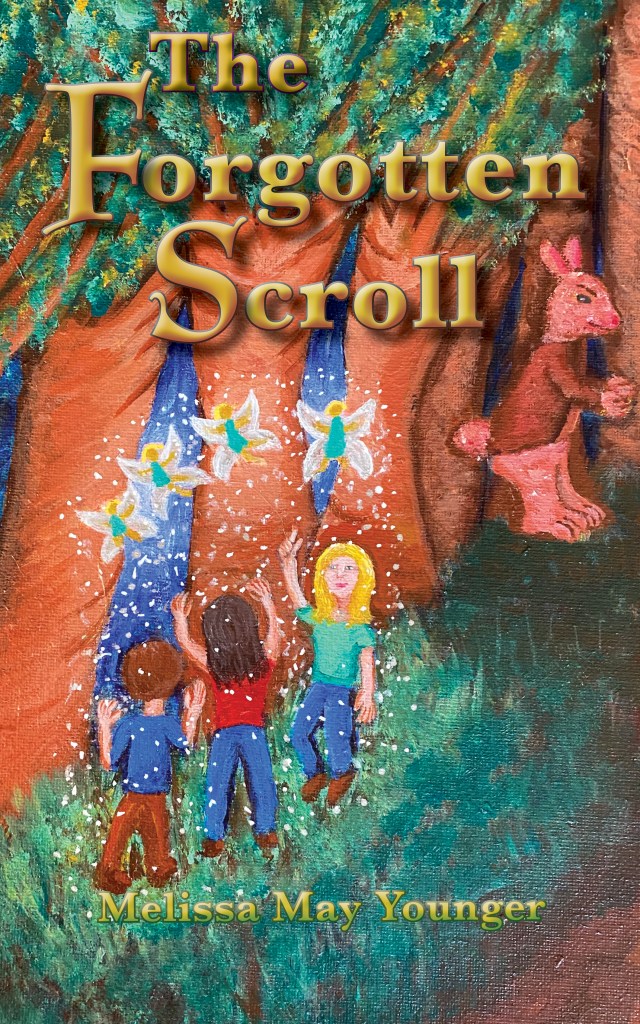

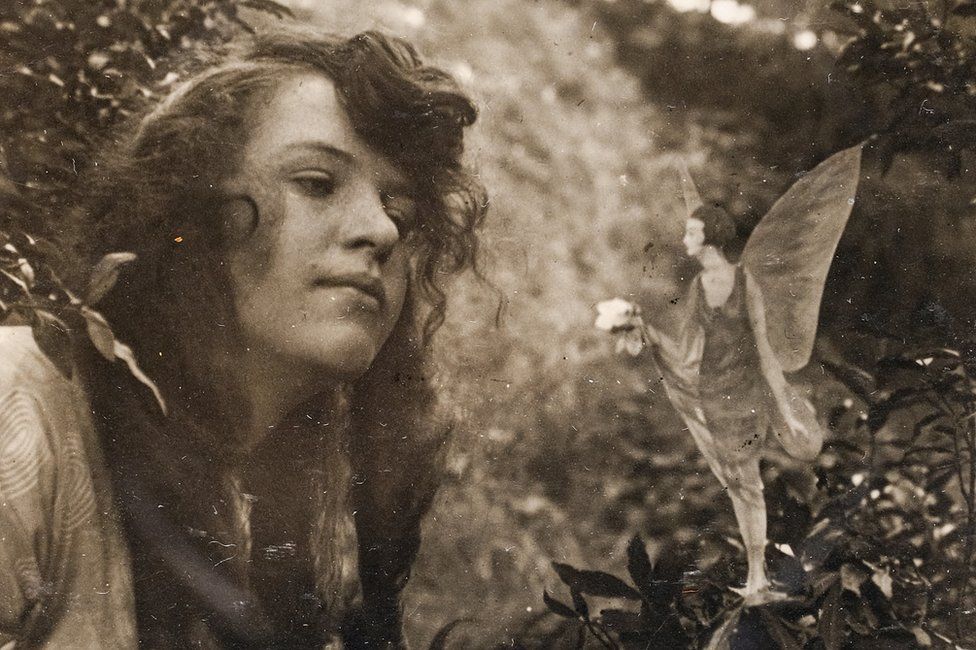

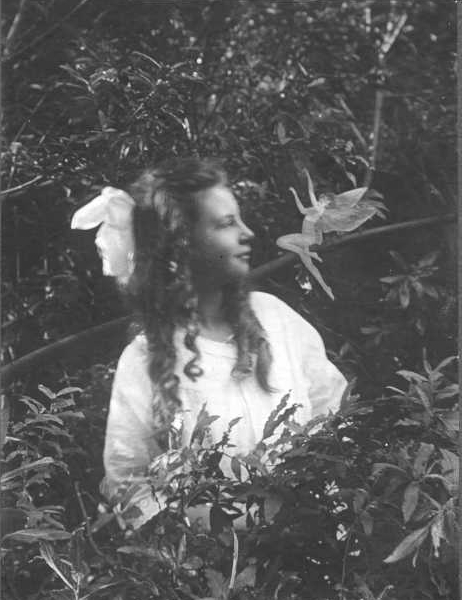

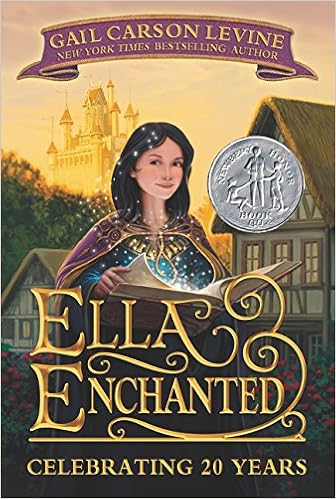
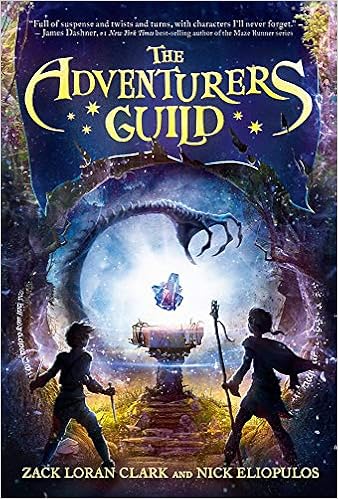

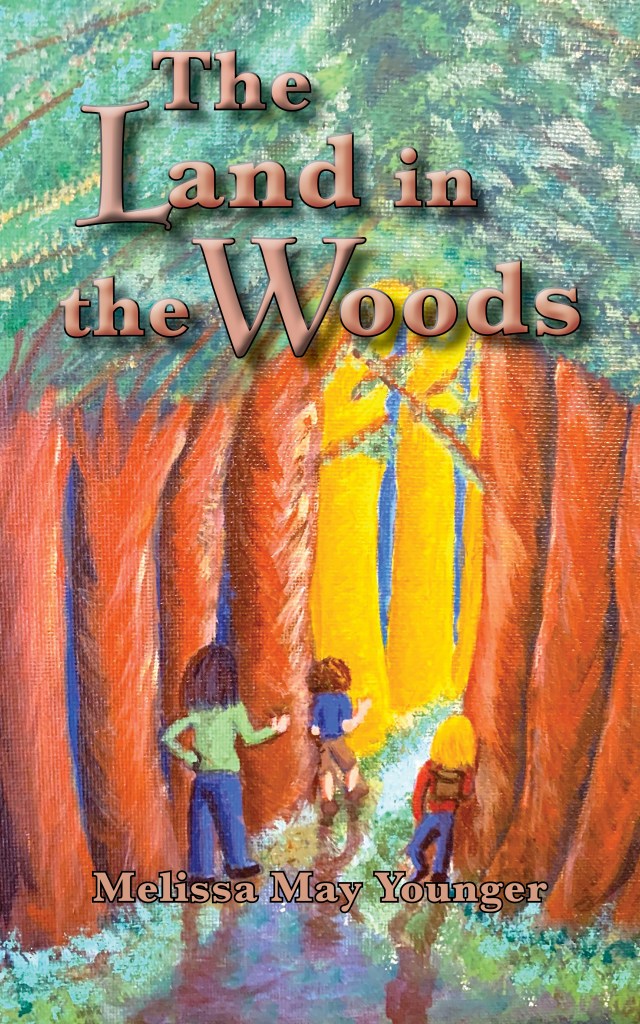

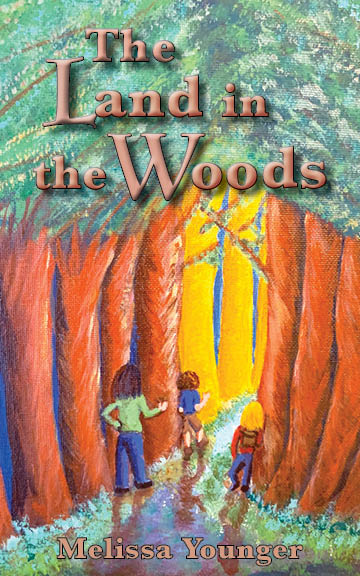
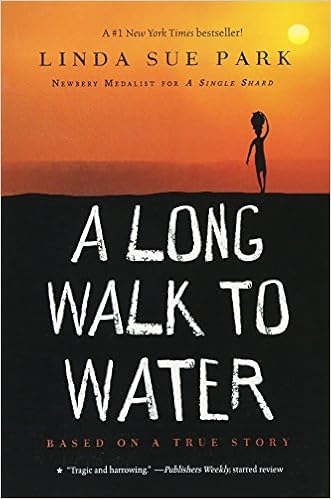


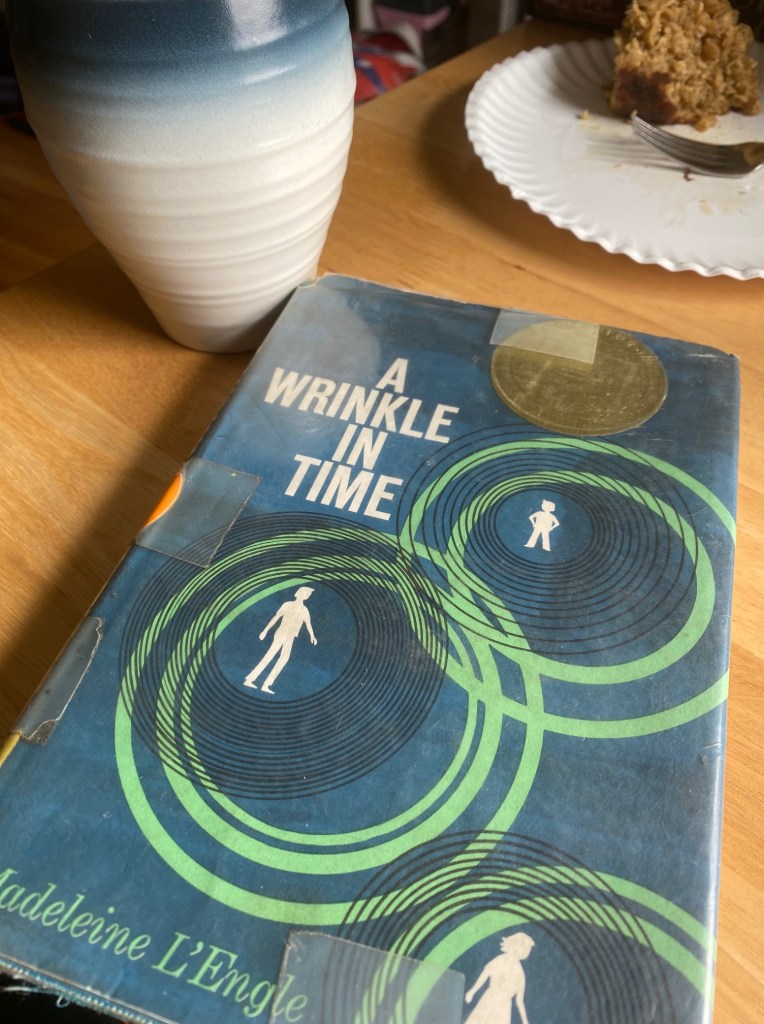
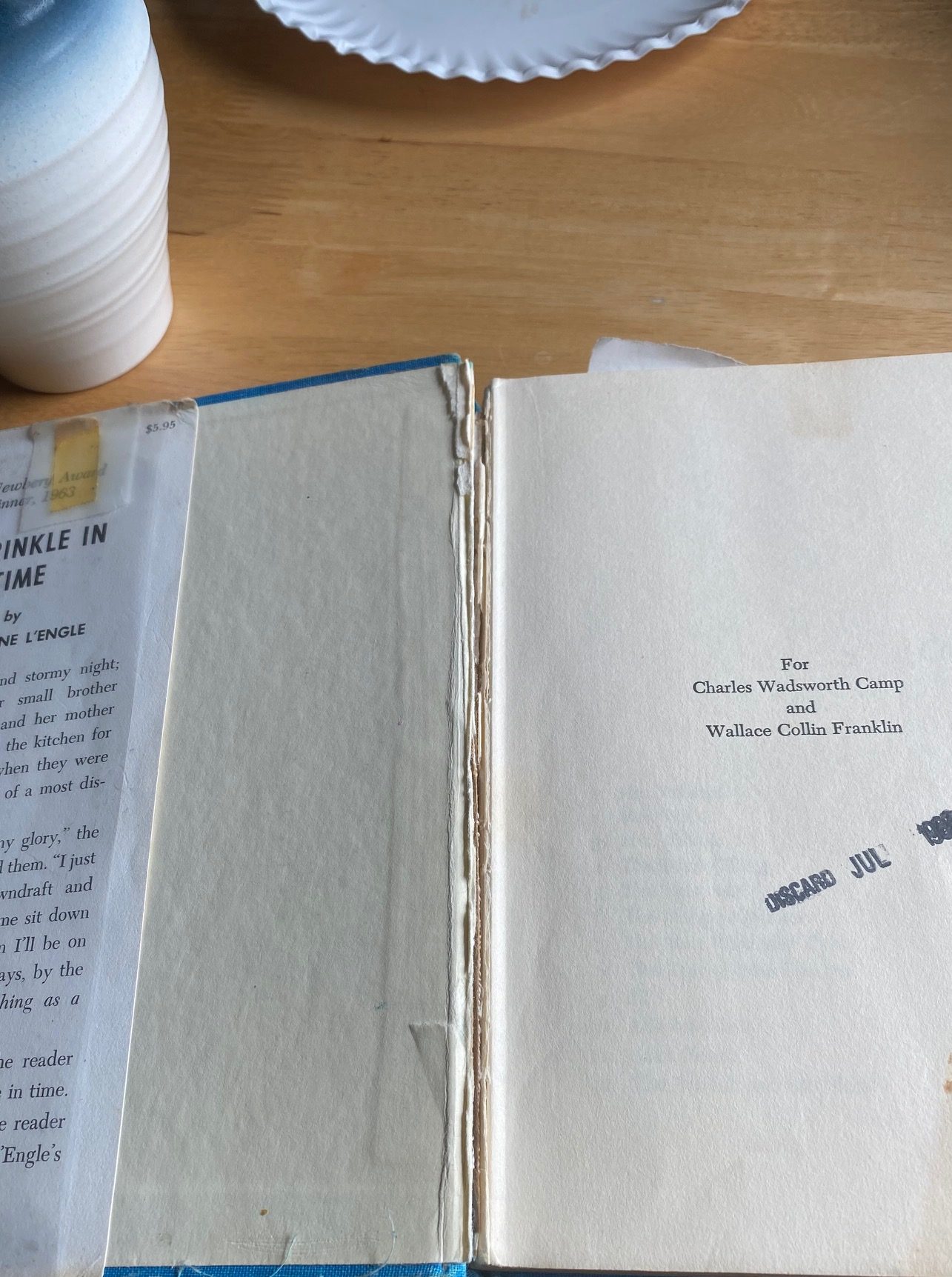
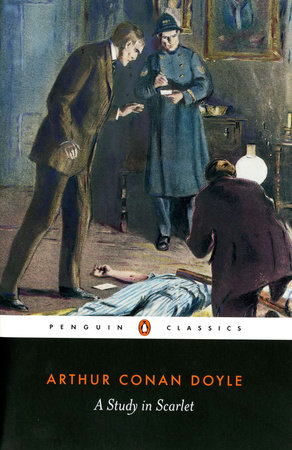
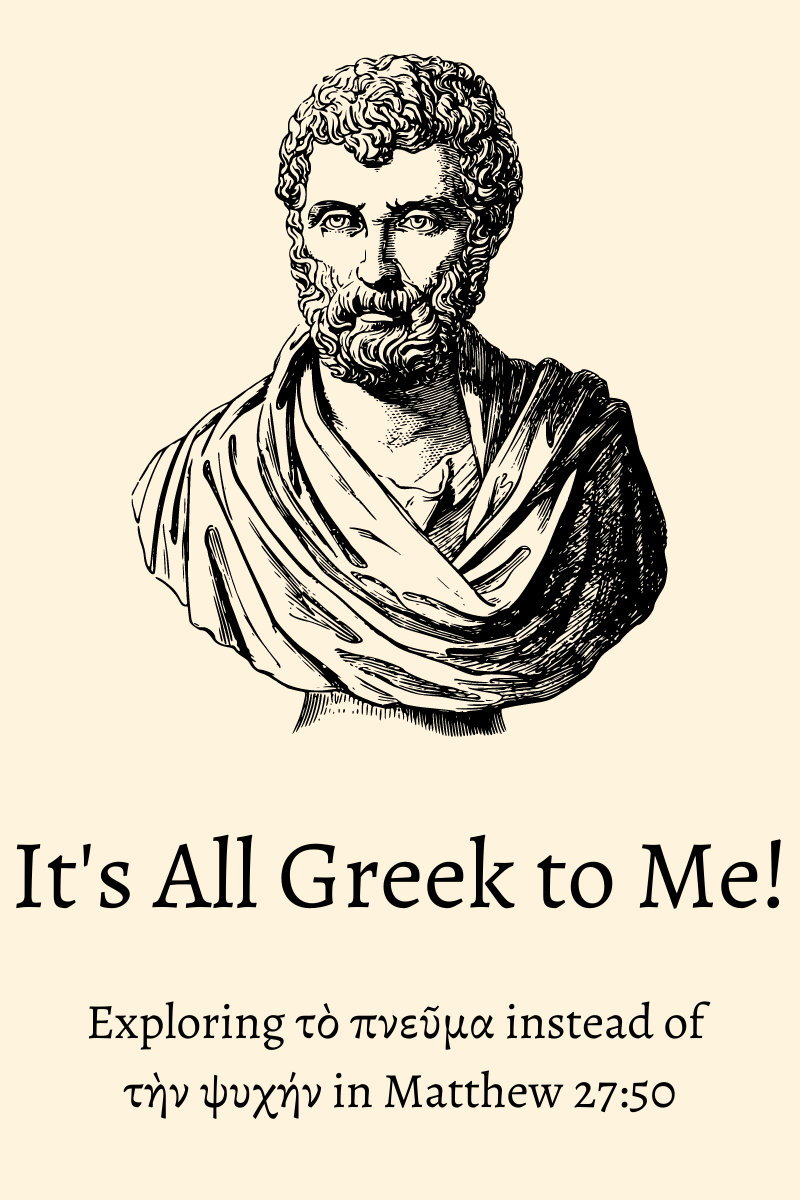





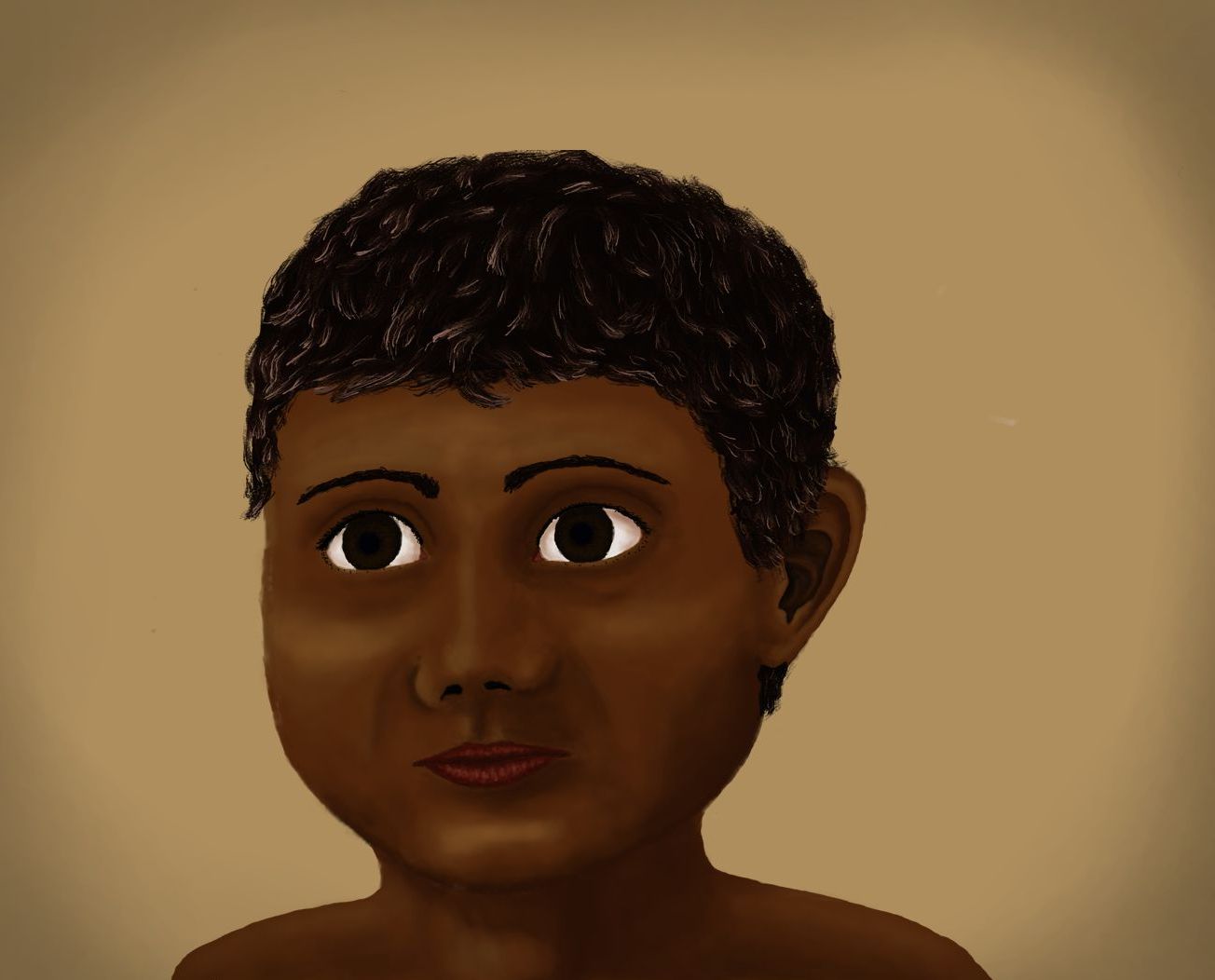
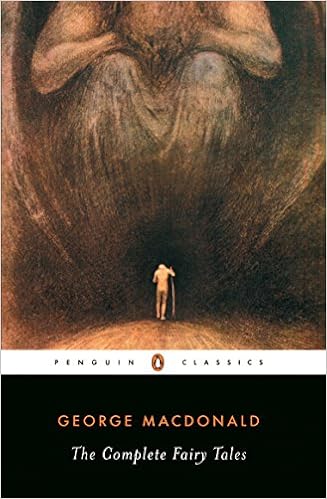


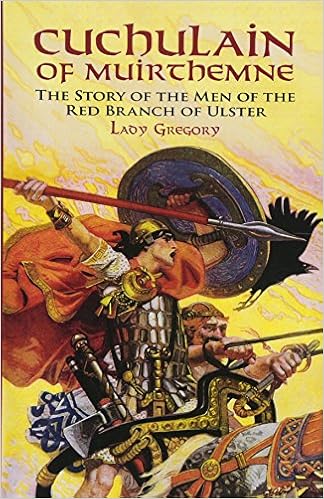
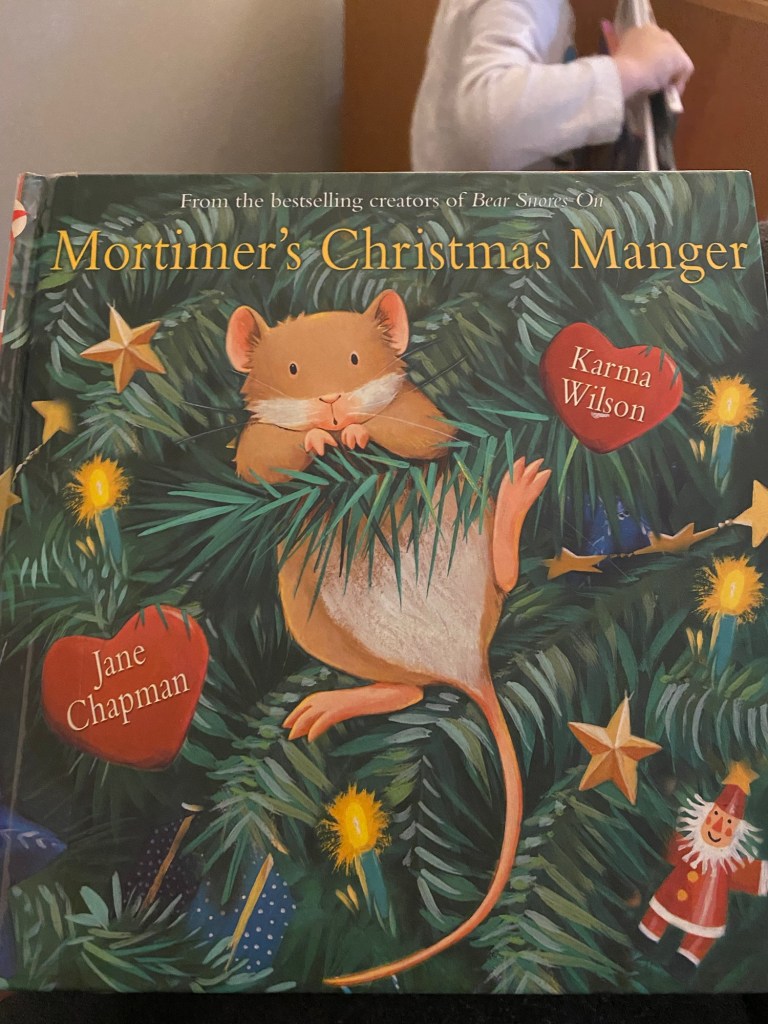


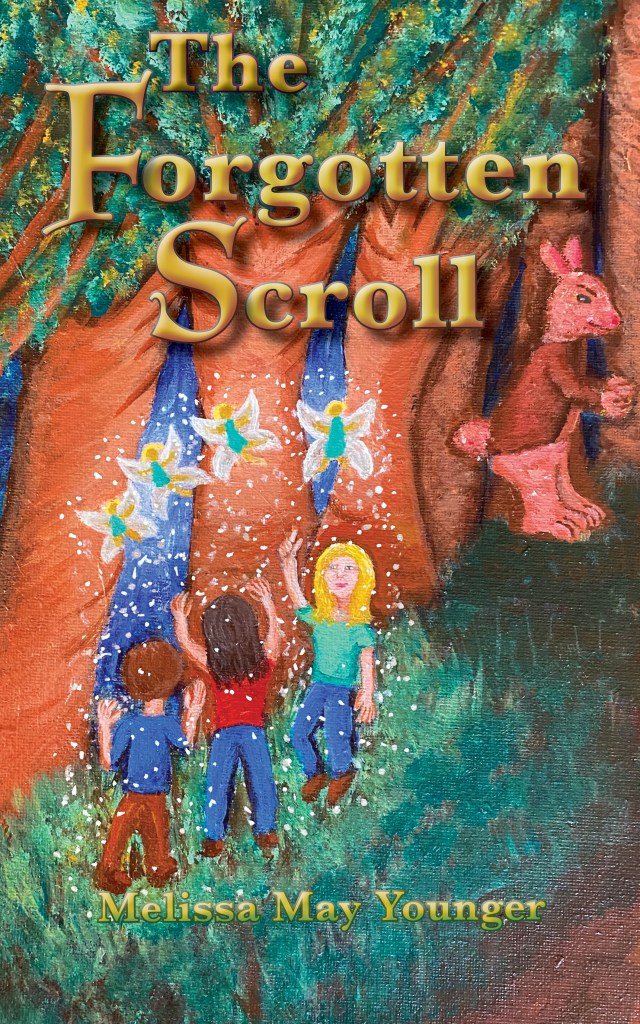
 Classic Reads