This is the kind of story that starts out bizarre and increasingly makes sense as it goes along.
It starts out like an ordinary fairytale, and has many typical fairy and folk tale elements (seven-league boots, magic, wizards, witches, kings, etc).
Yet, there is a self awareness in the story and in the main character from the beginning. The character knows her life is a story, and she has read many stories and seen that nothing special ever happens to the oldest child.
As she is an oldest child, she makes peace early on that she won’t have adventures… yet this sets her up as the perfect candidate to have an adventure happen to her.
The Inciting Incident
Ordinary Sophie is making hats for her widowed stepmother, slaving away without pay and planning to leave because she is being taken advantage of, when in pops a witch, who curses her. This pushes Sophie to take the leap and set out to seek her fortune, and hopefully lift the curse.
Under her curse, Sophie is disguised as an old woman. She finds satisfaction and freedom in this form, as she can act more bossy than usual and speak her mind. She ends up at the infamous Wizard Howl’s castle (which moves by magic, giving the book its name). There, she befriends the others in the castle and begins living her best life by cleaning the living daylights out of the filthy, magical place.
The Humor
I loved the humor in this story! From the witty narrator to Sophie’s crotchety behavior contrasting with Wizard Howl’s immature impulsivity, there’s a lot to enjoy.
Sophie’s cleverness and perspective also bring some laughs.
The Self-Discovery
One of my favorite things about this story was how much the protagonist learns about herself.
For instance, as an older woman, she gives herself permission to be stubborn and bossy. She discovers along the way that she enjoys acting that way, instead of merely letting others tell her what to do. She finds she doesn’t want to toe the line. In her own way, she rebels.
As she discovers more about herself, she also discovers she has magic. She always talked to inanimate objects, but eventually she realizes/ is told that her compulsive talking habit actually casts spells.
The Ending
There are many disparate bits of information thrown into the story: a previous wizard who disappeared, a King, and an enchanted scarecrow that follows Sophie and won’t leave her alone.
Everything comes together in a neat and tidy explanation at the end. All the disparate pieces have a purpose. As a writer, I admire the author’s ability to do this.
Interested in other Middle Grade Fantasy or hearing more about this book? I share some thoughts on my Youtube channel as well:
Free Children’s Middle Grade Ebook!!
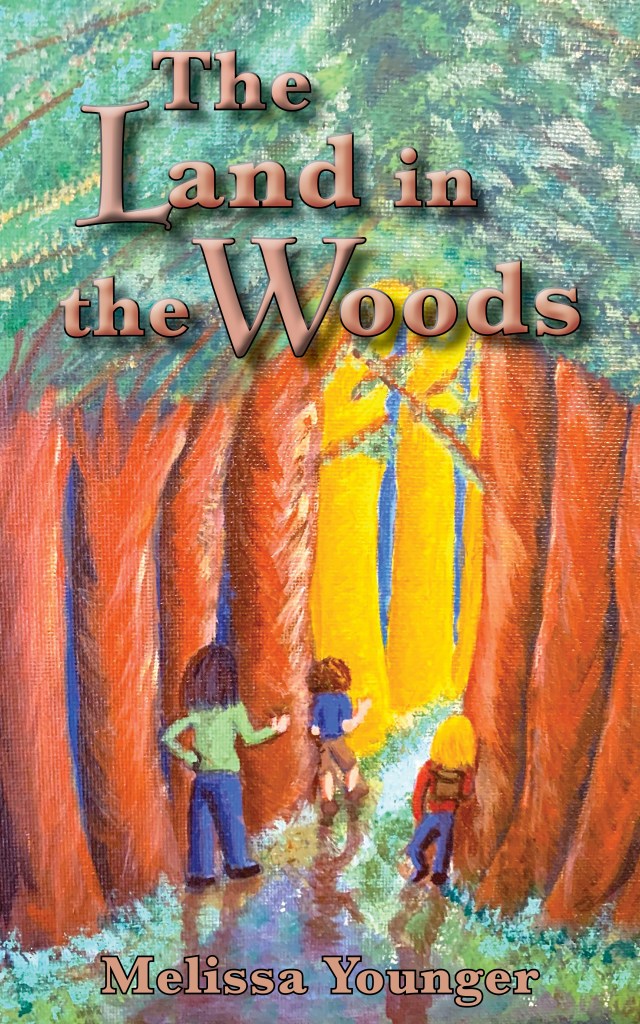
Also, from December 25th-29th, 2021 My ebook The Land in the Woods, a children’s middle grade fantasy adventure story, is free on Amazon! Check it out!
From December 25th-29th, The Land in the Woods, a middle-grade (ages 9-12) fantasy adventure novel is FREE in ebook form on Amazon. Share this with someone of that age who might enjoy reading it over Christmas break!
Please check it out and leave a review if you end up reading it.
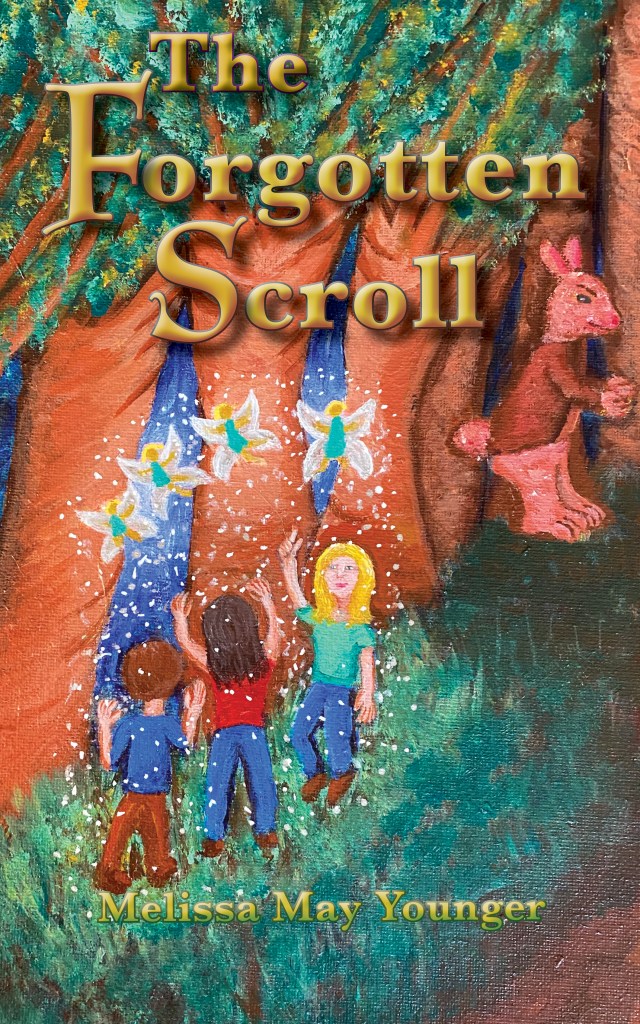
This is also a series. The second book, The Forgotten Scroll, was just released, and the third comes out next June.
They are fun fantasy adventure stories with Christian themes.
Here is the description:
When Maurie, Janine, and Bobby Wells return to the mythical land of Eridu, they are given an important mission to fight the Darkness.After deciphering ancient languages and intricate puzzles, the Wells children learn they must recover the King’s magical scroll to bring light back into His Kingdom.
But the road to finding the scroll is difficult, and they must team up with new friends and old foes, battling dangerous creatures and overcoming obstacles on their epic journey.
The children are guided by Prince and Neumatos, whose power and goodness continue to surprise them. Yet, when new and powerful enemies threaten their mission, the children and crew worry that their mission is doomed.
Will Eridu be consumed by the Darkness? And how many can be saved before they are swallowed up completely?
This is the second book in the Adventures in Eridu. We recommend reading The Land in the Woods first!
Using mythological themes and creatures from history and children’s classics, these books will inspire your children’s imagination and teach them important values of faith, courage, and love.
This book has everything from magical sorceresses and knights to dragons and werewolves! It has a fellowship of adventurers like in The Hobbit and The Lord of the Rings and an ocean voyage similar to The Voyage of the Dawn Treader in The Chronicles of Narnia. It has danger, battles, and comic relief along the way, geared to entertain today’s young readers.
Also, here is a video of how I did the painting, if you’re interested (with some relaxing music):
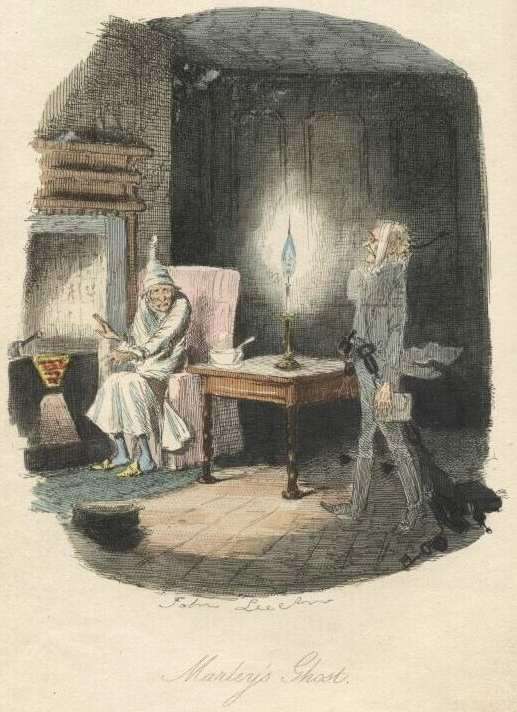
Perhaps one of the most well-known Christmas classics is A Christmas Carol, by Charles Dickens. The writing is phenomenal in its prose, but what is arguably most compelling about the tale are the characters and story arc Dickens creates.
What makes this piece so famous and why does it connect with people so well, leaving a strong impression on their memories?
You can get your own copy of to read along by clicking on one of the images below:
During Nanowrimo, I’ve been working on the third book in my adventures in Eridu series. Here’s a chapter I’ve written this past week and a video update on my writing progress at the end!
If you haven’t seen the first book in the series, The Land in the Woods, you should check it out on Amazon! It’s a children’s fantasy adventure story for ages 8-12.
It’s free on Kindle unlimited and will be free as an ebook for 5 days right before I release the second book, The Forgotten Scroll, on December 15th!
Chapter 5: Friend or Foe?
As it turned out, the stream was outside near another entrance to the building. Around the stream, green grass was visible on its banks. It appeared the snow could not exist where the stream’s water touched.
After the children drank their fill at the stream, they were eager to head back to the snow beast. They had never seen one before, and his whole existence was a mystery to them.
Aaron handed them each a small container to take water back with them in, which he said he had found from scrounging around in the building.
They headed back to the snow beast and arrived there quickly. To their surprise, it had regained consciousness. It struggled against the bindings and groaned pitifully, but could not break free.
When it saw the children and Aaron approaching, it gasped, “Please, you have to let me go!”
“It can talk!” Janine gasped.
“I’ve never met one that talks,” Aaron said. “Beware, this may be a trick of the sorcerer. He is said to be able to conjure great illusions.”
“He seems sad to me,” Bobby said. He went towards the beast and held out his water dish. “Want a drink?” he asked.
“Where did you get that water?” the beast asked.
“From the river behind the building,” Maurie said. Something about the beast made her want to trust it.
“Then, yes,” the beast said. Bobby poured a few drops into the beast’s mouth and it shivered and then gave a satisfied sigh.
“That is the only water I drink from,” the beast said. “It comes from Prince’s mountain. My brothers eat the snow, but it has made them wild and wicked.”
“Would they try to eat us?” Maurie asked.
“Yes,” the beast confessed. “But I would not, I promise you.”
“Why were you trying to get us?” Bobby asked.
“You attacked me. I was only trying to get away from the sorcerer.”
“The sorcerer?” Aaron asked, sounding alarmed. “Is he here?”
“Yes and no,” the beast replied. “His illusions are here, but I think he lives at the edge of the ruins. He tricks my brothers into doing his bidding, and would do the same to me if I didn’t run from him.”
Maurie glanced up at the portrait on the wall. She hoped that the sorcerer wasn’t somehow watching them through it, or wasn’t tricking them into something bad without them knowing it.
“Do you know much about the sorcerer?” Maurie asked the beast.
“I know he is suspected of being in league with the Amarok, and that is enough for me,” the beast said with a shiver. “Now, will you untie me? These ropes are cutting into my paws.”
Maurie looked at the ropes and saw that they did look tight and were leaving red marks on him as he struggled.
“Then don’t struggle,” Aaron said. Maurie glanced at him suspiciously. He seemed to have no sympathy for the creature and she hoped he wasn’t still intending for them to eat it for dinner.
“Are you a good snow beast?” Bobby asked, gently patting the top of the beast’s head. He let out a sort of purr that gave the impression that he enjoyed it.
“A good beast?!” scoffed Aaron. “I don’t believe it for one minute. I’ve never seen one.”
“Maybe because you are too quick to kill us before you find out!” snarled the beast. “You have killed many of my brothers, some of them still good like myself.”
The children looked at Aaron in shock. Maurie wondered how he would react to such an accusation.
“I have to eat,” Aaron explained. “And so do the snow beasts. It’s kill or be killed.”
“Not all of us would kill you,” the beast argued, struggling against its bindings.
“I wouldn’t want to wait and find that out the hard way,” Aaron said.
“Maybe we should untie him and let him free,” Maurie suggested. “After all, he didn’t try to hurt us. I believe him.”
“Better safe than sorry,” Aaron disagreed. “We must keep him tied up as long as we’re here. Especially as he found a way inside. He might alert the others to come in.”
“Nothing wicked can enter here,” the snow beast said with a sigh.
“But if this is enchanted by the sorcerer,” Janine wondered, “then why would he only want good things to enter?”
“It’s not enchanted by the sorcerer. The sorcerer tried to take it over when he cursed the land, but he could not undo Prince’s magic, which runs through the stream and in tunnels underneath this building,” the beast explained. “The legend is well-known among the snow beasts.”
“But you said,” Maurie said, turning to Aaron. She paused, confused. Aaron had told them a very different story, and she didn’t know who to believe. Both Aaron and the snow beast seemed to be able to drink Prince’s water, so she was inclined to trust them both.
“I can only guess at what happened here,” Aaron admitted. “I haven’t found hard proof of my theories, but I have learned not to trust the snow beasts. Don’t put too much stalk in what he says.”
The beast gave an exasperated groan and then sighed. “If you would be so kind as to untie me at least when you leave,” he said.
Maurie pitied the beast and thought Aaron was being unfair. Although the beast looked fierce, she recalled that even Prince could transform into fearsome creatures.
They ate the rest of their treats from Mrs. Goodwin and drank some of the water from their vessels.
“Since the snow stopped, we should leave,” Janine said.
Aaron shook his head. “If you want to leave the cursed ruins, you have to do it at dawn. It’s a long journey across them, and by the time you get out it will be night. It’s still too dangerous to travel at night, especially in this part of the land.”
“Well, what are we going to do today, then?” Maurie asked.
“I suggest gathering what supplies you can find from this place,” Aaron remarked. “There’s not much but its better than nothing.”
The children set off to explore the building while Aaron watched the beast. Maurie hoped Aaron wouldn’t decide to slaughter it and have it for dinner while they were away. “Prince,” she said softly. “Protect our new friends.”
The other rooms in the dilapidated building were not better than the one they had been in. Some had small trinkets that told them someone had lived there, long ago. There were some pots and a few dolls, toys, and decorations.
Janine found some more rope on other sets of curtains and tied some of it around her waist, securing the rest by making a loop at her side. Maurie giggled. “You look like an explorer,” she said.
Janine smiled. “Well, I guess we are explorers.”
“Yayy!” said Bobby. “Hey guys, what about this?” he held up a small silver knife he had found.
“That’s a bread knife,” Janine said knowledgeably.
“Well, maybe we will need it for bread,” Bobby said. Then he squinted his eyes mischievously. “Or to fight our enemies,” he said with a slight growl in his voice.
Maurie found some pretty peach colored cloth with velvet roses on it, but wasn’t sure it would be useful. She lifted it up to examine it, and discovered it was a shawl. She saw a small satchel made from the same cloth underneath it. “Perfect!” She secured the satchel over her shoulder.
Aaron was right: there wasn’t much to find. After they had gathered some things, they went back to the main room. There, they passed the day playing I Spy and listening to Aaron’s stories about how he had survived in the ruins.
“Why don’t you leave with us tomorrow?” Bobby asked.
Aaron shook his head. “I can’t. You see, the reason I came here in the first place is the reason I can’t leave. My wife and child were taken by the creatures of darkness, and I found out they were enlisted as servants in the sorcerer’s fortress. I won’t leave here until I’ve found them.”
“When we find Prince, we can ask him to help you,” Maurie assured Aaron.
“Thank you,” Aaron said. “You are very kind.”
“Why don’t you just find the fortress and break in?” Bobby wondered.
“It is guarded by illusions,” Aaron said. “The closer you get to it, the harder it is to find.”
The children went to bed that night feeling sorry for both Aaron and the beast. It seemed terrible to be trapped by the curse, but the sorcerer sounded too powerful for them to take on on their own.
Somehow, they would find Prince and break the curse, Maurie promised herself.
Ever since I heard this story as a little girl, I was captivated. George MacDonald has a way of telling fairytales/ fantasy stories in a way that connects with a very human experience.
The young princess in the story is a curious and naive sort, which drives her to meet and trust many different characters, including the old woman she meets in a tower and a young boy who is “not her class.”
You can guess what the Goblins in the story represent: the worst of humanity, the abstract “evil” in the world, or what have you. Yet, one thing is clear throughout: they are wicked, selfish, and petty villains bent on getting revenge on the King and his household.
On the face of it, The Princess and the Goblin is simply a fun fairytale where good prevails and evil is defeated. Yet, George MacDonald has this way of weaving grace and truth into his stories that spark a deeper, spiritual interest.
Below are some video versions of the Princess and the Goblin (and the last is a hilarious version!).
So far, I’ve written over 5,000 of the 30,000 words I am shooting for during Nanowrimo on my WIP, The Cursed Ruins. It’s the third book in my children’s fantasy adventure series, and the second is being edited so that I can publish it in December!
Here’s a chapter I wrote this week:
Chapter 2 – Christmastime
Two weeks later, the house was abuzz with activity. Their aunt Bertha was coming to visit for a few weeks and they had to rearrange their house to accommodate her. Mr. and Mrs. Wells brought Maurie’s bed into Janine’s room, which the girls would be sharing for the holidays.
Then, they had to set up a cot in Maurie’s room and get some of her things out of the way. They vacuumed, cleaned, baked, and tidied until the house was immaculate and smelled of lovely gingerbread.
“Can’t we try some before she comes?” Bobby begged, peering at the cookies on the counter. They had cut out some gingerbread men and shortbread cookies and had to let them cool before they could decorate them.
“Not yet! They’re a special treat,” Mrs. Wells reminded him. Her phone buzzed and she looked down at it. “She’s almost here!”
Janine groaned, and Maurie nodded. She felt the same way. The children disliked aunt Bertha because she always told them they should do things differently and bossed them around.
Just then, there was a knock on the door. Aunt Bertha barely waited for the door to be unlocked before she barged in, dumping snow on the doorstep. She took off her boots and dropped them onto the floor and then took off her large purple snowcoat.
“Be a dear and hang this up,” she said to Janine, who was closest to her. Janine pursed her lips but complied.
“Don’t just stand there,” Aunt Bertha reprimanded Maurie. “Give me a hug.”
Maurie stood as still as a statue but Mrs. Wells gave her a gentle push from behind and she knew she had to do it. She stepped forward and held her arms up and Aunt Bertha enveloped her in a crushing embrace. Maurie’s nostrils were filled with the scent of mothballs and potpourri. She did her best not to cough or gag. In fact, it was somewhat difficult to breathe until the hug was over.
“Now can we eat the cookies?” Bobby asked.
“Cookies? You shouldn’t be eating cookies,” Aunt Bertha said with a laugh. “Those must be for Santa. Little boys like you need to eat carrots and good things.”
“I do eat healthy things,” Bobby replied, nonplussed by his Aunt’s manner.
“Well, then, more for the adults!” She said.
Maurie’s face reddened slightly. She could feel herself growing irritated with Aunt Bertha already. She clenched one of her fists slightly. She wouldn’t let her ruin Christmas for them, she just wouldn’t. “We made the cookies for everyone,” she said, hoping this would settle things.
Aunt Bertha ignored Maurie’s comment and turned her attention to Bobby, who she gave an extra big hug to so that his eyes nearly bugged out. (970)
After Aunt Bertha was settled in, the children decorated the cookies with red, white, and green icing.
“Can we bring some to Mrs. Goodwin?” Bobby asked. “She always shares her cookies with us.”
“Yes, but make sure you’re quick about it. There’s a blizzard coming in and it should be starting soon.” As soon as Mrs. Wells said that Maurie looked out the window and saw some white sparkling snowflakes start to fall.
“Let’s get bundled up!” Maurie cried out excitedly. It felt like quite the adventure to be racing against the blizzard to deliver some Christmas cookies.
The children packed up the cookies carefully, selecting some of the prettiest ones. “Careful! The icing isn’t dry yet,” Janine warned.
Once the cookies were packed and the children were bundled, they set out down the street. The snow was falling quickly at that point and there must have been over an inch of it on the ground.
“Hurry!” Janine commanded as the snow began to pick up. A gust of wind blew some of it in their faces.
They hurried onto my porch and pounded on my door. “Mrs. Goodwin, we’re here to give you some Christmas cookies!” Bobby shouted over the wind.
I opened my door and saw my three young snow-covered friends. “You look freezing!” I commented. “Step inside for a moment.”
The children crossed the threshold, bringing a load of snow with them. I laughed as it fell off them onto my floor. Bobby glanced up at me with an apologetic expression. “Oops.”
“Don’t worry about that,” I said. “It will melt, and I’m sure Sally will enjoy licking it up.” I beckoned to my old, white furry Samoyed friend who was lying on her bed in the corner. She barked happily as if in agreement.
“Here’s the cookies,” Maurie said, handing them to me. “We hope you like them.”
“Merry Christmas!” Janine said. The children turned around as if they were about to leave.
“Hold on,” I said. “I’ve got something for you three.”
They closed the door and waited patiently at the entryway while I went to find the three small gifts I had wrapped in green shiny paper the day before.
“Here,” I said, handing them out. “A little something I thought of from the stories you told me.”
“Wow, thanks!” Bobby exclaimed. I took the cookies from them and set them on the counter.
I narrowed my eyes at them suspiciously. “You haven’t had any more adventures lately, have you?”
The children shook their heads sadly. “Though I wonder,” said Maurie, “what Eridu is like at Christmastime.”
“Maybe Santa goes there, too,” Bobby said.
“Santa’s a legend,” Janine reminded Bobby.
“From what you told me, it sounds like the place where some legends are true,” I surmised.”Now take care as you head back. That storm is picking up.”
I opened the door and the children went back out into the cold. What happened next was rather unbelievable. One moment I saw them heading into the blizzard as snow whipped around wildly. The next moment it was as if they had vanished. I guessed it was an effect of the denseness of the storm at the time, but as I later found out, my three friends had been transported back to Eridu again.
They didn’t know they were in Eridu at first, as there was a snowstorm there, in the area they had been transported to, as well.
“Just a little further,” said Janine as they pressed onward. “I see a light.”
The children went towards the light and gasped. “Where did this come from?” Maurie asked. It was a giant structure of ancient design, and looked like the top half had mostly crumbled away. The whole thing was covered in a thick layer of snow and ice, but a lit doorway at its base looked inviting.
“Let’s go inside,” Bobby suggested. “I’m fr-rr-rr-eezing!”
The children approached cautiously, unsure of where they were. They stepped inside and dusted themselves off. The light they had seen came from a torch, which was fixed to the wall.
“Where is this place?” Janine wondered aloud.
Maurie looked at the walls and saw some markings that looked like a kind of writing. She recognized them as some they had seen the last time they were in Eridu. “Guys,” she said, pointing to her discovery. “I think I know where we are.”
How about you, fellow writers? How is your progress going and what are you working on?
Here’s a little more about my strategies and goals for Nanowrimo:
If you’re writing or have finished writing a book, you might be considering whether the self or traditional publishing route is best for you.
Below, I weight the pros and cons of each publishing route.
Which Makes More Money?
As you will see in this video, you can make money through self or traditional publishing. The amount you make with each, however, varies based on a few factors.
Other Factors to Consider
Let’s talk about some of the benefits of self-publishing and traditional publishing! In this video we will answer these questions:
Can I become a famous author self-publishing or through traditional publishing?
Which route is better to get my voice out there and be heard?
How can I reach the people I want to help through my writing? self- or traditional publishing?
Which allows me to have more creative control: self-publishing or traditional publishing?
After taking a few months off for life things, I will be resuming blogging about some books I’ve read. I will also share more about the upcoming sequel to my children’s fantasy novel, The Land in the Woods.
If you are a fan of wacky fantasy or postmodern literature, this is a must-read!
About the Author
This classic children’s fantasy novel was written in 1979 in German, by author Michael Ende. Ende was a famous children’s writer, who was heavily influenced by surrealism from a young age, as his father Edgar Ende was a painter.
From his author website, Michael Ende, “believed it was necessary to reconnect the disparate threads of modern life in a new poetic mythology for the contemporary age. In line with the romantic tradition, his quest for the magic word was a search for a story that would conjure the essence of the world as we know it.”
The Book vs. the Movie
The first third of the book is basically exactly like the 1984 movie, up until the end. Bastian is bullied, runs into a book shop, and steals the neverending story to read in his school attic instead of attending class.
Slowly, the reader is drawn into Bastian’s experience of reading the book while Bastian is being drawn into the story he is reading. In fact, the lines between the real and fictional world are increasingly blurred to the degree that when one of the characters is looking in a mirror, he sees Bastian through the mirror in the school attic.
The main difference between the book and the movie is when Bastian calls out the Child Empress’ name it is only the beginning of his adventures. After that, the story becomes increasingly meta, and bizarre. Yet, the author has a purpose in this.
Post-Modern Literature or Surrealism?
Is The Neverending Story post-modern? I would have to say yes.
I liked how one blog explained post-modern literature: “Parody and pastiche serve to highlight the self-reflexivity of Modernist and Postmodernist works, which means that parody and pastiche serve to remind the reader that the work is not “real” but fictional, constructed.”
While in the world of the story, Bastian tells stories which become true.
Also, at different points a character in the story recounts “The Neverending Story,” starting with the moment Bastian walks into a book store. At that moment, Bastian is in the story, listening to a story about him discovering the story (which he is now in). I had to chuckle at Ende’s mind games.
On the other hand, this story is also heavily influenced by surrealism, which “can be defined as an artistic attempt to bridge together reality and the imagination. Surrealists seek to overcome the contradictions of the conscious and unconscious minds by creating unreal or bizarre stories full of juxtapositions.”
This story is incredibly meta and pokes fun at itself throughout. The main character, Bastian, who is reading a story, gradually becomes a character in the story. Yet, because he comes from the real world, he is able to invent and create in the fictional world. This is where the story becomes truly bizarre, as a child begins to dictate the course of the narrative and affect the makeup of Fantastica.
Yet, as he discovers, Bastian is still bound by the rules of the world. For instance, like others in Fantastica, he can only meet the Child Empress once. He also only has true power to create when holding the Empress’s medallion, a power which belongs exclusively to the story and not him.
You can see the increasing blur between reality (represented by Bastian) as he encounters a world of imagination (Fantastica). Interestingly enough, the more time he spends there creating, the more he loses touch with the “real” world.
Yet, Bastian must spend time there, for Fantastica is in danger of being lost.
Imaginary Things Become Lies
How Ende talks about the residents of Fantastica is also interesting. They are all created and named by those outside their world. They rely on the imagination of real people for their continued existence.
Yet, Fantastica is in jeopardy because people have stopped visiting the world of imagination. To become its savior, Bastian must find a way to bring knowledge of it back with him.
However, if the creatures in Fantastica were to ever enter the real world, they would become lies. And by the second, as Bastian continues to create in Fantastica, he loses more of himself.
You’ll have to read the story to find out more!
It is very difficult to describe how fun this book was to read and the trip it took me on in a single blog, but I have tried. 🙂
If you enjoy wacky, creative fantasy, especially the kind that makes you think deeply, this is the book for you!
As a young girl, I knew fairies weren’t real, but it was fun to imagine what it would be like if they were.
I had a wild imagination and could create fantasy worlds and adventures for myself and my younger siblings in our imaginary games (the older ones, naturally, wanted to dictate what we would play instead).
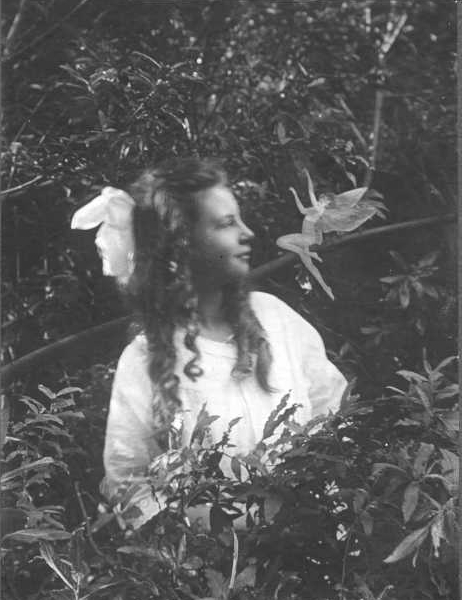
I read Fairytale: A True Story, the novelization based on the movie, when I was in fourth grade. I didn’t remember the story, but the concept captured my imagination.
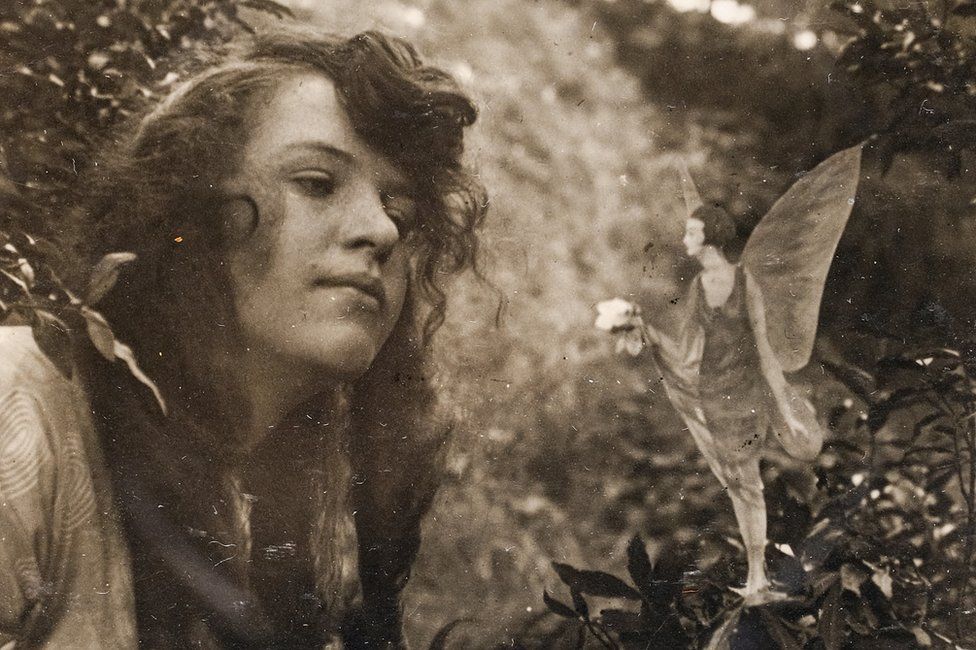
The story is based on two young cousins, Elsie and Frances, in 1917. They take pictures of “fairies” for their mother/aunt, who is grieving the loss of her son Joseph. The mother is looking for something to believe in, such as angels or fairies, to connect her to Joseph.
The film version has historical cameos from characters such as Harry Houdini and Sir Arthur Conan Doyle. Doyle is portrayed as one who believes in fairies, while Houdini, being an illusionist, sees through the girl’s ruse but doesn’t rat them out.
Throughout the story, there are hoards of people who want to believe in fairies because it gives them hope, especially in war times.
The film is based on the real story of two girls who took photographs with “fairies” and became famous for it. The photographs were found to be authentic, thus making people believe the fairies were real.
Yet, the girls did something simpler than faking a photograph- they used drawings of fairies from “Princess Mary’s Gift Book,” with hat pins to hold them up. They simply took pictures of themselves with the drawings.
The film asks whether it is moral to make others believe in something that isn’t real if it gives them hope. I enjoyed revisiting the story and history, but I do think the girls shouldn’t have let the hoax go so far. Hope, when rightly placed, is a good thing, but I think misplaced hope can be dangerous and lead to an endless wild goose chase, as it did for many in this film.
![Howl’s Moving Castle by [Diana Wynne Jones]](https://m.media-amazon.com/images/I/51PTsb7CHtL.jpg)




 Classic Reads