In this week’s Bible passage, Jesus begins calling disciples and healing and teaching people. Word about his ministry spreads, and crowds come to Him in Galilee.
Join me as we use the historical context and maps to help us understand this passage and apply it to our lives.
Welcome to Bible for the Busy Woman!
Goals:
Help women to be in the Word regularly.
Help women gain understanding of proper approaches to studying the Bible.
Educate women about books of the Bible and connections throughout the Bible.
Teach orthodox theology according to the Bible.
Encourage women to live for God.
I hold a BA in English and an MA in Theological Studies. Additionally, I have taught the Bible while working in various ministries for over ten years. I love helping others understand God’s Word and how to live for him.
Feel free to ask me some questions or request a specific Bible passage.
Resources used for this video:
Zondervan Illustrated Bible Backgrounds Commentary, Vol. 1: Matthew, Mark, Luke. Edited by Clinton E. Arnold. 2002.
IVP Dictionary of Jesus and the Gospels. Editors Joel B. Green, Scot McKnight, I. Howard Marshall. 1992.
Deluxe Then and Now Bible Maps. Rose Publishing, Torrance, 2008.
This is a middle grade fantasy novel that was greatly influenced by many classical works I’ve read in this genre (including Alice in Wonderland, The Lion, the Witch, and the Wardrobe, etc.) and some classic Christian works (Pilgrim’s Progress, Phantastes by George MacDonald, etc.). I also drew upon my experience as a child exploring the woods in New England, and my knowledge of sibling dynamics from my family and the children I’ve taught over the years.
This story has been in the works for over 10 years! That is mostly because I didn’t have the time nor the confidence to fully develop it and publish it. It is now fully written, has been edited 3 times (and is currently being reviewed again), and I am developing the drawings for the chapter headings and finishing off the painting for the book cover. I plan to launch it in June of this year.
Description:
While exploring the woods near their house, Janine, Maurie, and Bobby Wells hear a strange animal cry and go to investigate it. To their surprise, they find a portal to a magical land. In the land, they must face the forces of darkness, and be confronted with the darkness that is in them, too.
As the children learn the laws of the land from the King’s creatures, and meet the mysterious and kind Prince, they question wrestle with questions of justice, forgiveness, and mercy.
Excerpt:
Maurie turned to Bobby. His lip had begun to tremble as tears sprung to his brilliant blue eyes. He was not quite old enough to appreciate the grandness of the adventure he was on. While Maurie was drinking everything in with awe, Bobby was suffering from several instances of shock, one of them being his abrupt separation from his eldest sister.
“Don’t cry, Bobby,” Maurie consoled him. She stooped to give him a big hug. “You can go next if you want. Janine will be on the other side, waiting for us.”
“Okay,” Bobby agreed, sniffling but comforted by the idea of reconciliation.
Maurie helped Bobby to open the door. It was heavier than she anticipated, and it opened with a loud creak.
Bobby stared into the darkness on the other side. “How will I see where I’m going?” he asked.
“I don’t know, but I’m sure Sir Bluthers wouldn’t send us anywhere unsafe,” Maurie reassured him.
Bobby crossed his arms and stuck out his lower lip. “Hmph!”
Maurie sighed, her patience waning. “If you don’t go, I will,” she threatened.
“No! I’m going!” Bobby protested, stepping through the door.
In a moment, Maurie was alone. A slight shiver ran up her spine. She had been so concerned with getting Bobby through the door that she hadn’t realized that she was afraid, too.
The Forgotten Scroll
This is the sequel to The Land in the Woods, and is about 5/8 written. I enjoy the inventive, creative process I am at right now with this one, and I am excited to see how it develops. I always create a rough outline, tweak the outline several times, and then sometimes don’t adhere to it at all when doing the final chapters.
Description:
A few months after they discovered the magical land of Eridu, the Wells children are transported back there to complete an important mission for the King. Mystery surrounds the disappearance of an important scroll, and to retrieve it the children must team up with some old foes and new allies.
Excerpt:
The Wells children were at odds with each other. Janine had become grumpier and bossier than usual lately, and Maurie and Bobby tried to avoid her.
Ever since the summer, when they had traveled to the land of Eridu in the woods, and then not been able to find it again, Janine had insisted that it must have been a dream.
She wouldn’t listen to Maurie’s objection that they couldn’t have had the same dream, nor to Bobby’s insistence that he wouldn’t have been able to draw his pictures about the land if he hadn’t been there.
Mr. and Mrs. Wells weren’t any help, as Mr. Wells continued to encourage Maurie and Bobby to tell stories about the land, while Mrs. Wells scolded them for lying.
The summer was slowly turning into fall and the children had been back in school for about a month. Each of the children had grown taller that summer, and Maurie and Bobby felt they had grown much wiser, too.
Janine, however, had lost what she had gained in Eridu and returned to her old patterns.
Even though Bobby was five and Maurie was eight, they played with each other and tried to avoid Janine altogether. It seemed that they might go on like this forever, if not for something extraordinary that happened.
Learning from the Man of Sorrows
This book deals with anxiety, depression, grief, pain, and other kinds of suffering by looking at scriptures and using Jesus as the ultimate example of how to bear these sorrows and walk through them in a godly way.
It will draw on philosophy and psychology to help us understand the human condition and to illuminate how to pull through these things with hope.
True Forgiveness
I will draw upon Christian thinkers, theologians, church fathers, philosophers, and Bible passages to look at what forgiveness is and what it really means to forgive.
Excerpt from the introduction:
“Everyone always says that forgiving means you simply let something go, as if the event never happened, or the hurt never occurred.
The problem is that when someone wrongs another person deeply enough that forgiveness is needed, the person who must forgive pays a price. That should never be forgotten or minimized. When it is, it actually detracts from the act of sacrificial love that motivates true forgiveness.
What many people often mean when they say, “forgive and forget” is simply: “forget.” Forget the thing happened. Forget the pain you felt. Forget the injury that was caused you. Forget the injustice. Act like it never happened and try to treat the other person the same way you did before they harmed you. Basically, deny reality and suppress your true feelings. Deny your right to be respected and loved.
Over time, this type of false forgiveness is deeply damaging. Instead of bringing harmony, it brings a false sense of comradery while deep and painful emotions boil under the surface.
The reason people arrive at this false forgiveness is that they want things to be simple. But forgiveness is not simple. It is complex. It involves two or more parties, and may be needed on both sides of a dispute. It can take moments, years, or a lifetime to be “resolved.” It may even need to be revisited when old wounds are scratched.”
Those are just a few of my personal writing projects right now.
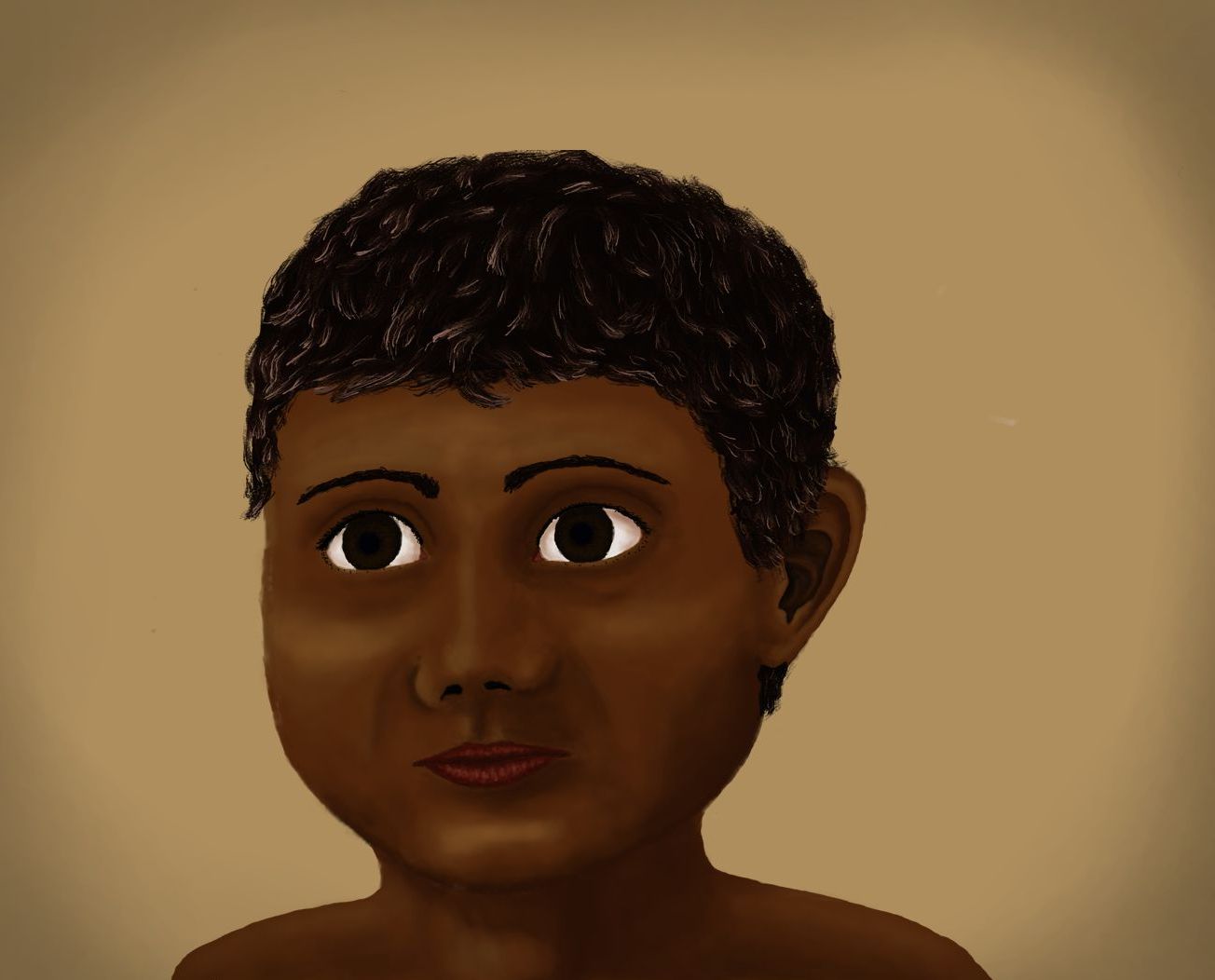
He writes intriguing stories and makes captivating illustrations, like the ones below.
“Shapur” by Jonathan Sutton
“He was an orphan. With no parents to provide for him, he lived on the streets, if you could call it living. His skin, which was stretched over the bones of his malnourished body, bore the bruises of abuse. Three fingers on his right hand hung uselessly crooked. An enraged shopkeeper, who was tired of losing food to starving waifs, had smashed them. Unfortunately, angry shopkeepers were not the worst he had to deal with. Occasionally people (sometimes drunk) would beat him as a form of entertainment or as an object to vent frustration on. A few did things to him that he never thought or spoke about.
Then, everything changed. Sickness prevented him from eating for 2 days, and, when he recovered enough to move, he was desperately hungry. His desperation caused him to take stupid risks, so he got caught stealing bread. This sort of occurrence is so common that normally it would not be notable, and this story would end here with the death of one more orphan. However, a foreign King was in the city on a diplomatic mission, and he happened to notice this child. This King saw something in him no one else did, so he decided to show compassion to this child. He invited the boy to sit behind him on his horse and asked,
“Will you come with me and be my son instead of being an orphan?”
The orphan was struck dumb at the question for a time. Finally, he managed to squeak out,
“Me? What? Why?”
“Because I see who you are. You are an amazing person who has the potential to do great things; just the sort of person I want as a son.”
The child tried and failed to imagine what this meant, but there was one question burning in his mind.
“Does this mean that you will feed me?”
“Yes.”
“Every day?”
“Of course. I will give you plenty of food! You will never have to go hungry again.”
Again, the child tried and failed to imagine this, but it seemed to him that he would be provided with at least a few meals a week, even after taking into account the King’s obvious exaggeration.
“What do you want from me?” the orphan asked.
“To be my son.”
“What’s that?”
“It means we will be together and care for each other. You will spend time with me and learn from me.”
The child still didn’t understand this. What did the King mean by care for each other? Some of his playmates on the streets had fathers that beat them, so he wasn’t sure he wanted one.
Thoughts of always having food every day caused his head to swim. He didn’t know what to expect, but his hunger cried out louder than his doubts. If he could only get food, then he was sure he could find a way to survive the rest.
“Ok,” he whispered, hardly daring to look at the King. It was all incredibly overwhelming and seemed too good to be true.
The King laughed, loud, long, and joyfully. Then he declared,
“This child is now my son. He is my prince. I expect you to treat him the same way you treat me. Today I adopt him, name him Shapur, and declare him as my Prince and heir. The fact that he was an orphan is of no importance, and no one is to ever speak of it or treat him as such again. He is as much a prince as a child born in my own house.”
So the King took Shapur into his palace and treated him as his son and a prince of the realm. Surprisingly, this created difficulties for Shapur. When Shapur was given royal robes, he would only wear the undergarment because he was afraid of what the King would do to him if he ruined them. It’s not like it would be his fault. He had never learned to manage such things, but the King certainly wouldn’t be that understanding. He could never understand a poor orphan like him.
That night at supper he was seated with The King but avoided his eyes and touch. He snuck food away from the table, so he would have food the next time he was hungry. After supper, he was taken to his chambers. The bedroom was large and sumptuous with comfortable chairs, several large wardrobes, tables, and, best of all, a large, soft bed with a bedspread that reached the floor.
This last bit pleased Shapur. With the bedspread hanging so low, he could hide under there and while he slept. He briefly thought about stashing his food somewhere, but eventually decided it was safer to keep it on his person.
Shapur continued to behave like an orphan while The King continued treating him like a prince. Every day, the King would spend time with Shapur and teach him about what a prince was like. Shapur was uncomfortable with this because he could tell he acted nothing like a prince. He often wondered what the King was thinking during these conversations.
He tried to stop doing the things he did as an orphan, but his attempts were rather pitiful. Sometimes he could stop for a short time, but he always went back to his old habits again.
His food stash never got eaten because there was always plenty of food available, so it began to rot. The stench of it filled his room. He had gotten used to a clean room by this time, and the smell made him nauseous and too ashamed to allow anyone in. Some days, he would manage to go a whole day without sneaking food to his room. He was very proud of this. So proud, in fact, that his pride ran away with him the next time he saw the King.
“I would like to tell you something,” the Prince stated.
“Good, what is it?” the King asked, pleasantly surprised. Shapur rarely spoke to The King, but The King always wanted to hear what was on Shapur’s mind. So, he was very happy when the Prince wanted to talk to him.
“I’ve been sneaking food away from the table at mealtimes and stashing it in my room, but today I stopped doing that.”
The King grinned, “Good, now will you let me give you a hug?”
Shapur looked shocked, and his eyes dropped to stare at the ground again. “Um….I’ve got to…uh…go clean out my food stash. It.. um.. smells.”
“Oh, I can do that for you.”
This just made Shapur’s eyes widen in horror. “No, no, I’ll go do it.” And, with that, he fled to his room. The King watched him go and sighed.
This scene repeated itself over and over again regarding the various issues of how Shapur dressed, spoke, or behaved. However, the overall behavior of Shapur didn’t change. He could manage a change for a short while, but fear would always get the upper hand, drag him back into his old habits, and bury him in shame. He began to avoid the King more and more. The King had done so much for him, and he couldn’t even do simple things like dress properly. He had tried, but every time he started to put on the royal robes, he panicked and threw them off again.
This was the cycle he found himself in. He would try hard and have some success. Then he would fail and feel ashamed. Shame would cause him to despair and avoid the King even more. He would never be anything besides an orphan. The despair caused him to behave more like an orphan than ever before, while shame drove him to muster up yet another effort to change himself.
This cycle took its toll. Shapur would sometimes skip eating meals with the King and eat his rotten food instead. One day, when he was feeling particularly glum, he found some ragged clothes and decided they were all he was fit to wear. He would tell the servants how great the King was and how well he treated a poor undeserving orphan like himself, but he still wouldn’t accept a hug.
Finally, he began to sleep in the stable. One night while he was asleep, the King came out to see him. He covered him with a warm blanket and sat down waiting for him to wake. Shapur only slept fitfully these days, so he soon woke with a start. He stared at the King like a bird caught by a snake’s eye.
“Hello,” said the King with a smile.
Shapur scrambled to his feet. He knew he was in trouble now. “What are you doing here?” he asked.
“Being with you.”
“Huh?”
“Well, you don’t seem to want to be with me, so I come and spend time with you.”
“Why?”
“Because I love you. That makes me want to be with you.”
“But I wasn’t even doing anything. Weren’t you bored?”
The King grinned, “You would think so, wouldn’t you? But when you love someone, just being in their presence is special.”
This was too much for the Prince. So many confusing emotions rose and could not be stifled. They burst out heedlessly from the Prince’s mouth saying things he had never dared before.
“How? Why? What? I don’t understand. I’m an orphan! Can’t you see that? I dress like one, eat like one, talk like one, and act like one! You can’t prove otherwise! You are so good to me, but I still can’t act like you want me to. I’ve failed and shown everyone that you don’t know what you are doing. You picked a loser! You should kick me out! Why haven’t you? Maybe I should leave before you do. It would probably be better for both of us.”
“So why haven’t you left?” said the King who seemed strangely unruffled by this sudden outburst. In fact, there even seemed to be a smile lurking in his concerned eyes.
“I don’t know. You’re just so . . . so . . . good. After living here, I think I would die living anywhere else,” the Prince said gloomily. “I can’t stay and bring shame to both of us, and I can’t leave. I’m so stuck that I would have been better off dying in the streets.”
“I don’t think so,” The King smiled. “I love you, made you my prince, and named you Shapur. I know you act like an orphan. I expected this when I adopted you. That’s what you were as a small child, so that’s how you learned to act. Everything you learned then was aimed towards surviving one more day. You always had to take care of yourself. It takes time to understand what it’s like to be loved and cared for.”
“But I keep doing the same things wrong over and over again. I know better, but I never stop.”
“Now you are loved,” the King continued undisturbed, “Now I provide for you. These things are the difference between your old life and this one. If you want to learn how to be a prince you have to spend time with me and receive my love. When you receive my love, you will understand who I am. When you understand who I am, you will understand who you are because a prince is just like his father, the king. When you know who you are, you will act like yourself, my prince.”
“But that’s not who I am! I’m an orphan! Can’t you see how I hoard food, dress in rags, sleep in a stable, and hide from you and other people? I’ll never be able to stop!”
“You feel hopeless because you don’t accept that I adopted you. You think that your actions can make you who you are, but they can’t. You aren’t King. I’m the King. I decide how things in my kingdom are. No one under my rule can contradict anything I say, and that includes you! I say you are a prince, so you are. Nothing you say or do can change that.
As an orphan, your childhood was stolen from you. Please let me give it back to you. Let me take care of you, love you, and teach you how life really is.”
Shapur was in tears by the end of this. The abuse of his past hurt so much, and his failures stung him mercilessly. He was tired, so very tired from . . . everything.
“Ok,” he whispered. Then he collapsed.
The King caught him in his arms and held him close.
“I love you,” he whispered. And as Shapur lay there, he finally felt . . . contentment.
The inspiration behind this story lies in spiritual beliefs which have brought positive changes to my life. I believe we are all born separated from God, but God wants to be with us. He sees good in us that we cannot see, and he wants to restore us to our original design. If we let him, he will show us who we are. Since these beliefs have helped me, I wanted to share them, but I wasn’t sure how. Eventually, I settled on writing this allegory. I hope this helps you as it has helped me. May God bless you whoever and wherever you are.” ~Jonathan
Here is a link if you’re interested in checking out his blog!
I’ll blog on some of these books down the road, but I thought I’d share what I’m reading right now and my initial thoughts on these books.
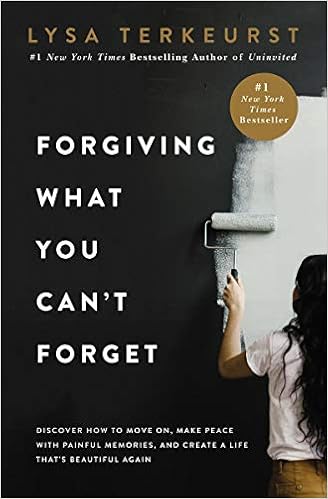
Forgiving What You Can’t Forget Lysa Terkeurst
This New York Times bestseller stuck out to me because of its title. So often we’re told to forgive and forget, when the truth is that there are things we can’t forget. This is especially the case for those who face trauma and deal with PTSD. I appreciate Terkeurst’s story and message, but I’m not far enough into the story to give it an official thumbs up or thumbs down. What I can say is that it is very honest and personal. She speaks from experience, and with compassion.
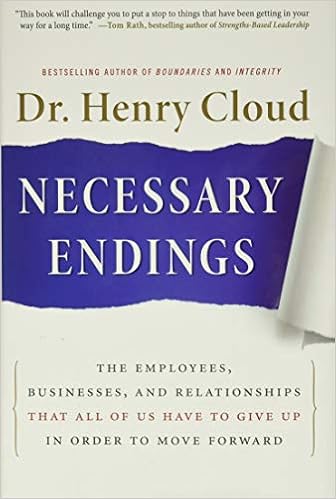
Necessary Endings by Henry Cloud
This is one I am reading with a friend. I’m a few chapters into it and so far, I find myself nodding my head often. Cloud gives sensible advice and points out our tendency to let things continue too long when we would benefit far more by ending some of them. This includes having to fire people, end relationships, or stop spending so much time on activities that are sucking time and energy away from things that matter.
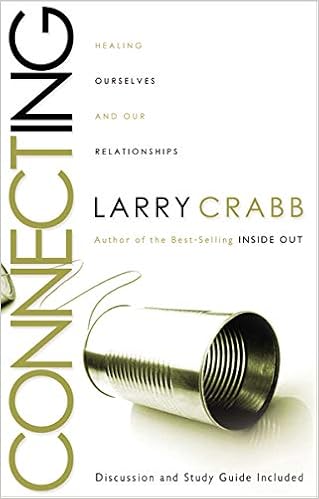
Connecting by Larry Crabb
I’m a quarter of the way into this one and, though I appreciate Crabb’s point that the church could and should do more to help people connect with each other on a deeper level, I have a few problems with his theology. He’s a counselor, not a theologian, but when he starts talking about the trinity mirroring what should be happening in human relationships a warning alarm goes off in my head (“Warning: potential heresy!”). Still, he has some good points, so I’ll continue this one.
The Phoenix and the Carpet by E.Nesbit
I’m about halfway through this one, which is the sequel to Five Children and It, and I am over the moon for this book. This is what children’s fantasy ought to be! The children are having an ordinary, boring day until their father gives them a carpet, which turns out to be magical, which they find out from the magical phoenix that comes with it. I like the personality of the Phoenix better than the Psammead in the first book (he was too grumpy) and I love that the children’s adventures are more varied, and don’t all end in disaster.
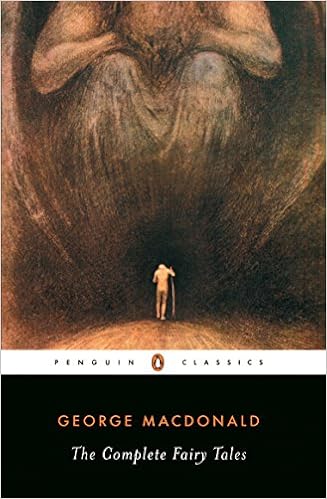
The Shadows by George MacDonald
I’ve just started this delightful fairytale, which I haven’t read before. So far, it is intriguing, mysterious, and playful. The shadows are impish, but part of me wonders if they have nefarious purposes. I’ve seen shadows in other works by MacDonald, and they usually represent spirits that have passed on. I look forward to finishing this one and blogging about it.
We’ve been trekking through the book of Matthew, looking at the historical context and Matthew’s extensive use of the Old Testament to help us find meaning.
This week’s Bible passage is Matthew 4:12-17, which shows Jesus moving away from potential danger after John the Baptist is arrested. In doing so, Jesus fulfills Isaiah 9:1-2.
We learn from this passage and use of an OT quotation that Jesus is the long-awaited hope for the Jewish people. Similarly, He is our hope, but we need to ask ourselves if we are truly hoping in Him.
Resources used for this video:
Zondervan Illustrated Bible Backgrounds Commentary, Vol. 1: Matthew, Mark, Luke. Edited by Clinton E. Arnold. 2002.
Deluxe Then and Now Bible Maps. Rose Publishing, Torrance, 2008.
Greek New Testament
Goals:
Help women to be in the Word regularly.
Help women gain understanding of proper approaches to studying the Bible.
Educate women about books of the Bible and connections throughout the Bible.
Teach orthodox theology according to the Bible.
Encourage women to live for God.
Bible for the Busy Woman is for:
mothers of young children who can only grab a few minutes and don’t have a lot of brain power
working women who have to give a lot to their job and want to understand the Bible better but don’t have the time
female students who need their brainpower for their studies
Feel free to ask me some questions about this or other Bible passages and I’ll try to answer or will direct you to some helpful resources.
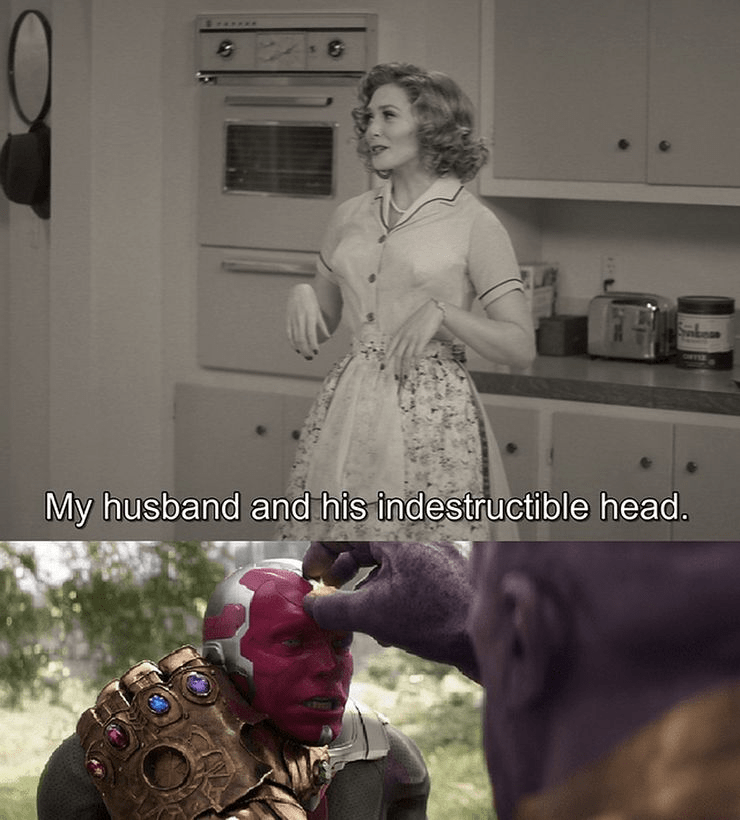
I’ve been watching Wandavision (slight spoiler ahead), and its commentary on grieving is very interesting.
So far, we have learned that Wanda created this entire TV land to escape the reality that Vision is dead. In the most recent episodes, Wanda is confronted by others that she needs to face her grief and her “truth.”
I think there are a lot of misconceptions about grief, and I know I’m not the first to notice we don’t have the healthiest ways to deal with it.
In fact, most of us do what Wanda does: we refuse to process and deal with our grief.
There’s a lot to grieve right now: missing friends and family, important events, and a loss of freedom. Some are grieving loss of loved ones due to CoVid or other reasons.
While it is unpopular, grief is not the enemy. It is part of how we need to process our experience, and there are healthy ways to deal with it.
The Grief Recovery Handbook
One of the books I’ve found helpful to help me process my grief, especially when my dad died a couple of years ago, was The Grief Recovery Handbook by John W. James and Russell Friedman.
One of the most enlightening things in that book was learning that the “five stages of grief” were not meant to be applied to grief.
Dr. Elizabeth Kubler-Ross identified emotional stages that a personal with a terminal illness might go through before they die: denial, anger, bargaining, depression, and acceptance.
These stages were not studied and observed in people grieving the death of a loved one, yet people commonly try to apply them to that scenario.
Grieving is Different for Everyone
One of the main points the authors emphasize is that grieving is going to look different for everyone because the relationship will be different.
Siblings who have lost a parent are going to grieve differently because they had a completely different relationship with the parent. Two people who have lost a pet are not going to have the same grieving experience as each other.
Each person needs to do their own work of sorting through their feelings, practicing self-care and identifying the boundaries they need.
Making Your Grief Complete
The authors also emphasize the need to complete your grief, and they guide you through a process they have successfully used in grief recovery programs.
Basically, you end up going over a history of your relationship with the person, pet, event, etc. and all the good and bad. You process your emotions and recognize what you are actually losing. You also recognize what you can be thankful for.
It was a good exercise for me, and I can recommend this book to those who are grieving. Sometimes we need to escape for a while and need a distraction from the work, but I think it’s important for everyone to process their grief. It can be a very healing process and you can learn a lot about yourself.
On a Personal Note
One thing I personally had to do in the grieving process was learn how to feel my anger and yet get to a place of true forgiveness.
You can’t skip that first step if you want to get to the second. When we try to forgive before emotionally processing things, you end up with denial. This is not a denial that the person is dead, but rather a denial of your feelings by not facing them.
Grieving is a natural, human process and I think we generally need to make more room for ourselves and others to be able to do that. We don’t need to fix it, and it doesn’t help to ignore it: instead, we need to heal by finding healthy ways to walk through it.
I post new Bible videos every Monday. Join me for these quick, 5-minute, information-rich devotionals. You can subscribe on Youtube to see these videos, and likes or comments on Youtube are always appreciated!
Here are some other Bible passages you can look at when you’re facing temptation:
Let no one say when he is tempted, “I am being tempted by God,” for God cannot be tempted with evil, and he himself tempts no one. But each person is tempted when he is lured and enticed by his own desire. Then desire when it has conceived gives birth to sin, and sin when it is fully grown brings forth death.
Do not be deceived, my beloved brothers. Every good gift and every perfect gift is from above, coming down from the Father of lights, with whom there is no variation or shadow due to change. Of his own will he brought us forth by the word of truth, that we should be a kind of firstfruits of his creatures.
James 1:13-18, ESV
What causes quarrels and what causes fights among you? Is it not this, that your passions are at war within you?You desire and do not have, so you murder. You covet and cannot obtain, so you fight and quarrel. You do not have, because you do not ask. You ask and do not receive, because you ask wrongly, to spend it on your passions. You adulterous people! Do you not know that friendship with the world is enmity with God? Therefore whoever wishes to be a friend of the world makes himself an enemy of God.
James 4:1-4, ESV
And he came out and went, as was his custom, to the Mount of Olives, and the disciples followed him. And when he came to the place, he said to them, “Pray that you may not enter into temptation.” And he withdrew from them about a stone’s throw, and knelt down and prayed,saying, “Father, if you are willing, remove this cup from me. Nevertheless, not my will, but yours, be done.”And there appeared to him an angel from heaven, strengthening him.And being in agony he prayed more earnestly; and his sweat became like great drops of blood falling down to the ground.And when he rose from prayer, he came to the disciples and found them sleeping for sorrow,and he said to them, “Why are you sleeping? Rise and pray that you may not enter into temptation.”
Luke 22:39-44, ESV
Pray then like this:
“Our Father in heaven, hallowed be your name. Your kingdom come, your will be done, on earth as it is in heaven. Give us this day our daily bread, and forgive us our debts, as we also have forgiven our debtors. And lead us not into temptation, but deliver us from evil.
Matthew 6:9-13, ESV
No temptation has overtaken you that is not common to man. God is faithful, and he will not let you be tempted beyond your ability, but with the temptation he will also provide the way of escape, that you may be able to endure it.
1 Corinthians 10:13, ESV
But those who desire to be rich fall into temptation, into a snare, into many senseless and harmful desires that plunge people into ruin and destruction.
1 Timothy 6:9, ESV
When you are tempted:
– seek God in His Word
– pray and look for a way out of it
– share your struggle with a trusted brother or sister in Christ and ask for prayer and accountability
Resources used for this video:
Zondervan Illustrated Bible Backgrounds Commentary, Vol. 1: Matthew, Mark, Luke. Edited by Clinton E. Arnold. 2002.
IVP Dictionary of Jesus and the Gospels. Editors Joel B. Green, Scot McKnight, I. Howard Marshall. 1992.
Greek New Testament
Think you don’t have time to study the Bible? Let these videos help enhance your understanding as you read through these Bible passages. Feel free to ask me some questions and I’ll direct you to some helpful resources.
Goals:
Help women to be in the Word regularly.
Help women gain understanding of proper approaches to studying the Bible.
Educate women about books of the Bible and connections throughout the Bible.
Teach orthodox theology according to the Bible.
Encourage women to live for God.
Bible for the Busy Woman is for:
– mothers of young children who can only grab a few minutes and don’t have a lot of brain power
– working women who have to give a lot to their job and want to understand the Bible better but don’t have the time
– female students who need their brainpower for their studies
Melissa Younger holds a BA in English and an MA in Theological Studies. Additionally, she has taught the Bible while working in various ministries for over ten years. She loves helping others understand God’s Word and how to live for Him.
This was a very long book (656 pages in the Penguin Classics edition)! I started reading it a couple of years ago, up until the point when the main character was about to commit a crime.
As I anticipated, I lost a lot of respect and empathy for the main character once he committed the crime. I like heroes to realize their wrongdoing and change. Unfortunately, you have to wade through many hundreds of pages for him to get there. Even then, he only confesses to the crime after being found out. I was satisfied there was some redemption in the epilogue (finally!).
Fyodor Dostoyevsky
Fyodor Dostoyevsky, the Russian novelist who wrote Crime and Punishment in 1866, was highly influential in the development of modern literature. He brought many unique political, psychological, and philosophical ideas to his works, and Crime and Punishment embodies them all.
Dostoyevsky was very politically active. He hung around intellectual, utopian socialists and was arrested for it. He spent eight months in prison before being marched out to an execution with the other members of the group. They were a trigger-pull away from their end when they were informed that the tsar had mercifully decided to spare them. Dostoyevsky’s experience later inspired the novel Crime and Punishment.
Dostoyevsky was familiar with pain, suffering, social problems, and death. After his life was spared, he spent four years in a Siberian prison before being forced into service as a soldier. He had a bad case of epilepsy and was known to have seizures. He later married a widow who died of consumption.
Though most of his life reads like a tragedy, Dostoyevsky eventually started to see the goodness of people in his later years. He grew less cynical and turned more towards faith, as he was influenced by Russian Orthodoxy.1
The Crime
Dostoyevsky used his life experiences to write Crime and Punishment. The difference is, the main character Raskolnikov commits a far more hideous crime than simply belonging to a group of intellectual revolutionaries.
Raskolnikov thinks of himself as a brave Napoleon, overcoming an obstacle to right a wrong in society. His way of thinking leading up to and following the crime could be termed consequentialist, as he believes the ends justify the means.
The crime he commits (spoiler alert!) is the horrific and graphic murder of two older women. Raskolnikov hides behind strategy and rationalizations in the time leading up to, during, and after the crime, believing that society would be wrong to consider what he did to be a crime.
Dostoyevsky delves into the complexities of a criminal’s psychology, and explores some of the external factors that sometimes drive people to commit crimes, such as oppression and poverty.
Raskolnikov has many different motivations for killing one of the women: she exploits poor people (including himself), he wants to save his sister from a bad marriage, and he desperately needs money.
The Guilt
Throughout the story, guilt eats away at Raskolnikov. This book serves as a study in the psychological effect of believing one can take justice into one’s own hands…only to find out that one is a poor judge.
When Raskolnikov discovers that he is not above the moral law which governs ordinary people, he begins to realize his guilt. It starts to drive him insane, until he is certain that he has no other choice but to confess.
The Punishment
This book explores different types of punishment. One of these is how we punish ourselves. Raskolnikov punishes himself psychologically long before he is arrested.
He puts himself in danger of being found out and starts dropping hints to others that he committed the murders everyone is talking about. He is in a nervous condition and constantly collapses from the mental strain.
On top of that, he goes through additional psychological torture when he is followed and continually interrogated, especially by a detective who implies but does not outright state what he knows.
Raskolnikov is eventually imprisoned in Siberia (like Dostoyevsky was), and forced into penal servitude. He works himself to the bone, and into a state of illness. Finally, a sense of shame and despondency set in. He is only rescued from these by the love of Sonya, a young girl who has loyally followed him after he showed kindness to her family.
Raskolnikov knows Sonya’s religious convictions, and realizes she has something he needs. He begins to read the New Testament, and the final seven years of his sentence don’t look so gloomy anymore.
I came away from this book thinking it is like a very dark and depressing murder mystery. Unlike other murder mysteries, the question is not whodunnit but, will the murderer be found out?
This was not the most pleasant read during a stressful pandemic and winter storm season, but I am happy to have finished it! If you’ve read this book I’d love to hear your thoughts 🙂
In today’s video, we look at Matthew 3:13-17 and why Jesus was baptized. We’ll also explore the importance of the Trinity in the passage and in our daily walk.
The context:
John has been baptizing many people who have come out to him to repent of their sin. Today, we see Jesus enter the scene, and ask John an uncomfortable question.
Different Kinds of Baptisms:
John was baptizing people who wanted to repent and live for God. It was a purification type of baptism, and not the same as the baptism we practice today (as they were not accepting Jesus as their savior yet!).
Jesus is baptized “to fulfill all righteousness,” but he didn’t need to repent because he was without sin. He is endorsing John’s baptism and the baptism with water shows his full submission to God. It is at this point that he receives another baptism: of the Holy Spirit.
Today’s Passage: Matthew 3:13-17
13 Then Jesus came from Galilee to the Jordan to John, to be baptized by him. 14 John would have prevented him, saying, “I need to be baptized by you, and do you come to me?” 15 But Jesus answered him, “Let it be so now, for thus it is fitting for us to fulfill all righteousness.” Then he consented. 16 And when Jesus was baptized, immediately he went up from the water, and behold, the heavens were opened to him, and he saw the Spirit of God descending like a dove and coming to rest on him; 17 and behold, a voice from heaven said, “This is my beloved Son, with whom I am well pleased.”
I post a new video every week, walking through the book of Matthew. You can stay tuned by subscribing on Youtube!








 Classic Reads