A Real Life Hallmark Town

Like many, I enjoy watching the Hallmark Christmas movies each year. Though they get increasingly predictable, sappy, and contrived, I still like seeing the Christmas decorations and how a group of people come together to solve a problem.

Recently, I spotted a story on Thrillist when I was looking for information for 2021 travel plans. It’s a story about a town that came together to keep the local hospital open at the beginning of the CoVid-19 pandemic. And then, of course, they were rewarded with an extravagant town light display. Very Hallmark-y. Still, it’s good to know that people in the community can help each other out in real life, too.

You can read the story and see the lights here: https://www.thrillist.com/news/nation/why-makers-mark-turned-this-tennessee-town-into-a-holiday-wonderland

There are better shots of the lights’ display on the Makers’ Mark page, which sponsored the contest: https://www.smalltownbrightlights.com/

Advent Week 4: Love

“All you need is love,” sang the Beatles and many others over the years.

Love might just be all we need, but this also prompts another question, which philosophers have pondered in song:

What Is Love?

I think the most compelling definition of love is the giving of oneself for another. In short, love is true sacrifice, where the good of another is elevated above one’s own needs.

What I don’t mean is this:

When we initially try to love and give of ourselves, we find it is impossible. As C.S. Lewis puts it:

“In the end, you will either give up trying to be good, or else become one of those people who, as they say, “lives for others” but always in a discontented, grumbling way – always wondering why the others do not notice anymore, and always making a martyr of yourself. And once you have become that you will be a far greater pest to anyone who has to live with you than you would have been if you had remained frankly selfish.”

C.S. Lewis Mere Christianity

Love is not meant to be prideful. It is not meant to direct attention to itself, saying “look how loving I am, everyone!”

And yet, when we start out trying to love others, I think that is a natural stage in our development, because the reality is we still need to be loved and admired. If we are constantly doing for others, we lose touch with our own needs and then start trying to solicit the love we need from others (manipulation, anyone?).

So, how do we get beyond this stage?

The Answer Is in the Christmas Story

We are in a pinch, because we are called to love others, yet we need love, too.

There is no guarantee that if we love others, they will love us. Or, if they do, we might question whether their love is genuine or a mere echo of the love we have given them.

I think the end of the book of I John sums up how God has solved these problems for us:

Dear friends, let us love one another, for love comes from God. Everyone who loves has been born of God and knows God. Whoever does not love does not know God, because God is love. This is how God showed his love among us: He sent his one and only Son into the world that we might live through him. This is love: not that we loved God, but that he loved us and sent his Son as an atoning sacrifice for our sins. Dear friends, since God so loved us, we also ought to love one another. No one has ever seen God; but if we love one another, God lives in us and his love is made complete in us.

I John 4:7-12
  1. God sent his Son Jesus into the world as an act of love.
  2. God’s love was further demonstrated when Jesus died to take away our sin.
  3. Because we have already received this great gift of love from God (redemption and restoration to a right relationship with Him), we should love others sacrificially, too.
  4. Then, we see the love of God in a more tangible way. We can love one another first, just as God did for us.

This brings me to the Christmas story.

God sent Jesus as a vulnerable little baby boy as an act of love. God sent one who was holy in among sinners, who would treat him in the most unloving ways.

God’s love is powerful, make no mistake. It overcame generations of disobedient, unloving people. His love is revolutionary, and can start something new in the human heart, that we don’t get from other humans. His love is pure and good. That is a gift we should celebrate and pass on to others this Christmas!

Chicago Christmas Photos

Since we haven’t been able to go out and explore Chicago this Christmas, I’ll have to share some photos from last Christmas. Hopefully, once our apartment is decorated and if we drive through a Christmas lights display I will have some more to share.

The Museum of Science and Industry, Chicago

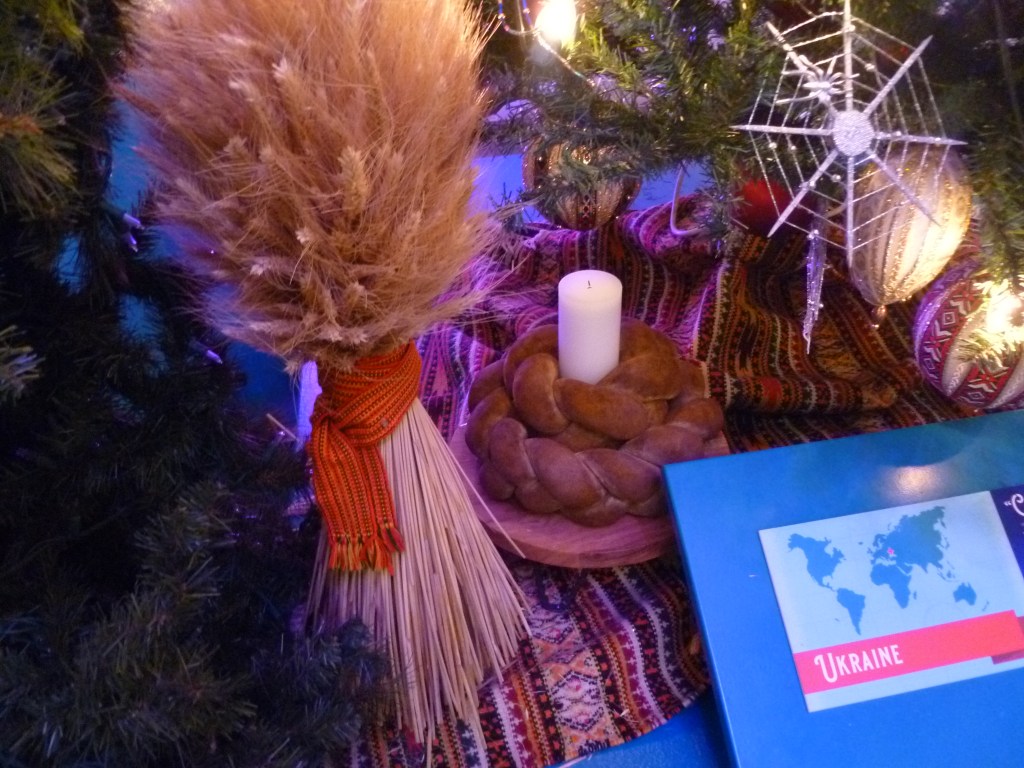
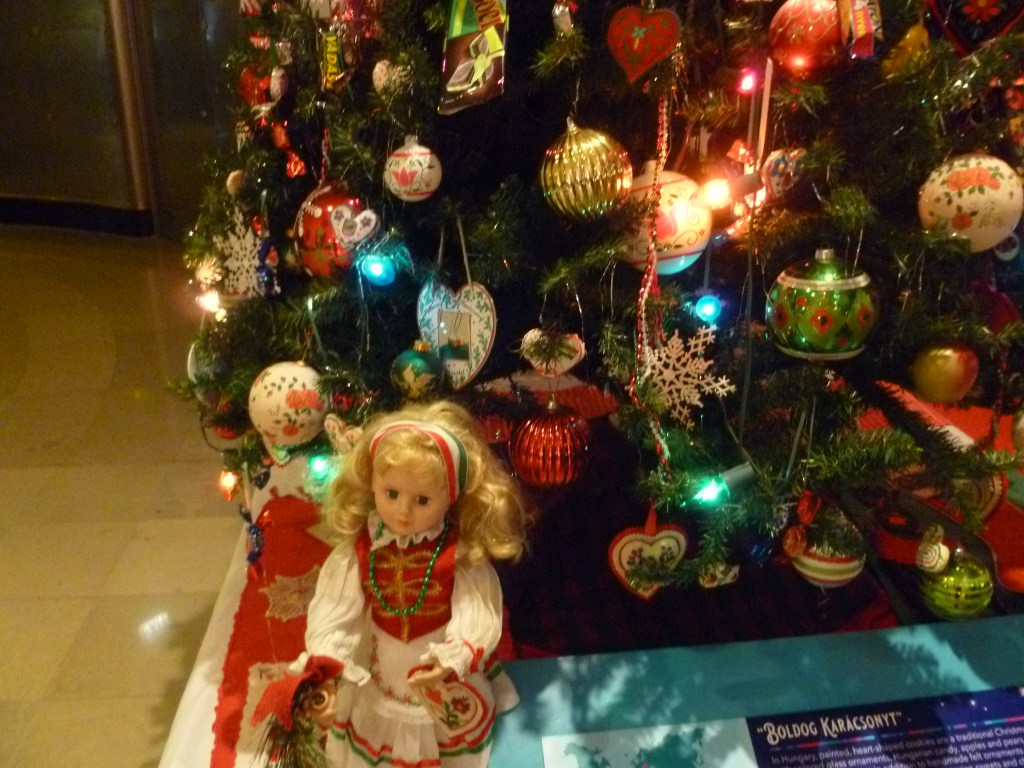
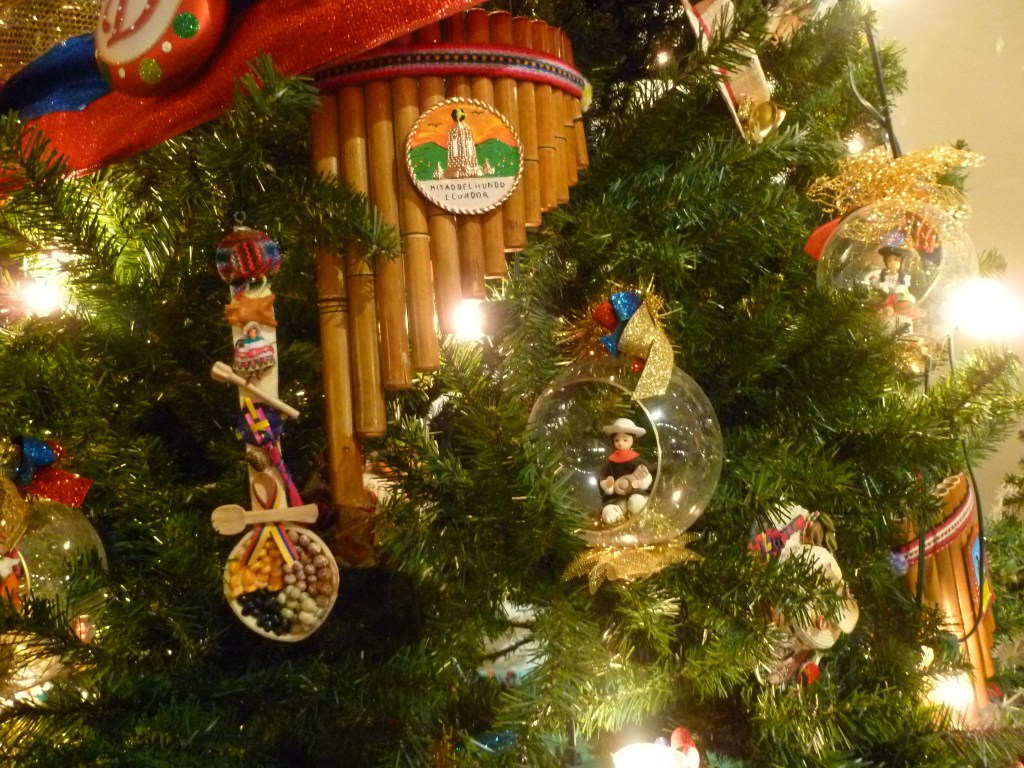
I loved seeing all the Christmas trees from around the world. Can you guess which country each of these is from?

Union Station

They had a giant Christmas tree and a large engine on display as the “Polar Express” (but my battery died before I could get the picture!).

Like Kevin McAllister, I just can’t get enough of towering Christmas trees for some reason.

Zoo Lights at Lincoln Park Zoo

If you’re ever in Chicago around Christmas, I recommend the zoo lights!

It was different to go to the zoo at night, and one of the cool parts was that the nocturnal animals like the wolves were extremely active and fun to watch. But man, it was cold! Even dressed in layers we were frozen to the bone by the end (that’s what hot chocolate is for!).

This year, due to CoVid, we can’t do many of the fun Christmas things we want to, but we might check out one of the drive-through Christmas light displays (Some for the Chicago area can be found here: https://www.timeout.com/chicago/things-to-do/christmas-lights-in-chicago).

Happy Safe Christmasing, Everyone! 🙂

Third Sunday of Advent: Joy

We all experience joy in our lives, even if it’s just for a moment. 

As children, we find joy in the small things: learning to walk, discovering and learning things for the first time, joy in things like ice cream, a parent’s embrace, and playing water games on a warm summer day.

Then there’s joy in graduating, in achieving our goals, in meeting that special someone and falling in love for the first time and eventually, looking into the face of your newborn child.

This week of advent we celebrate joy. There’s a lot of different joys in the Christmas narrative in the Bible, but one joy encapsulates all of them: the joy of that the Messiah is finally coming!

The Joy of Elizabeth and John the Baptist

First, we see the joy of Elizabeth, Mary’s older cousin, when Mary comes to visit her after finding out that she will give birth to the Son of God. 

“And when Elizabeth heard the greeting of Mary, the baby leaped in her womb. And Elizabeth was filled with the Holy Spirit, and she exclaimed with a loud cry, “Blessed are you among women, and blessed is the fruit of your womb! And why is this granted to me that the mother of my Lord should come to me? For behold, when the sound of your greeting came to my ears, the baby in my womb leaped for joy. And blessed is she who believed that there would be a fulfillment of what was spoken to her from the Lord.”

Luke 1:41-45

It has always fascinated me that the baby in her womb leaps for joy, too. The baby is John the Baptist, who will be both Jesus’ cousin and forerunner, the Elijah of his day, prophesying for people to “Repent, for the Kingdom of Heaven is at hand!” (Matthew 3:2)

The Joy of Mary, the Mother of Jesus

Then, there is Mary’s song of joy as the reality of her situation sinks in. She expresses her joy in song, in the famous Magnificat:

“My soul magnifies the Lord,

    and my spirit rejoices in God my Savior,

for he has looked on the humble estate of his servant.

    For behold, from now on all generations will call me blessed;

for he who is mighty has done great things for me,

    and holy is his name.

And his mercy is for those who fear him

    from generation to generation.

He has shown strength with his arm;

    he has scattered the proud in the thoughts of their hearts;

he has brought down the mighty from their thrones

    and exalted those of humble estate;

he has filled the hungry with good things,

    and the rich he has sent away empty.

He has helped his servant Israel,

    in remembrance of his mercy,

as he spoke to our fathers,

    to Abraham and to his offspring forever.”

Luke 1:46-55

The Joy of Friends and Relatives, and Zechariah

Then, the story focuses on Elizabeth and Zechariah as their child is born. Friends and relatives rejoice over the birth of John the Baptist, as Elizabeth was well beyond child-bearing years. 

Everyone knows that this child is miraculous and from God, even though John’s father Zechariah cannot tell them (you may recall he was struck dumb when he didn’t believe the angel that his wife would have a child). 

“neighbors and relatives heard that the Lord had shown great mercy to her, and they rejoiced with her.”

Luke 1:58

When the child is born and they are naming it, Zechariah writes that the child will be called John as that is what God told Zechariah to name him. Suddenly, he can talk again!

And the first words from his lips are those of joy. Not joy over his newborn son, but over what John will preach and stand for: that John will help prepare people for the Messiah, his cousin Jesus.

The Joy of the Shepherds

This brings us to the last group of people who rejoice in Luke’s account of Jesus’ birth: the shepherds. 

To some, the joy candle is all about the joy of the shepherds when they hear the good news out in the fields at night: 

“the angel said to them, “Fear not, for behold, I bring you good news of great joy that will be for all the people. For unto you is born this day in the city of David a Savior, who is Christ the Lord. And this will be a sign for you: you will find a baby wrapped in swaddling cloths and lying in a manger.” And suddenly there was with the angel a multitude of the heavenly host praising God and saying,

“Glory to God in the highest,

    and on earth peace among those with whom he is pleased!”

Luke 2: 10-14

The shepherds respond by going to find the child (via the angels directions), and then tell the good news to everyone they meet. 

“And the shepherds returned, glorifying and praising God for all they had heard and seen, as it had been told them.”

Luke 2:20

But then there’s a curious note in there about Mary pondering these things in her heart. I can see joy in that, too. 

Remember to Rejoice

The main message throughout the Christmas story is that there was and should be much rejoicing in a savior being born into the world: one who would take away sin and defeat death. Christians: remember this joy at Christmastime, and take time to ponder the wonders of this season.

The Magnificat (by Bach):

Christmas Classics: The Little Match Girl

An illustration for the story The Little Match Girl by the author Hans Christian Andersen

I’ve always loved fairytales, and used to read every Grimm Brothers and Hans Christian Anderson story there was, along with many others. Each one was unique: promising castles and balls, or magic and mystery. I was drawn to them for the happy ending; somehow, the hero would overcome an obstacle against all odds.

Hans Christian Anderson’s The Little Match Girl has always seemed depressing, and never fit the fairytale genre to me. Yet, it holds its own kind of hope (albeit in a depressing way).

The Christmas in the Story

This Christmastime story, which takes place on the eve of the New Year, reminds us of those in need. The author shows the plight of the match girl and how brave she is in the face of death, using her imagination to try to warm herself.

Each time the girl strikes a match, a new cheery vision brings her happiness. Once, she sees a holiday feast. Another time, she catches a glimpse of a marvelous Christmas tree.

The Match Girl

The match girl is not a well-developed character: all we learn about her is that she is slowly freezing to death while others enjoy warmth and food indoors, and that she doesn’t want to go home because her father will beat her for not making money from selling matches.

We immediately sympathize with her: after all, she is a little girl with no way to help herself. Instead, she uses her imagination to escape from her harsh reality (or are the matches really magical?).

The Injustice

This story leaves you with a sense of injustice: how could all those passers-by neglect this poor girl?

Why isn’t society (or some kind soul) taking pity on her and welcoming her inside?

This story can remind us of the need to notice and see the needs of those who are “freezing to death” before our eyes. This could be taking literally, or to mean those who have great needs we could help meet.

I saw this article recently about a French man who designed an “igloo” (it’s an old story that’s going around again), which I think shows ingenuity and compassion.

It’s easy to forget all we take for granted, and not to see others who don’t have the things we do. This story is a sad, poetic illustration of that reality to me.

The Story:

“Most terribly cold it was; it snowed, and was nearly quite dark, and evening– the last evening of the year. In this cold and darkness there went along the street a poor little girl, bareheaded, and with naked feet. When she left home she had slippers on, it is true; but what was the good of that? They were very large slippers, which her mother had hitherto worn; so large were they; and the poor little thing lost them as she scuffled away across the street, because of two carriages that rolled by dreadfully fast.

One slipper was nowhere to be found; the other had been laid hold of by an urchin, and off he ran with it; he thought it would do capitally for a cradle when he some day or other should have children himself. So the little maiden walked on with her tiny naked feet, that were quite red and blue from cold. She carried a quantity of matches in an old apron, and she held a bundle of them in her hand. Nobody had bought anything of her the whole livelong day; no one had given her a single farthing.

She crept along trembling with cold and hunger–a very picture of sorrow, the poor little thing!

The flakes of snow covered her long fair hair, which fell in beautiful curls around her neck; but of that, of course, she never once now thought. From all the windows the candles were gleaming, and it smelt so deliciously of roast goose, for you know it was New Year’s Eve; yes, of that she thought.

In a corner formed by two houses, of which one advanced more than the other, she seated herself down and cowered together. Her little feet she had drawn close up to her, but she grew colder and colder, and to go home she did not venture, for she had not sold any matches and could not bring a farthing of money: from her father she would certainly get blows, and at home it was cold too, for above her she had only the roof, through which the wind whistled, even though the largest cracks were stopped up with straw and rags.

Her little hands were almost numbed with cold. Oh! a match might afford her a world of comfort, if she only dared take a single one out of the bundle, draw it against the wall, and warm her fingers by it. She drew one out. “Rischt!” how it blazed, how it burnt! It was a warm, bright flame, like a candle, as she held her hands over it: it was a wonderful light. It seemed really to the little maiden as though she were sitting before a large iron stove, with burnished brass feet and a brass ornament at top. The fire burned with such blessed influence; it warmed so delightfully. The little girl had already stretched out her feet to warm them too; but–the small flame went out, the stove vanished: she had only the remains of the burnt-out match in her hand.

She rubbed another against the wall: it burned brightly, and where the light fell on the wall, there the wall became transparent like a veil, so that she could see into the room. On the table was spread a snow-white tablecloth; upon it was a splendid porcelain service, and the roast goose was steaming famously with its stuffing of apple and dried plums. And what was still more capital to behold was, the goose hopped down from the dish, reeled about on the floor with knife and fork in its breast, till it came up to the poor little girl; when–the match went out and nothing but the thick, cold, damp wall was left behind. She lighted another match. Now there she was sitting under the most magnificent Christmas tree: it was still larger, and more decorated than the one which she had seen through the glass door in the rich merchant’s house.

Thousands of lights were burning on the green branches, and gaily-colored pictures, such as she had seen in the shop-windows, looked down upon her. The little maiden stretched out her hands towards them when–the match went out. The lights of the Christmas tree rose higher and higher, she saw them now as stars in heaven; one fell down and formed a long trail of fire.

“Someone is just dead!” said the little girl; for her old grandmother, the only person who had loved her, and who was now no more, had told her, that when a star falls, a soul ascends to God.

She drew another match against the wall: it was again light, and in the lustre there stood the old grandmother, so bright and radiant, so mild, and with such an expression of love.

“Grandmother!” cried the little one. “Oh, take me with you! You go away when the match burns out; you vanish like the warm stove, like the delicious roast goose, and like the magnificent Christmas tree!” And she rubbed the whole bundle of matches quickly against the wall, for she wanted to be quite sure of keeping her grandmother near her. And the matches gave such a brilliant light that it was brighter than at noon-day: never formerly had the grandmother been so beautiful and so tall. She took the little maiden, on her arm, and both flew in brightness and in joy so high, so very high, and then above was neither cold, nor hunger, nor anxiety–they were with God.

But in the corner, at the cold hour of dawn, sat the poor girl, with rosy cheeks and with a smiling mouth, leaning against the wall–frozen to death on the last evening of the old year. Stiff and stark sat the child there with her matches, of which one bundle had been burnt. “She wanted to warm herself,” people said. No one had the slightest suspicion of what beautiful things she had seen; no one even dreamed of the splendor in which, with her grandmother she had entered on the joys of a new year.”

Story and image from: https://americanliterature.com/author/hans-christian-andersen/short-story/the-little-match-girl


Classic Christmas Books Made Into Movies

The Polar Express

This book was originally a beautiful, illustrated classic by Chris Van Allsburg (also the author and illustrator of Jumanji). I always loved looking at the illustrations and the magic of this Christmas story as a child, but when they created an animated adaptation, I was skeptical.

They had to add a lot of plot to drag this story out, but they did that well, by making the conductor (played by Tom Hanks), a hobo character (also played by Tom Hanks), and the engineers more of a part of this story.

And then there’s the magical soundtrack, complete with the amazing vocal talents of Josh Groban. What’s not to love about both the classic book AND the movie?

How The Grinch Stole Christmas

I honestly haven’t seen the new Benedict Cumberbatch one yet (is it good?), but I know I loved this old version as a kid, made from Dr. Suess’ original drawings:

A Muppet Christmas Carol

Charles Dickens’ A Christmas Carol was *cough* naturally made into a Muppet Movie, staying true to the original classic with a few minor changes (such as Stanley and Woldorf playing the Marley brothers).

For some reason, the Muppet Christmas Carol portrayal of Robin (Kermit’s nephew) as Tiny Tim is somehow more endearing than in the human versions. And man, if any movie shows off Michael Caine’s acting ability, it’s this one. Acting with a cast of almost all muppets must have been a challenge, especially to portray all the poignant emotions of Scrooge.

How about you? Do you have any favorite Christmas books that were made into movies?

Second Sunday of Advent: Peace

We all want peace, don’t we?

As an enneagram 9, I truly long for peace- both internally, and between those around me. Yet, there are false peaces…

Week 2 of advent in the Christian tradition centers around peace. God promises peace many times in the Bible. But then there is the juxtaposition that Jesus presents, as He brings both peace AND division.

Let’s look at the peace part first.

A prophesy about Jesus in Isaiah says:

For to us a child is born,

to us a son is given;

and the government shall be upon his shoulder,

    and his name shall be called

Wonderful Counselor, Mighty God,

    Everlasting Father, Prince of Peace.

Isaiah 9:6

Jesus is named the prince of peace, meaning that he rules over it. But Jesus doesn’t rule over peace by bringing a beauty pageant type of world unity. People don’t just suddenly start getting along.

Later, Isaiah talks about peace for the new nation God will build:

“Open the gates,
    that the righteous nation that keeps faith may enter in.
You keep him in perfect peace
    whose mind is stayed on you,
    because he trusts in you.”

Isaiah 26:2-3

God’s peace is for those who are mindfully living for and trusting in Him.

When we come to the Christmas story, we see peace proclaimed by the angels to the shepherds at Christ’s birth:

Suddenly a great company of the heavenly host appeared with the angel, praising God and saying,

“Glory to God in the highest heaven,
    and on earth peace to those on whom his favor rests.”

When the angels had left them and gone into heaven, the shepherds said to one another, “Let’s go to Bethlehem and see this thing that has happened, which the Lord has told us about.”

Luke 2:13-15

Peace here is for those on whom God’s favor rests. We know from other scripture passages that God’s favor rests on those who obey Him and trust in him.

Now let’s look at who isn’t promised peace:

Do not suppose that I have come to bring peace to the earth. I did not come to bring peace, but a sword. For I have come to turn ‘a man against his father, a daughter against her mother, a daughter-in-law against her mother-in-law – a man’s enemies will be the members of his own household.’ Anyone who loves his father or mother more than me is not worthy of me; anyone who loves his son or daughter more than me is not worthy of me; and anyone who does not take his cross and follow me is not worthy of me.”

Matthew 10:34-38 NIV

Jesus says there will NOT be peace between those who are following God and those who are not. Just think about the last time religious conversation came up with family members who held very different viewpoints. Was it a peaceful conversation?

This doesn’t mean that Christians can’t or shouldn’t go the extra mile to be peacemakers (blessed are the peacemakers, remember?). It means that it will be much harder to keep things pleasant and, in the grander scheme of things, there is not true peace between people whose core values are divergent. They can “act nice” but that is not the same thing (not that acting nice is bad).

The true peace that Christmas promises is for those who believe in Christ Jesus and follow his teachings. They get peace with God, which brings about other types of peace (inwardly and with others).

Therefore, since we have been justified by faith, we have peace with God through our Lord Jesus Christ.

Romans 5:1

When we come to the Christmas story, we can remember that Jesus brings peace with God, and that is something worth celebrating.

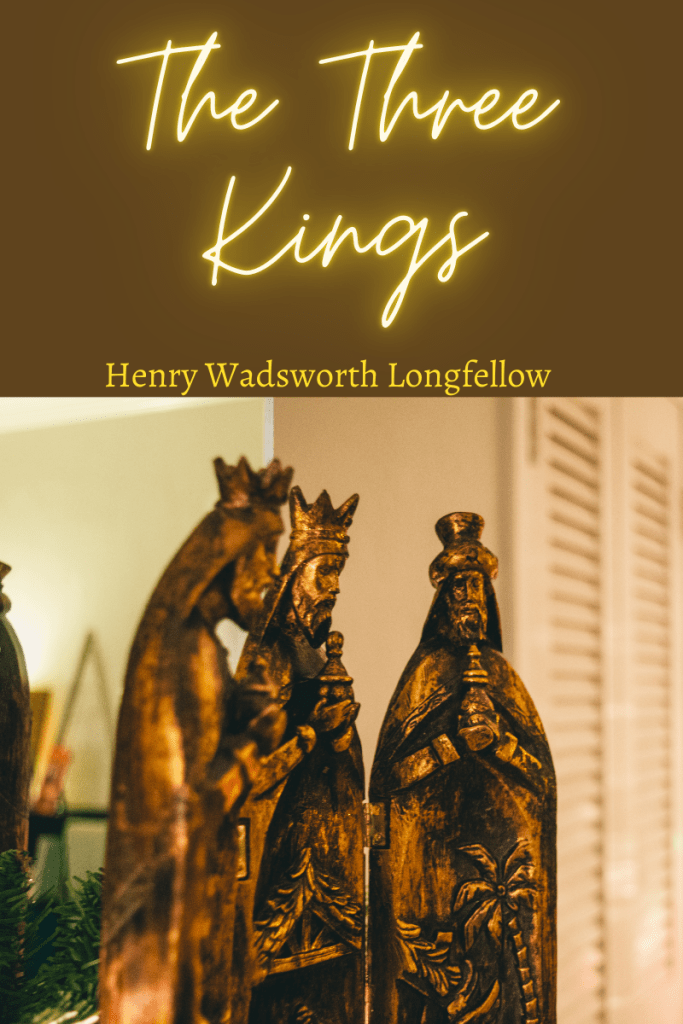
Christmas Classics: The Three Kings

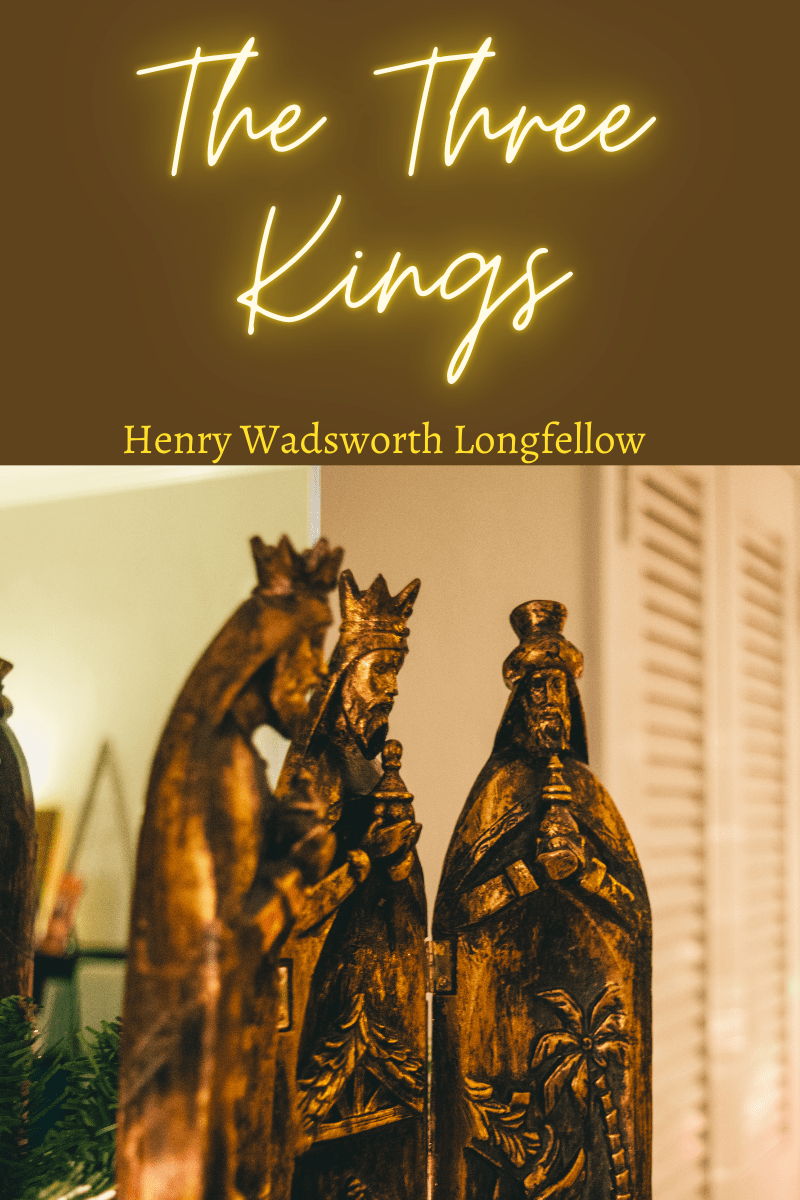
Henry Wadsworth Longfellow was a well-known, 19th-Century American poet, astute scholar, and world traveler. He wrote countless poems, such as “Paul Revere’s Ride.” He also wrote fiction, nonfiction, and translations of many European works.

Longfellow knew many different languages, including French and German, and was a well-respected scholar in his day. Though The Three Kings is not his most popular work, I wanted to share it with you, in the spirit on the Christmas season.
 

Three Kings came riding from far away,
Melchior and Gaspar and Baltasar;
Three Wise Men out of the East were they,
And they travelled by night and they slept by day,
For their guide was a beautiful, wonderful star.

The star was so beautiful, large and clear,
That all the other stars of the sky
Became a white mist in the atmosphere,
And by this they knew that the coming was near
Of the Prince foretold in the prophecy.

Three caskets they bore on their saddle-bows,
Three caskets of gold with golden keys;
Their robes were of crimson silk with rows
Of bells and pomegranates and furbelows,
Their turbans like blossoming almond-trees.

And so the Three Kings rode into the West,
Through the dusk of the night, over hill and dell,
And sometimes they nodded with beard on breast,
And sometimes talked, as they paused to rest,
With the people they met at some wayside well.

“Of the child that is born,” said Baltasar,
“Good people, I pray you, tell us the news;
For we in the East have seen his star,
And have ridden fast, and have ridden far,
To find and worship the King of the Jews.”

And the people answered, “You ask in vain;
We know of no King but Herod the Great!”
They thought the Wise Men were men insane,
As they spurred their horses across the plain,
Like riders in haste, who cannot wait.

And when they came to Jerusalem,
Herod the Great, who had heard this thing,
Sent for the Wise Men and questioned them;
And said, “Go down unto Bethlehem,
And bring me tidings of this new king.”

So they rode away; and the star stood still,
The only one in the grey of morn;
Yes, it stopped—it stood still of its own free will,
Right over Bethlehem on the hill,
The city of David, where Christ was born.

And the Three Kings rode through the gate and the guard,
Through the silent street, till their horses turned
And neighed as they entered the great inn-yard;
But the windows were closed, and the doors were barred,
And only a light in the stable burned.

And cradled there in the scented hay,
In the air made sweet by the breath of kine,
The little child in the manger lay,
The child, that would be king one day
Of a kingdom not human, but divine.

His mother Mary of Nazareth
Sat watching beside his place of rest,
Watching the even flow of his breath,
For the joy of life and the terror of death
Were mingled together in her breast.

They laid their offerings at his feet:
The gold was their tribute to a King,
The frankincense, with its odor sweet,
Was for the Priest, the Paraclete,
The myrrh for the body’s burying.

And the mother wondered and bowed her head,
And sat as still as a statue of stone,
Her heart was troubled yet comforted,
Remembering what the Angel had said
Of an endless reign and of David’s throne.

Then the Kings rode out of the city gate,
With a clatter of hoofs in proud array;
But they went not back to Herod the Great,
For they knew his malice and feared his hate,
And returned to their homes by another way.

It’s interesting that though the wise men from the East are never named in the Bible, Longfellow’s poetic choices for their names have crept into the American version of this story.

Overall this is a fun, imaginative poem which stays mostly true to the original Bible story found in Matthew 2, and I love the descriptive language he uses.

NaNoWriMo Week 4

Well, the truth is, I did not hit the 50,000 word mark for NaNoWriMo- at least not on the book I was working on. I did more like 28,000 words, but that’s okay!

I figured out I have too many different projects going on at once to really sink my teeth into one at the moment. Generally speaking, this is just the way I operate. I like to spin many plates at once, which results in slower progress on all of them, but it keeps me interested and energized to work on them.

Below is a snippet of what I wrote for the last week, on my modern, Jane Austen-inspired YA novel:

“As I was saying,” Will continued, “philosophy of language is fundamental and essential to have lucid conversations about other philosophical discussions. If we can’t agree on what terms are and what they mean, then we can’t even have a discussion, and we might end up talking past each other.”
One of the students raised his hand.
“Yes,” Will said, pointing to the student.
“But can’t you just look words up in the dictionary?” he asked, grinning and elbowing his friend.
“Yes, but in what dictionary?” Will asked. “What I mean is, if you have specialized terms then chances are that different people are going to define and interpret those terms differently. You need to think about the context that the word is being used in, who is using the word, who they’re speaking to, and all of those things. But now we’re getting into hermeneutics instead of just philosophy of language.”
Susan was impressed despite herself. Will seemed very at ease in front of these students, explaining these philosophical concepts.
“I know that some of you have started in the philosophy program this year,” Will was saying, “so you might not have taken Linguistics or philosophy of language classes yet, but you will need to understand these fundamentals for your other classes.”
Susan raised her hand, and Will cocked one eyebrow. “Yes,” he said, pointing at her.
“I was just wondering,” said Susan, “can those who aren’t in the philosophy program join this club?
“I think that’s a question for the club president, but I would assume so,” Will said with a smile. “Do you have any comment on the philosophy of language?”
Susan felt a little flustered and put on the spot. She glanced around the room at the other students and saw that most of them looked just as nervous as she did. It made her feel a little bit more at ease that she wasn’t surrounded by a bunch of geniuses, or if they were geniuses, they weren’t completely confident about it.
“Well,” said Susan. “I usually try to deal with philosophy by using examples.”
“Such as?” Will asked.
“For instance, if I have a pencil,” Susan said, drawing her inspiration from the pencil that lay on the table in front of one of the students. “When I use the word pencil, am I talking about that pencil in particular, or am I talking about the concept of pencils? I think, as you said, it depends on the context. A pencil is an object that has certain properties that qualify it to be a pencil.”

Happy End of NaNoWriMo!

Resources for Self-Publishing

As I’ve been embarking on this self-publishing journey, I’ve searched for people who

a) seem to know what they’re talking about

b) have great, easy-to-follow videos/ instructions

I wanted to share with you some of the great content I’ve found out there, if you are someone who is interested in self-publishing, too. 

Best Self-Publishing Companies for Novels in 2020 by iWriterly

Book Marketing Strategies by iWriterly

Abbie Emmons has lots of great writing tips and shares about how she self-published her own book. You can check out her videos here: https://www.youtube.com/c/AbbieEmmons

How to Layout your book in Adobe Indesign with Becca C. Smith

Creating a children’s book in Indesign with Bethany Stahl

Helps and Tips for Creating a Book Cover:

How to Self-Publish Your First Book: Step-by-step tutorial for beginners with Gillian Perkins

How to Self Publish Your Book Using Amazon’s KDP – video tutorial with Richard Blazevich

If you have found some great resources for self publishing that you want to share with others, feel free to leave links to content below.

Happy self-publishing!

Design a site like this with WordPress.com
Get started