Facing Shame: Families in Recovery

Facing Shame: Families in Recovery is an intense book. Some of the case studies they discuss could be triggering for some (which is why I’ve not included them in this post).

This book was written by two family therapists, Merle A. Fossum and Marilyn J. Mason, one of whom is the co-founder of the Family Therapy Institute in St. Paul, Minnesota.

This book is intended for practicing physicians–which I am not–but I decided to read it because:

  • I wanted to better understand the system of my shame-based family of origin and how to break free from those patterns.
  • I want to help people, especially in the church, to recognize and move from unhealthy shame-based patterns to healthier ones.

The main thrust of this book is that individuals in shame-based family systems need to do a lot of work to become more respectful and healthy.

The Addiction is the Not the Problem

At the risk of being controversial, this book reveals what I have long suspected: the addiction is not the real problem. What I mean is that there is a whole supporting system behind addiction, full of false beliefs and harmful, ingrained patterns of behavior. The authors share their discovery of this:

“Early in our learning we thought we were dealing with distinctly different problems–one family having a problem with alcohol abuse, another with compulsivity around money, and another with physical abuse. The separate family patterns came together in a pattern, a template of shame.”

Facing Shame, p. 7

What they discovered is that an unhealthy system develops around a person with an addiction, and the unhealthy patterns of shame are passed down the family line no matter if the addiction is or not.

Guilt Vs. Shame

I think the authors could have clarified that the type of shame they are talking about is unhealthy shame, which is not based in reality. Instead, they lump all shame together.

Here is their full definition of shame:

“Shame is an inner sense of bring completely diminished or insufficient as a person. It is the self judging the self. A moment of shame may be humiliation so painful or an indignity so profound that one feels one has been robbed of her or his dignity or exposed as basically inadequate, bad, or worthy of rejection. A pervasive sense of shame is the ongoing premise that one is fundamentally bad, inadequate, defective, unworthy, or not fully valid as a human being.”

(Facing Shame, p.5)

The authors attempt to differentiate feelings of guilt, which they define as, “the inner experience of breaking the moral code,” and shame, which is ” the inner experience of being looked down upon by the social group (vii).” They describe shame as a devouring monster, from which we must break free.

My personal opinion is not all shame is bad. Sure, it feels bad, but there are things for which we should feel shame. If you commit murder, you should feel shame! And, yes, society should shame murderers! I will talk about this good use of shame for moral formation in a post about the book Defending Shame.

Unhealthy Shame is Self-Perpetuating

Once a shame-based family is constructed, it is much harder to undo it. Why? because the shame becomes somewhat self-perpetuating. People living in the shame-based system become dependent on it, and will defend it and lash out at those who try to attack it.

The authors discuss the development of a false self in a shame-based system. Each person has a role to play, like in a sitcom. Stepping outside that role and revealing your true self breaks the family rules. The sad thing is, this system does not allow for any true intimacy to take place, as each person’s true self becomes buried. I know from personal experience it takes a lot of learning and practice to show up as your genuine self.

Developing Boundaries

This book dealt with learning how to establish healthy boundaries, too, as these are often blurred in shame-based family systems.

I liked the zipper metaphor they used to describe the regulation of boundaries.

Basically, we have two zippers: an internal and an external one. When we are enslaved to unhealthy patterns of shame, another person can come up, unzip us and take whatever they want.

When we learn how to manage our internal zipper, we can maintain our boundaries and self respect no matter what someone else is trying to do to us. This is key to combating unhealthy patterns of shame.

Who Should Read This Book

Like I said, this book is meant for family therapists, but I think it is applicable for anyone who works with families (social workers, ministers, etc.). It can also be used for personal work if you come from a shame-based family system.

You may come from a shame-based family if:

  • There are family secrets no one is supposed to talk about (though this might never be explicitly stated).
  • Family relationships always feel thin and brittle.
  • Your family system clings to a certain time period or version of the people in it. It is inflexible and unwilling to change.
  • There are vague boundaries.
  • Perfection is demanded.
  • Individuals are disrespected and violated frequently (this will happen on rare occasions in a healthy system).
  • Anyone in the family was abused.
  • Anyone in the family struggles with addiction (even if it was your great-grandpa!).

I hope this is helpful to someone out there. Shame is not the most fun topic to think about and discuss, but I think it is an important one that we all need to address at some point.

Bible for the Busy Woman: Matthew 1:18-25

Welcome to Bible for the Busy Woman! Today’s passage is Matthew 1:18-25, which talks about the awkward situation Joseph finds himself in when Mary is pregnant before they had “come together,” and how God orchestrated events to make Joseph Jesus’ (adoptive) father.

In this video, we’ll identify the main topic and walk through the three actions that help us to find meaning in it, while touching a little on the cultural context.

*You can subscribe to my Youtube channel and hit the notifications button to regularly see these videos. I will put out a new one every Monday (and possibly more often in the future!). 

**Please like or comment on the video on Youtube as well, so that more people who are interested in this kind of content can find it (it improves search rankings based on activity).

Resources used for this video:

Zondervan Illustrated Bible Backgrounds Commentary, Vol. 1: Matthew, Mark, Luke. Edited by Clinton E. Arnold. 2002.

Greek NT.

ESV Bible.

Feel free to ask me some questions and I’ll direct you to some helpful resources.

Goals for Bible for the Busy Woman: 

  • Help women to be in the Word regularly.
  • Help women gain understanding of proper approaches to studying the Bible.
  • Educate women about books of the Bible and connections throughout the Bible.
  • Teach orthodox theology according to the Bible.
  • Encourage women to live for God.

Bible for the Busy Woman is for:

  • Mothers of young children who can only grab a few minutes and don’t have a lot of brain power.
  • Working women who have to give a lot to their job and want to understand the Bible better but don’t have the time.
  • Female students who need their brainpower for their studies.

Undine By Friedrich de la Motte Fouque

Cover

I’ve always loved George MacDonald’s essay on the Fantastic Imagination, and his discussion of fairytales. While rereading it recently, my curiosity was piqued by the example of the story he feels embodies the true fairytale form: Undine, by Friedrich de la Motte Fouque.

Were I asked, what is a fairytale? I should reply, Read Undine: that is a fairytale; then read this and that as well, and you will see what is a fairytale. Were I further begged to describe the fairytale, or define what it is, I would make answer, that I should as soon think of describing the abstract human face, or stating what must go to constitute a human being. A fairytale is just a fairytale, as a face is just a face; and of all fairytales I know, I think Undine the most beautiful.

The Fantastic Imagination, George MacDonald.

The Author

The author of Undine, by the full name Friedrich Heinrich Karl de la Motte, or Baron Fouqué, was born February 12, 1777, and became a German novelist and playwright (though he was of French descent). He was an avid reader who loved mythology, especially of the Scandanavian, Greek, and Norse variety.

His writings often embodied the ideals of chivalry and drew upon the linguistic ideas of J.G. Fichte, a German philosopher who was one of Fouqué’s contemporaries.

Fouqué’s fame was short-lived, but thanks to the shout outs he got from his contemporaries, such as George MacDonald, his works are not lost (background from here).

The Premise

Though it has been likened to the Little Mermaid, the stakes in Undine’s premise are much higher:

“Undine has come to earth to seek for a soul. Without one she may never know the golden gifts God has given to each mortal, gifts these of love, joy, sorrow. You will read in this little book how Undine, the water maiden, won for herself a human soul.”

Undine, From: http://www.gutenberg.org/files/18752/18752-h/18752-h.htm

She is not just looking for a man she fell in love with; she needs a soul, because she doesn’t have one.

The Chivalrous Knight and the Maiden

The story begins with your standard chivalrous knight happening upon a fisherman, his wife, and their a beautiful foster daughter Undine.

Undine is captivated by the knight, and begs him to tell her about his adventures. Her foster parents angrily insist that the knight not tell Undine, and Undine storms out of the cottage and into the dangers of the woods.

The fisherman and the knight then must embark on a noble quest to bring the maiden back safely.

Here we see that the maiden is strange, for she sits peacefully during a big storm:

Looking around him Huldbrand saw where Undine had found a shelter. It was on a little island, beneath the branches of a great tree, that the maiden sat. There was no terror of the storm in her eyes. She was even smiling happily as she nestled amid the sweet scented grass, safe from the fury of the storm.

Undine, http://www.gutenberg.org/files/18752/18752-h/18752-h.htm

From this scene, I can only think that Undine(1811) must have influenced George MacDonald in writing The Light Princess (1864), as there is a similarity in the lightness of their character.

The Knight’s Tale

After Undine is safely back in the cottage, the knight agrees to tell Undine his tale, and the fisherman and his wife now agree to listen.

'I saw in a great cavern a group of little goblins'

The knight encounters many terrifying creatures, including an “ugly little man” and some hostile goblins. A tall, white, haunting figure seems to follow him, especially in the stream.

In the knight’s story, Undine learns that she has a rival for his affections: a lady that the knight had met in town, named Bertalda. It was she who sent the knight on his quest into the forest, to bravely face the perils and bring news back to her.

The Knight is Domesticated

The knight is trapped by the stream, which rose after the storm, and is forced to stay with Undine and her parents at the cottage.

The knight slowly becomes domesticated, no longer needing his sword. He begins to imagine that Undine is secretly the daughter of some king, and daydreams about marrying her.

A Priest Walks Into a Cottage…

Enter a priest, literally. He knocks on the door, just when the knight is thinking about how much he wants to marry Undine. How convenient! The knight seizes the opportunity to propose.

In the little cottage were heard the solemn words of
the marriage service

Tragically, it is only after they are wed that the knight learns about the true condition of his impish, seemingly insensitive wife:

‘Lady, you are fair to look on, but I pray you to cease these foolish ways, lest your soul become less beautiful than your face.’

Undine’s laughter ceased. After a while she looked at the priest and asked in a timid whisper, ‘What is this thing which you call a soul, holy Father?’

Over the little kitchen a hush fell as the holy man answered, ‘How can I tell you what this strange thing which we call our soul really is? Yet can I tell you why God gives us this great gift. It is that we may learn to know and love Him. Our bodies will grow old, and we will lay them aside as a garment which we no longer need, while our souls will live and dwell with Him for ever.’

Undine.

Undine never realized she didn’t have a soul until she learns what it is, and this is the first that her new husband knows about it, too. The knight impresses on her the importance of having a soul, telling her that, without it, her love for him will grow cold.

And yet, in a twist, as they look into each other’s eyes:

Through love Undine had won a soul, which is indeed the gift of God to every mortal.

Undine.

Undine won her soul by learning to love another. How sweet! But the story has just begun…

Undine’s Origins

The mystery throughout the story is, what is Undine and where did she come from?

Once Undine has a soul, we get to hear her story. We learn she is a water nymph or mermaid, who has taken on human form.

This comes back to haunt her, as her uncle is a powerful and vengeful water spirit who keeps trying to steal her away.

Forces seem to work against Undine and the knight being together, as they are of different natures.

The Rivals

Bertralda and Undine, though rivals at first for the knight’s heart, become fast friends.

Then, things get a little sticky: Bertralda spends more time with the knight. Undine doesn’t like it, and the knight reproves Undine for her jealousy. Then, Undine’s vengeful uncle tries to lash out at the knight and Betralda. It becomes a little soap opera-esque until our heroes meet an unhappy end.

At the sound of his voice the girl burst into tears

Literary Connections

I can definitely see how this story draws upon some of the characters and themes of older stories, such as Edmund Spenser’s The Faerie Queene (1590), which celebrates virtue and bravery, and also has two female characters: the pure Una and the false Duessa.

I can also see elements of a Greek tragedy here with the difficulties of a god/ creature marrying a human as a theme throughout the story.

Overall, this was a lovely story, but since I like a happy ending, especially in a fairytale, it left me wanting something.

I’d love to hear from you!

Are you a fan of mythology/ fairytales?

What are your favorites?

Movie Review and Background: Miss Austen Regrets

Miss Austen Regrets - Wikipedia

I watched this movie free on Prime Video. Miss Austen Regrets is not a new film (2007), but like many BBC productions I think its quality stands the test of time.

The Plot

The movie is based off of the surviving letters that Jane Austen wrote. It explored the question of whether Jane Austen had ever actually been in love, and how much of what we read in her books might have been inspired by her own life experience. I think the film did a good job of keeping us guessing…and left the ending with an ambiguity that reflects the holes in what we know about Austen’s life.

What I Liked

I loved the actors they chose for this movie, the artful shots, the music, and the letter narrations. Hugh Bonneville (from Downton Abbey) played the man whose proposal Austen had turned down in her younger years, and possibly regretted.

Olivia Williams did a great job portraying Jane, and I thought it was funny when Tom Hiddleston showed up as one of Jane’s niece’s suitors. Every time Hiddleston was talking from offscreen I was picturing Loki (from Avengers).

The History

After watching this movie, I wanted to find out which plot points were historically accurate. To my surprise, it looks like they got a lot of it right, or as much as we can tell.

I don’t want to give away too many details in case you want to watch it, but here’s a place you can read more about Jane’s life: https://www.britannica.com/biography/Jane-Austen

Here’s a fun blog I’ve been following about the day to day life and historical aspects that Jane includes in her novels:

https://janeaustensworld.wordpress.com/

Anyone else seen this movie? What did you think?

Bible for the Busy Woman: Matthew 1:1-17

Here’s my latest Bible for the Busy Woman video:

For further study, check out these Bible passages:

Abraham – Covenant in Gen. 12:1-3, Gen. 17:1-16 further details

Isaac – Gen. 17:19 covenant through Issac, Gen. 25:21-23 Isaac’s sons

Jacob – Gen. 28:10-15

Judah and Tamar – (One of Joseph’s brothers) Gen. 38:26-30

Perez (and Zerah, by Tamar) – a blessing to Boaz: Ruth 4:11-12

Hezron – 1 Chronicles 2 shows all the sons of Hezron and a lineage Ram – noted in lineages as the father of Amminadab

Amminadab- noted in lineages as the father of Amminadab Nahshon – Numbers 7:12, noted as a leader in many places

Salmon (w/ Rahab, fathered Boaz) – Joshua 6:25 on Rahab

Boaz (w/ Ruth, fathered Obed) – Ruth 2:1, 4:13

Jesse – 1 Samuel 17:12

David (w/ “wife of Uriah” had Solomon) – 2 Samuel 11:13-12:24

Solomon – 1 Kings 1:28-39

Rehoboam- 1 Kings 14:21

Abijah- 1 Kings 14:31

Asa – 1 Kings 15:9-14

Jehoshaphat – 1 Kings 22:41-44

Jehoram – 2 Kings 8:16-19

Uzziah – 2 Chronicles 26:1-5

Jotham- 2 Kings 15:32-35

Ahaz- 2 Kings 16:1-4

Hezekiah- 2 Kings 18:1-5

Manasseh- 2 Kings 21:1-9

Amos- 2 Kings 21:19-22

Josiah- 2 Kings 22:1-2, 23:1-3

Jehoiachin (deported to Babylon)- 2 Kings 24:8-12

Exile- 2 Kings 17:7-23

After the exile: (these are less clear/ less recorded)

Shealtiel- 1 Chronicles 3:17

Zerubbabel- Ezra 3:2, 5:2

Abihud- ? Eliakim- ? Azor- ? Zadok-? Achim- ? Eliad- ? Eleazar- ? Matthan-? Jacob- ?

Joseph- Matthew 1:18-25

Jesus- Matthew 1:21

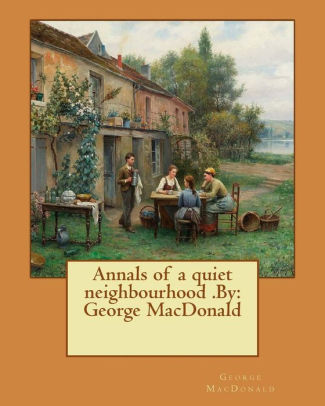
Annals of A Quiet Neighborhood

Annals of a quiet neighbourhood .By: George MacDonald by George MacDonald,  Paperback | Barnes & Noble®

For those who have been following my blog for a while, you probably figured out by now that I’m a big George MacDonald fan.

For those of you who haven’t, you may wonder who George MacDonald is. Let me tell you.

George MacDonald

George MacDonald was a Scottish preacher and writer in the mid-late 1800s. He’s known for his fantasy and for being a great inspiration to C.S. Lewis. He was also good friends with Lewis Carroll and other famous authors.

Aside from his fantasy, George MacDonald also wrote countless Victorian novels, which I adore. Even though I disagree with his theology at times, I love how he shows grace through each of his characters and stories.

The Story

Annals of A Quiet Neighborhood seems, on the surface, like it is the closest to autobiography as anything of MacDonald’s I’ve read. The main character is a minister who studies, preaches, and tends to the many needs of the townspeople.

As you get into the story, you discover that many of these characters have dramatic and scandalous backstories, but all of them are in need of one thing: redemption.

Teaching Moments

As you trudge through the chapters, finding out about everyone in the village and the day to day dramas, there are so many “a-ha” moments where MacDonald drops these gems. They are teaching moments that point out what the narrative has been proving, or interruptions in the narratives to clarify something.

The sensation when you come across one of these teaching moments is like you are wandering through a pleasant, open field and you come across a priceless treasure, that someone has placed there just for you.

Tips on Teaching Theology

One of these gems is when MacDonald makes a point about souls and bodies. The pastor has been going around to visit the sick and dying, and has recently held vigil at the bedside of a woman who talked about death in a way that greatly disturbed him.

MacDonald inserts a correction to a doctrine that he feels is improperly taught, to help his readers to understand it:

“And here let me interrupt the conversation to remark upon the great mistake of teaching children that they have souls. The consequence is, that they think of their souls as of something which is not themselves. For what a man HAS cannot be himself. Hence, when they are told that their souls go to heaven, they think of their SELVES as lying in the grave. They ought to be taught that they have bodies; and that their bodies die; while they themselves live on. Then they will not think, as old Mrs Tomkins did, that THEY will be laid in the grave. It is making altogether too much of the body, and is indicative of an evil tendency to materialism, that we talk as if we POSSESSED souls, instead of BEING souls. We should teach our children to think no more of their bodies when dead than they do of their hair when it is cut off, or of their old clothes when they have done with them.”

MacDonald plays with problems of grammar in describing a metaphysical concept: if we say we have a soul, then that sounds like something that is other than ourselves, and there is a feeling of impermanence.

The point MacDonald is making is that our true self is soul, not body, and it is the body that is shed when we die, not the soul. MacDonald is arguing against the philosophical concept of materialism (now called physicalism sometimes) here, and is possibly arguing for a form of idealism. He is also talking about a commonly-held position among Christians of a mind-body dualism.

Thoughts About Death

Another teaching moment in this story has to do with death. I know this sounds pretty grim, but MacDonald actually offers a lot of hope in this regard:

““To think,” I said to myself, as I walked over the bridge to the village-street—“to think that the one moment the person is here, and the next—who shall say WHERE? for we know nothing of the region beyond the grave! Not even our risen Lord thought fit to bring back from Hades any news for the human family standing straining their eyes after their brothers and sisters that have vanished in the dark. Surely it is well, all well, although we know nothing, save that our Lord has been there, knows all about it, and does not choose to tell us. Welcome ignorarance then! the ignorance in which he chooses to leave us. I would rather not know, if He gave me my choice, but preferred that I should not know.” And so the oppression passed from me, and I was free.”

I thought this insight was interesting. The main character arrives at a feeling of peace about death by realizing that, if Jesus didn’t think it was necessary to tell His followers about what death and “the other side” were like, then it is probably for the better that we don’t know about it.

We have an innate curiosity about death and what happens next, but it is fruitless, as we won’t know until we pass through those doors. Still, even if we don’t have firsthand accounts to tell us what it is like, Christians look to Bible passages about what we can expect. I could probably write a whole blog series on death as it is talked about in the Bible, but for now I’ll leave you with this final thought:

“Then shall the dust return to the earth as it was: and the spirit shall return unto God who gave it.”

Ecclesiastes 12:7, KJV

And this one:

For the wages of sin is death, but the gift of God is eternal life in Christ Jesus our Lord.

Romans 6:23, NIV

If you are a fan of Victorian novels, especially pastoral ones (in a double sense of that word, haha!), then I highly recommend this one.

Book Quotations taken from this ebook version: http://www.gutenberg.org/files/5773/5773-h/5773-h.htm#link2HCH0028

Bible for the Busy Woman Launch

I’m excited to announce that I am launching a project on Youtube. My target audience is Christian women, so feel free to share this with them if you think they might be interested!

In a nutshell, here are my goals and my intended audience in this project:

Goals:

  • Help women to be in the Word regularly
  • Help them to gain understanding of proper approaches to studying the Bible
  • Educate women about books of the Bible and connections throughout the Bible
  • Teach orthodox theology according to the Bible
  • Encourage women to live for God

This is for:

  • Mothers of young children who can only grab a few minutes and don’t have a lot of brain power
  • Working women who have to give a lot to their job and want to understand the Bible better but don’t have the time
  • Female students who need their brainpower for their studies

In each video, I give quick facts and exposition on the Bible passage, with a question to make an application. Each will be 5 minutes.

Below is my first video, providing an introduction to the book of Matthew. I will be going through this book, section by section, in following videos I will post about once a week.

Goal Setting for 2021

For the New Year, I have a LOT of goals! I try to think of specific areas of growth or things I want to focus on doing more of or getting better at. 

I decided that I will do a quarterly check in and can change the direction or frequency of certain goals as needed.

Here are some of my goals for this coming year:

  1. Blog 3 times/ week (at least one of these will be on a book/ text of some sort).
  2. Stay healthy.
  3. Read 100 books/ stories. I tend to choose some really long ones, so I’ll have to make some shorter (like short stories or poems) to balance that out.
  4. Enjoy my blessings and give thanks to God continually, because He is good!
  5. Practice letting go of more things and giving them over to God.
  6. Develop my prayer and worship life intentionally, using time and resources.
  7. Publish my first children’s fantasy novel and finish writing its sequel.
  8. Learn how to deal better and more calmly with conflict.
  9. Stay in touch with friends more regularly.
  10. Learn enough German to read a fairytale.

I have many others, but I won’t bore you with my 101 aspirations.

My plan to make these goals a reality is to develop these goals more. I have broken them down into smaller goals for each quarter, and then I will give myself (reasonable) benchmarks to reach each month.

I have also created a weekly schedule to keep me on track, allotting time to work at each goal. If I schedule it, that mentally helps me to make it more of a priority.

However, life happens and I have to be a little flexible as I don’t know when I will have extra time and when I will be inundated with work from my clients or other life demands.

What about you? What are some goals you have this year?

Reflecting on My #2020 Goals

What a year it’s been! 

Around this time of year, I always like to reflect. I don’t do “resolutions,” but I do like to make goals. I like to reflect on them often to notice growth and to learn from the goals I was/ was not able to meet. 

I always make personal, professional, and spiritual goals for each year, based on what is in my heart.

Here are some of goals from this past year, which I assessed twice throughout the year, and am now giving myself a final assessment on:

  1. Face and heal from shame. I would give myself 10/10 on this one. I read many books about shame (which I will share about in another blog), talked about it in counseling, and learned how to face it instead of trying to run or hide from it. I will work on this throughout my life, no doubt, but I am happy with the work I accomplished here this past year.
  2. Live in and enjoy the present. I am naturally future-oriented. I dream my entire life before I live it. I also look back to learn and grow from past. Sometimes I have one foot in the past and one in the future, meaning I have zero in the present! Yoga/ mindfulness and constantly telling myself: “enjoy this moment!” in whatever I am doing have helped with this, but I still have work to do. I would give myself a 7/10.
  3. Relearn how to seek and walk with God. I made this general goal as a baby step to help me get back to a place closer to where I was when I started out in ministry over ten years ago (borderline ascetic). I think many years in ministry made me feel a bit like I was working for God instead of just walking with Him, and I long for the simplicity of being with and learning from Him for the sake of it. For this one I’d give myself a 5/10.
  4. Grow as a writer and artist. I would say 10/10 for this one! I have written more this past year than I ever have. I have learned from countless videos, articles, and grammar websites. I am not a natural grammarian, but more of a wordsmith who has had to learn all the little details. I have enjoyed painting my book cover and have definitely learned more about myself as an artist. I watched a lot of painting videos during this past year, too (Bob Ross, anyone?). I promise to share some of my paintings with you all this coming year!
  5. Make $1000+/ month freelancing. I don’t like to make financial goals because it feels so money-grubbing to me, but as a freelancer I am now responsible for my business and income. I would give myself 12/10 on this one, as I surpassed that goal each month this year.
  6. Figure out appropriate boundaries in relationships. I am still working on this one, but I made some important steps in this area this year. I can look back on specific instances where I could articulate the boundaries I needed clearly and stick to them! I would give myself a 9/10.
  7. Get my first book published. Eh. The truth is, I was going to publish my first book this year, but the more I have learned about self publishing, the more I want to perfect my book and avoid making newbie mistakes. My book is a summer story for middle grade readers, so I also thought a June release would be better than the winter. SO, this is an unofficial announcement that my middle grade fantasy novel, The Land in the Woods, will be coming out in June 2021! I’ll give myself 6/10 for learning all I did about publishing.
  8. Cultivate 5 healthy, close friendships. This has not been the ideal year for this. I like to meet with people in person. Regardless, I have been able to meet with others virtually or talk on the phone. I would give myself a 7/10 on this one.
  9. Get to know ten new people. This one is a little vague. I definitely have gotten to know more than 10 new people this year, but on what level… I’ll just give myself a 10/10.
  10. Find an area to serve in church. Yes! 10/10, especially because I found 2 areas: children’s and women’s ministry.
  11. Communicate desires, needs, and expectations better, especially to my husband. Ha! This one depends on the day and my mood. When I’m thinking about a million different things, I generally struggle with this, as I am not as in touch with what I need and want. I have had to slow down and focus at times (journaling can help!) to realize what it is that I am really wanting or needing. Then, I have to “make a request” or figure out how to be assertive, without bullying, coercing or manipulating. I would give myself a 9/10 for this one because I’ve grown a lot here.
  12. Blog once/ week. I did not blog once/ week, but I have reached 52 blogs for this year, which averages out to that. Still, I’d like to be more consistent in the coming year. I will give myself an 8/10 here.

I guess some of those were more priorities than goals, but it’s still helpful to set direction. I’ve already made my goals for next year, and the list keeps growing! I will share a couple in my next blog.

I wish you a successful start to 2021! Happy New Year!

The Story Behind Classic Christmas Hymns

We’ve all heard classic Christmas hymns over the years, but where did they come from? And do we need to listen to them for the umpteenth time?

Joy to the World

In 1719, hymn writer Isaac Watts published a book of poems based on some Psalms from the Bible.

One poem, based on Psalm 98, emphasized Jesus’ role as King of the church and the world. 

A century later, Boston music teacher Lowell Mason set the poem to music and released it at Christmastime. It eventually became America’s most published Christmas carol: “Joy to the World.”

Silent Night

In 1816, Austrian assistant pastor Josef Mohr began writing a poem about angels announcing the Messiah’s birth to shepherds. It sat on a shelf collecting dust until two years later, when a group of actors came to the church to perform a pageant about the first couple of chapters of Matthew and Luke.

The story goes, as Mohr went home, he paused on the hillside to look at the snowy, wintry village below. He remembered the poem he wrote and decided to make into a carol for the congregation to sing the next night.

The church organ was broken, so Mohr asked the church organist, Franz Xaver Gruber, to write a melody that could be sung with a guitar. 

On Christmas Eve, Gruber and Mohr sang the carol for the congregation, accompanied by Gruber’s guitar.

When Karl Mauracher came to fix the organ a few weeks later, Gruber played the tune of silent night to make sure the organ was working. Mauracher loved it and took it back to his Alpine village, Kapfing.

When the Rainers and the Strassers, two well-known singing groups, heard it, they loved it so much that they decided to add it to their Christmas performances.

The Strasser sisters performed “Silent Night” for many audiences for the next decade, even for King Frederick William IV of Prussia. The popularity of the song spread from there, and was translated into English in 1858. 

Today, the song has been translated into more than 300 different languages!

My Thoughts:

I have to confess I am disappointed each Christmas when radio stations and churches don’t play these classic Christmas hymns.

Maybe those choosing the music are afraid we’re tired of them, or that they have lost their meaning and only have sentimental value. But these hymns (and others!) are deeply meaningful and the fact that they evoke strong emotions and sentiment is not a bad thing. 

I WANT to feel sentimental about Christmas. I want to be sentimental about my Savior, the Christ Child. It doesn’t mean my thoughts don’t go beyond that sentiment. The strong sentiment I feel actually gives me pause. 

When I sing “silent night, holy night, all is calm, all is bright,” I picture still, silent animal stalls and a mother who is weary from giving birth. It is a calm, yet bright scene.

Mary knows she has just given birth to the Savior and she is filled with peace. The first verse is like a lullaby that Mary is singing to her child, telling him to “sleep in heavenly peace.”

Maybe they didn’t have oil lamps, maybe it was dark, but emotionally it was the brightest and happiest moment: the long-awaited Savior had come!

My point here is that the poetic words evoke images, and the tune touches our hearts. We are transported back to childhood, and a time when faith seemed like a simpler thing.

What about you? What are some classic Christmas songs or hymns that you find meaningful?

Here are some modern versions of these Christmas classics by For King and Country, one of my favorite bands:

Sources:

https://www.crossway.org/articles/a-brief-history-of-joy-to-the-world/

https://www1.cbn.com/story-behind-song-joy-world

http://home.snu.edu/~hculbert/silent.htm

https://www.wqxr.org/story/true-story-silent-night/

Design a site like this with WordPress.com
Get started